Alphamab (Jiangsu) Biopharmaceuticals Co. Ltd. has identified new antibody-drug conjugate (ADC) comprising bispecific antibodies targeting HER2 covalently bound to cytotoxic drugs through a linker reported to be useful for the treatment of cancer.
Breast cancer-associated gene 1 (BRCA1) is a critical tumor suppressor in breast cancer, and BRCA1 deficiency impairs DNA damage repair, leading to DNA damage accumulation and subsequent genetic alterations that result in the onset of breast cancer. In the current study, researchers from the University of Macau aimed to identify the potential factors that may participate in BRCA1-associated tumorigenesis.
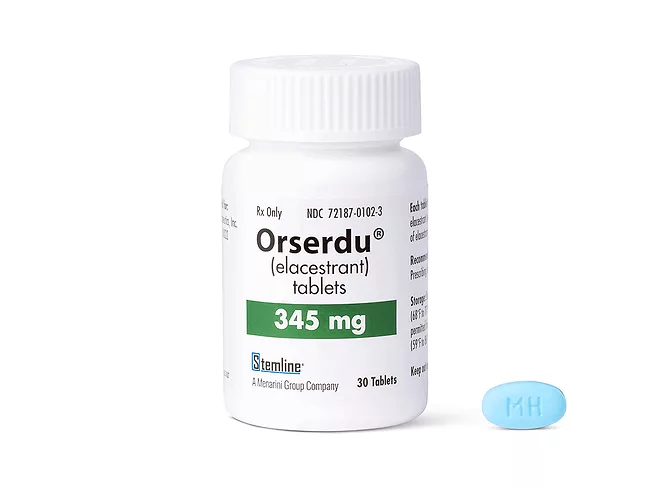
Winning the race to market with the first oral selective estrogen receptor degrader (SERD) for breast cancer is Menarini Group’s elacestrant, which gained U.S. FDA approval for use as second- and third-line therapy in patients with ER-positive/HER2-negative advanced or metastatic disease with the ESR1 mutation. It marks the first therapy approved specifically targeting ESR1, found in up to 40% of patients with ER-positive/HER2-negative disease.
Roquefort Therapeutics plc's ROQ-A1 and ROQ-A2 Midkine (MDK) antibody programs, targeting metastatic breast cancer and metastatic lung cancer, have successfully demonstrated in vivo safety in preclinical development programs conducted by cancer research groups.
Medshine Discovery Inc. has synthesized proteolysis targeting chimera (PROTAC) compounds comprising an E3 ubiquitin ligase binding moieties covalently linked to bromodomain-containing protein 4 (BRD4; HUNK1) targeting moieties through a linker reported to be useful for the treatment of cancer.
Hangzhou Innogate Pharma Co. Ltd. has identified kinesin-like protein KIF18A inhibitors reported to be useful for the treatment of cancer and viral infections.
Coherent Biopharma Ltd. has divulged peptide-drug conjugates comprising cytotoxic drug covalently linked to folate receptor α (FOLR1; FR- α)-targeting moiety through linker reported to be useful for the treatment of cancer and metabolic, immunological and neurological disorders.
An already-intrigued Wall Street appreciated Relay Therapeutics Inc.’s Jan. 10 update during the J.P. Morgan Healthcare Conference (JPM), where the company detailed progress across its development efforts, including those with RLY-4008, an oral small-molecule inhibitor of fibroblast growth factor receptor 2 (FGFR2), in the works for patients with FGFR2-altered cholangiocarcinoma (CCA) and other cancers. Shares of the Cambridge, Mass.-based firm (NASDAQ:RLAY) ran up by about 38%, or $6, in the five days ahead of Jan. 13. The stock closed Jan. 17 at $20.45, down 32 cents.
Scorpion Therapeutics Inc. has disclosed urea derivatives acting as phosphatidylinositol 3-kinase α (PI3Kα) (H1047R mutant) inhibitors reported to be useful for the treatment of cancer.
Deepwise Technology Co. Ltd.'s artificial intelligence (AI) device mammography screening software has been approved in China. The company claims that this is the first and only AI medical device that is approved for breast cancer in China.