Xandar Kardian Inc. closed a $10 million series A funding round to support the rollout of the company’s contactless health monitoring solution. Phoenix Venture Partners led the round with participation from Portfolia Active Aging & Longevity Fund, Taronga Ventures and others. “With the new financing round, Xandar Kardian looks forward to expanding its core team in Toronto and in the United States, in addition to placing increased emphasis on R&D and mass production for its technologies,” Xandar Kardian co-founder and CEO Sam Yang told BioWorld.
It’s not unusual for women to have some uterine contractions during pregnancy. Many of these go unnoticed, but others can be strong and feel like labor. Distinguishing between normal contractions and those that are not can help ensure women at risk of preterm labor get the extra medical care they need. To that end, Tel Aviv-based Nuvo Group Ltd. has launched an FDA-cleared uterine activity (UA) module on its Invu remote monitoring platform.
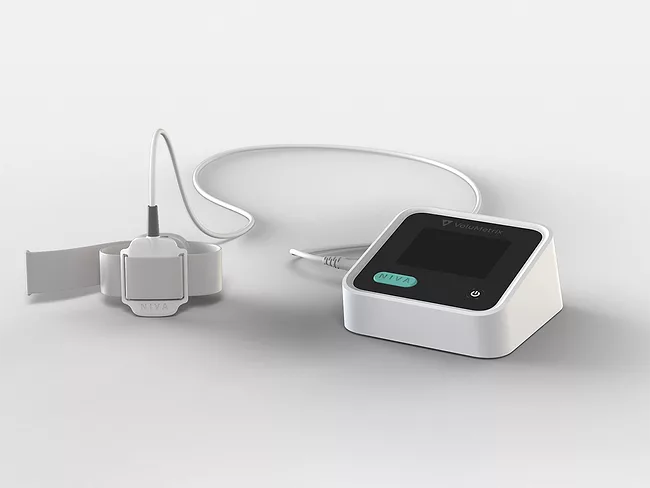
The FDA granted breakthrough device designation to Volumetrix LLC for its NIVAHF monitoring system for heart failure. The device is the first application of the company’s noninvasive venous waveform analysis (NIVA) technology, which captures and analyzes vital information about blood volume to assess patient status.
Imagine an orthopedic implant that not only accelerates bone healing but also captures data to support real-time clinical decisionmaking. That’s the vision of Intelligent Implants Ltd., whose Smartfuse system recently won FDA breakthrough device designation. The first indication is for lumbar spinal fusions.
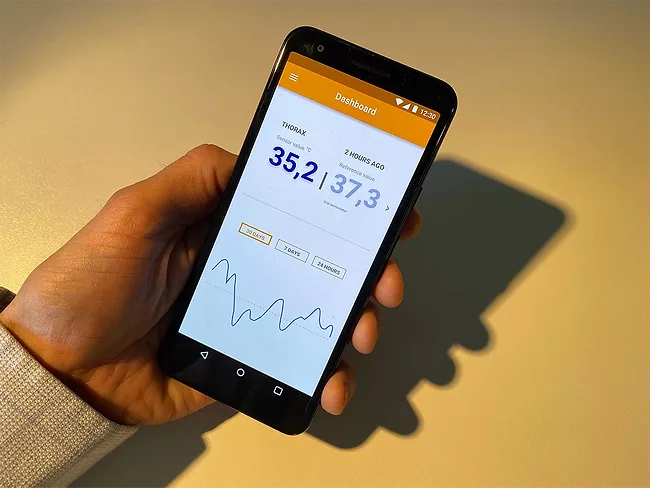
Dsruptive Subdermals AB has completed a clinical showing body temperatures tracked by its chip implants are comparable to temperature readings from standard clinical thermometers. The Stockholm-based startup is now offering its injectable implants as an open platform for researchers seeking efficient, low-cost tools to monitor changes in body temperature.
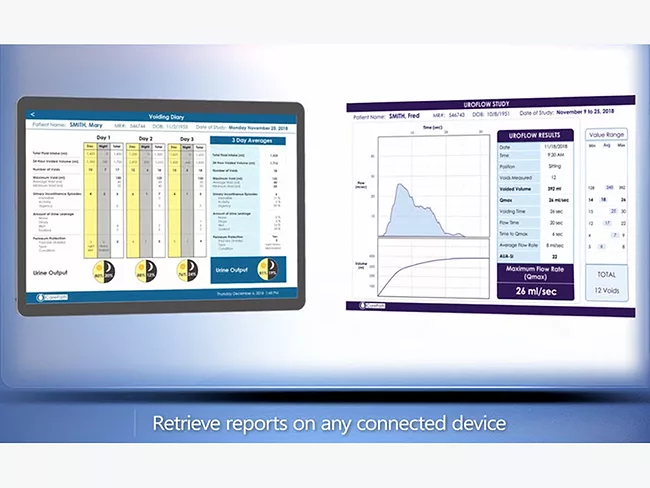
I-O Urology Corp. launched its Carepath platform to provide remote patient monitoring for urologic conditions. The platform uses a compact portable system to capture real-time urine voiding data and a mobile app to facilitate accurate reporting and timely communication between patients and their health care providers.
MIT Media Labs spinoff Empatica Inc. secured the CE mark for its Aura system, a wearable solution for the monitoring and early alert of respiratory infections, including COVID-19. For use with people 14 and older, Aura is commercially available in Europe and the U.K., and for pilot purposes in the U.S. – pending FDA authorization. Aura’s algorithm analyzes vital signs from Empatica smartwatches, comparing data against the wearer’s historical baselines. In validation studies, Aura was able to detect patients with possible H1N1 influenza, rhinovirus or SARS-CoV-2 infection with 0.94 sensitivity. Detection occurred on average two days after infection.
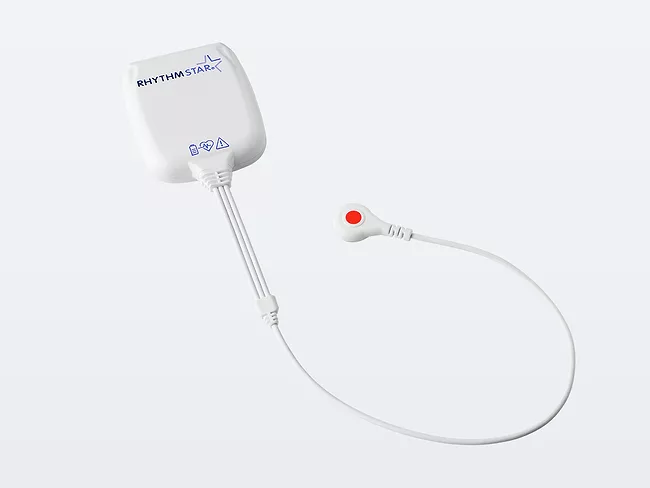
Cardiac monitoring company Rhythmedix Inc. reported the launch of its next-generation, wearable Rhythmstar device with built-in 4G cellular connectivity. The low-profile, water-resistant cardiac telemetry monitor provides extended remote monitoring to quickly detect arrhythmia without the need for a phone or other communication device.
Researchers at the University of California San Diego (UCSD) have taken wearables to a new level with a soft skin patch that integrates functions currently siloed in continuous glucose monitors, wearables, wellness apps and hospital monitors. The all-in-one patch can be worn on the neck to continuously track blood pressure, heart rate, glucose, lactate, alcohol and caffeine.
HONG KONG – Earlysense Ltd. has sold a contact-free continuous monitoring technology to global med-tech provider Hillrom Holdings Inc. Ramat Gan, Israel-based Earlysense will receive licensing for all intellectual property and technology sold to Chicago-based Hillrom for use outside the hospital along with $30 million in cash, commercial milestone payments and a portion of Hillrom's equity investment