Artificial intelligence, remote monitoring and need-based innovation are beginning to reshape Australia’s medtech sector’s devices, as well as the way health care itself is delivered, according to speakers at the 2026 Ausmedtech conference in Perth May 19-20.
Artificial intelligence, remote monitoring and need-based innovation are beginning to reshape Australia’s medtech sector’s devices, as well as the way health care itself is delivered, according to speakers at the 2026 Ausmedtech conference in Perth May 19-20.
Seung-min Park, professor at Nanyang Technological University and cofounder of Kanaria Health, is working to manufacture smart bidets that can capture biomarker data from urine and stool automatically and enable continuous monitoring.
The Apple Watch may be able to alert wearers to heart palpitations, but Google LLC’s Pixel Watch 3 can now detect when a user’s heart stops – and call emergency services. The pulse detection featured received clearance from the U.S. FDA on Feb. 26 and Google plans to make it available on its Pixel Watch 3 starting in March. Pulse detection is already available for watches sold in the U.K. and EU.
Remote monitoring for patients with implanted cardiac electrophysiology devices may finally be coming of age in the U.K. thanks to a review of these systems by the National Institute for Health and Care Excellence.
Nuvo Group Ltd. recently completed a business combination with Los Angeles Media Fund (LAMF) Global Ventures Corp, a special purpose acquisition company, and became a listed company in a bid to bring its Invu pregnancy monitoring and management platform to as many women as possible. “We are totally focused on women's health and trying to drive better outcomes through pregnancy care,” Rice Powell, CEO of Nuvo, told BioWorld.
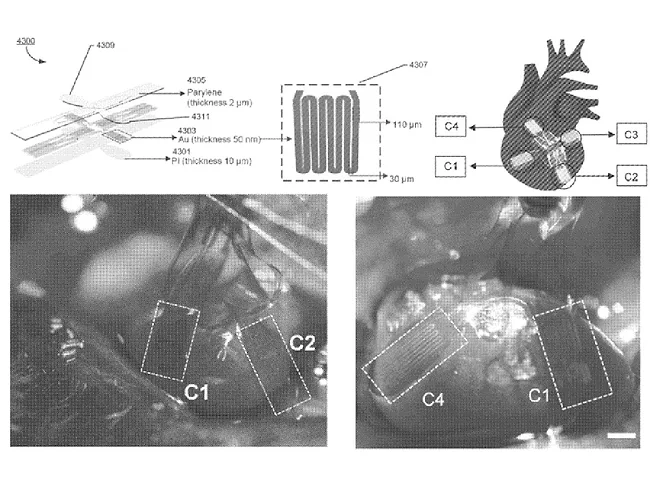
Wubin Bai, assistant professor of applied physical sciences at UNC-Chapel Hill, is seeking protection for morphable 3D-folded microelectronic mesostructures, including epicardial bioelectronic probes, made using concepts borrowed from origami.
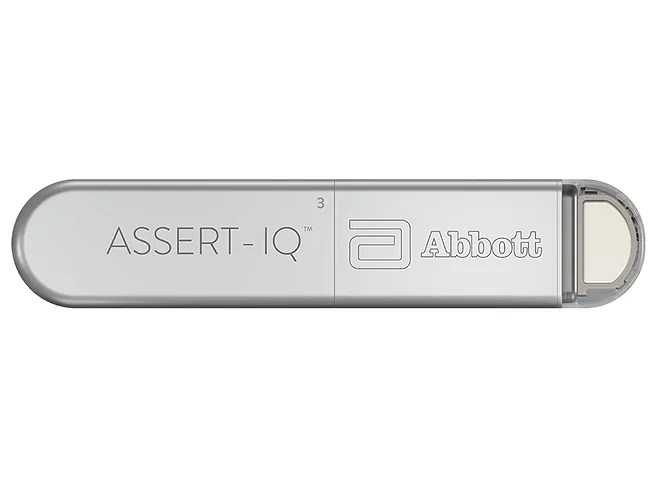
Abbott Laboratories landed CE mark for two versions of its Assert-IQ insertable cardiac monitor (ICM), one with a three-year battery life, the other lasting six years. Designed for long-term remote monitoring of individuals with abnormal heartbeats or at risk of developing arrhythmias, the device helps detect often-fleeting irregularities in heart rhythm to assist in diagnosis and care management.
Biospectal SA has received a CE MDR class IIa medical device certification for its optical fingertip blood pressure monitoring app, Optibp. The device records fingertip blood flow optically and transforms the information into a pulse wave that it analyzes to estimate blood pressure.
The U.S. FDA recently released a guidance for non-invasive remote monitoring devices, which were granted tremendous leniency during the COVID-19 pandemic as a means of reducing the demands on hospitals and doctor’s offices. That policy has been extended for the non-COVID era as part of the agency’s strategic plan to improve health equity by ensuring that access to digital health technologies is enjoyed by diverse American populations in a variety of health care access-challenged geographical areas.