A collaboration between Aegis Ventures LLC and Northwell Holdings invested $12 million to launch New York-based Optain Inc., an artificial intelligence company created to enable early identification and disease prevention through retinal imaging. Retinal imaging is well known for identifying eye diseases including diabetic retinopathy, age-related macular degermation and glaucoma, but it can also provide insight into cardiovascular and neurological conditions.
Researchers from Augusta University recently presented data from a study that aimed to assess the role of acetyl-CoA acetyltransferase (ACAT1) in neurovascular damage during diabetic retinopathy (DR).
Nearly everyone with diabetes for >20 years will develop diabetic retinopathy or uveitis, which are collectively among the most common causes of premature blindness. Melanocortin is a short peptide that not only controls pigmentation, but that is most importantly expressed constitutively in the intraocular space where it serves essential functions suppressing inflammation in the retina, ultimately preventing blindness.
Praetego Inc. has been granted a US$300,000 phase I Small Business Technology Transfer Research (STTR) award by the National Eye Institute (NEI) to advance the company's lead candidate, PTG-630, into preclinical proof of concept in diabetic retinopathy.
Eyenuk Inc. is significantly extending the scope of its artificial intelligence system for the automatic analysis of retinal images, adding the diagnosis of age-related macular degeneration (AMD) and glaucoma to the EU approved uses of Eyeart AI.
Ocuphire Pharma Inc. is marching ahead despite falling short of the primary endpoint in top-line data from the Zeta-1 phase II study testing oral APX-3330 in diabetic retinopathy (DR). The trial did not achieve its goal with regard to the percentage of patients with a ≥2-step improvement in Diabetic Retinopathy Severity Score at week 24 in the study eye. Ocuphire plans to schedule an end-of-phase II meeting with the U.S. FDA to review the results.
Thirona BV spun out its retina division into a stand-alone business, Thirona Retina BV, focused exclusively on the eye disease market, effective Jan. 1, 2023. The development comes after the recent expansion of Retcad, Thirona’s flagship solution for eye disease screening. Thirona BV will continue to develop artificial intelligence (AI)-driven systems for precision medicine in lung disease.
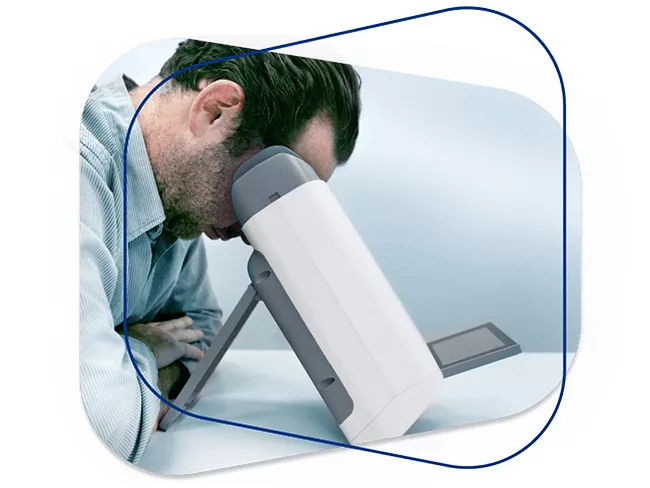
Earlysight SA is developing a novel ophthalmology device that can be used to diagnose certain degenerative eye disorders long before onset of first symptoms. Earlysight and researchers at the Swiss Federal Institute of Technology Lausanne (EPFL) have reported positive results for their first clinical trial of Cellularis in the journal Ophthalmology Science.
The U.S. FDA has given the green light to Aeye Health Inc. for its autonomous diagnostic screening system for diabetic retinopathy. The Aeye Diagnostic Screening (Aeye-DS) uses artificial intelligence (AI) to diagnose the eye condition from retinal images captured by a fundus, or retinal, camera.