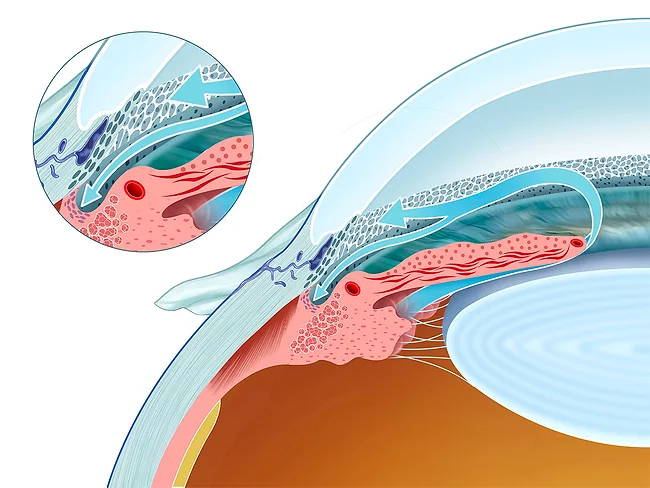
Scientists at Duke University have uncovered how macrophages help maintain intraocular pressure and have found that a specific type, resident macrophages, is essential for proper drainage of intraocular fluid. When these cells are removed, drainage becomes impaired and intraocular pressure rises, contributing to the development of glaucoma.
Scientists at Duke University have uncovered how macrophages help maintain intraocular pressure and have found that a specific type, resident macrophages, is essential for proper drainage of intraocular fluid. When these cells are removed, drainage becomes impaired and intraocular pressure rises, contributing to the development of glaucoma.
G protein-biased agonists enhance opioid-induced analgesia by selectively avoiding β-arrestin-2 (βarr2) signaling, which has been associated with reduced efficacy and adverse effects. Similarly, directing neurotensin receptor 1 (NTSR1) signaling toward β-arrestin pathways may promote analgesia via alternative mechanisms while minimizing side effects linked to G protein activation.
Investigators from Duke University hypothesized that hirudin-like protease inhibitors could be generated by linking exosite-binding aptamers with small-molecule active site inhibitors, thus generating more potent “EXACT” inhibitors.
Researchers from the University of Maryland in collaboration with the National Institutes of Health (NIH) and Duke University have identified angiopoietin-2 (Ang2) as a targetable protein to reverse cardiovascular dysfunction in Hutchinson-Gilford progeria syndrome (HGPS).
Breast cancer is a common cause of brain metastases and new research has shown that metastatic cells can invade the meninges not by entering the circulation and crossing the blood-brain barrier, but by traveling along the outer surface of the blood vessels that connect the vertebral bone marrow and the skull.
Since utrophin compensates for lack of dystrophin in mdx mice, which results in a milder phenotype of muscular dystrophy compared to humans, the mdx/utrn-/- mouse has been developed to mimic early onset of muscle dystrophy, severe muscle weakness and premature death.
Researchers from Duke University presented findings from a study that aimed to assess the physiological role of Piezo1, a mechano-gated ion channel that is highly expressed in pancreatic acinar cells, in the exocrine pancreas.
Work at Duke University has led to the discovery of prodrugs of UDP-3-O-(R-3-hydroxymyristoyl)-N-acetylglucosamine deacetylase (LpxC) (bacterial) inhibitors potentially useful for the treatment of cancer and gram-negative bacterial infections.
Pompe disease is caused by a deficiency in the lysosomal enzyme acid α-glucosidase (GAA) that leads to accumulation of glycogen in the lysosomes, mainly seen in skeletal and cardiac muscles. Researchers from Duke University have developed a new murine model of Pompe disease, which recapitulates human infantile-onset disease. This model harbors the c.1826dupA mutation in the murine Gaa gene, which resembles the human GAA c.1826dupA (p.Y609*) mutation seen in infantile-onset Pompe disease.