No one is looking in the rearview mirror at Medtronic plc as a fresh U.S. FDA approval for the next generation version of its intrathecal drug delivery system allows the company to leave behind a spate of problems associated with its Sychromed II device. The device delivers medication directly to the fluid surrounding the spinal cord via a small catheter positioned to deposit the drug at the site of most severe pain. The targeted delivery improves management of chronic and cancer-related pain as well as management of severe spasticity without use of systemic opioids.
A woman in Nambour, Australia, is the first patient to receive a minimally invasive implantable neuromodulation device for severe migraine and cluster headache in a first-in-human study conducted by Salvia Bioelectronics BV.
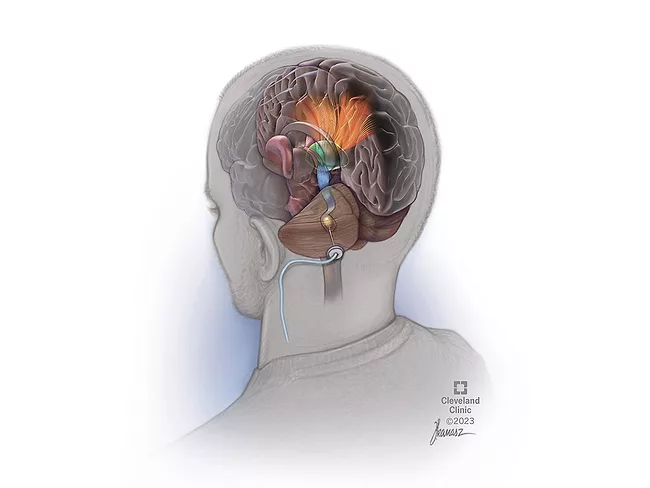
A first-in-human clinical trial conducted by researchers at the Cleveland Clinic demonstrated that deep brain stimulation (DBS) applied to the dentate nucleus region of the cerebellum could help patients recover function in their upper extremities up to three years after a stroke. Results of the study were published in Nature Medicine.
The European Commission has granted CE mark approval to Medtronic plc for its Inceptiv closed-loop rechargeable spinal cord stimulator (SCS). The device is the first Medtronic SCS to sense an individual’s biological cues and make adjustments in real time to control pain all day long. Dublin-based Medtronic plans to launch Inceptiv in Europe in the coming months.
Over the last six years, more than 20,000 patients have been implanted with the Sprint PNS system to manage acute or chronic pain, SPR Therapeutics Inc. reported. The 20,000th patient was treated for low back and leg pain with the Sprint Extensa XT system, which like the company’s other systems is implanted for 60 days in a minimally invasive surgery. The system uses percutaneous peripheral nerve stimulation (PNS) to recondition the central nervous system to provide long-term, significant relief from pain.
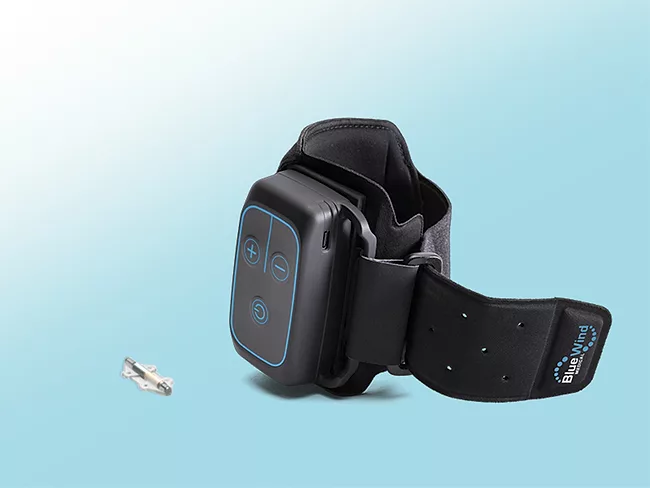
The U.S. FDA granted the de novo marketing request for Bluewind Medical Ltd.’s Revi system for the treatment of urgency incontinence with or without urinary urgency, the company reported on August 17. Unlike other neuromodulation devices approved in recent years, Revi stimulates the tibial nerve instead of the sacral nerves.
In game-changing news for parents of children with cerebral palsy, researchers demonstrated significant clinical improvement in the sensorimotor function of children who underwent sessions using Spinex Inc.’s Spinal Cord Innovation in Pediatrics (Scip) therapy. With current treatment options limited to physical therapy, medication and/or surgery, Parag Gad, co-founder and CEO of Spinex, told BioWorld he believes that Scip therapy “can be the new standard of care” for children with cerebral palsy.
Parasym Ltd.’s neuromodulation technology significantly decreased postural tachycardia syndrome (POTS) and has the potential to be a safe and effective treatment for individuals living with the condition, according to a recent study. The result from the trial represents a substantial breakthrough for people with POTS, as there are no U.S. FDA approved treatments for the condition, Nathan Dundovic, co-founder at Parasym, told BioWorld.
General Stim Inc.’s implanted sacral nerve stimulation (SNS) system was approved in China to treat individuals with certain bladder and bowel conditions. Hangzhou-based General Stim’s SNS system consists of a sacral nerve stimulator, an extension lead and an electrode.
The researchers who enabled patients with spinal cord injuries to walk independently after implanting programmable electrodes below their lesions have now taken things one step further, restoring direct communication from the brain to the spinal cord, enabling the brain rather than an external computer to direct leg movements.