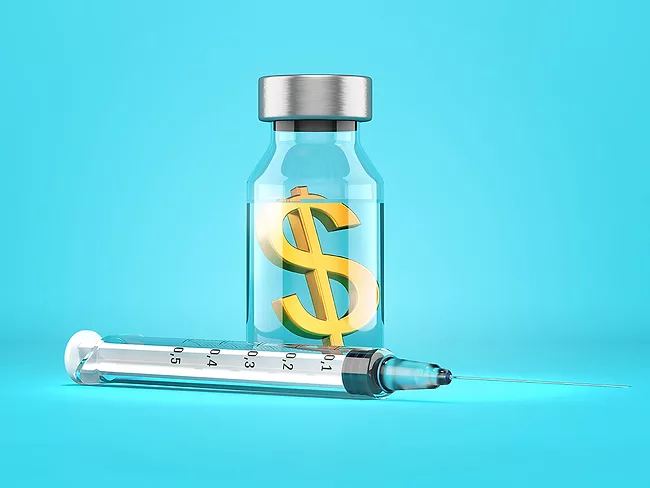
Drug pricing is playing an outsized role in the dynamics of the November U.S. election, creating turbulence for drug companies and for patients that will extend years after the votes are counted. During a Feb. 27 morning session on drug pricing trends during an election year at the BIO CEO & Investor Conference in New York, key opinion leaders spoke about their concerns, including the need to explain drug-pricing rationale to voters and patients in plain terms.
Helping executive and investors prepare for better economic times is a strong theme in the upcoming BIO CEO 2024 conference, which runs Feb. 26 and 27 in New York. The annual conference, sponsored by the Biotechnology Innovation Organization, is designed to present a broad, unbiased view of investment opportunities. Panels of experts are set to discuss hot therapeutic areas and the key business issues facing companies and the industry.
Be it viral, nucleic acid or protein vaccines, recent efforts that led to the first regulatory approvals for not only COVID-19, but also for malaria and respiratory syncytial virus, positioned infectious diseases in the headlines for much of the last four years.
Be it viral, nucleic acid or protein vaccines, recent efforts that led to the first regulatory approvals for not only COVID-19, but also for malaria and respiratory syncytial virus, positioned infectious diseases in the headlines for much of the last four years. But despite that attention, or the threat of future pandemics, or the numerous infectious diseases for which there are no preventable vaccines and very little development activity, the level of private and public funding for biopharma companies working in the space is dismal – at least compared with that of oncology products, according to a new analysis report released by the Biotechnology Innovation Organization (BIO) on Jan. 25.
John Crowley, a longtime industry executive whose story inspired a 2010 Hollywood movie, has been tapped for the role of president and CEO of the Biotechnology Innovation Organization (BIO), effective March 4, 2024, taking over from Rachel King, another longtime executive who has served as BIO’s interim CEO since October 2022.
The U.S. FTC has recalibrated its challenge to Amgen Inc.’s $27.8 billion acquisition of Horizon Therapeutics plc while one of the biggest trade groups has voiced its concerns about the government’s role in the deal. An amicus brief from the Biotechnology Innovation Organization (BIO), along with the Illinois Manufacturers Association, the Chicagoland Chamber of Commerce and the Illinois Biotechnology Innovation Organization, calls the FTC expansion into such deals overreach that chills pro-competitive biopharma mergers.
A recent bipartisan request for funding of a study on replacing U.S. drug patents with cash prizes is just one more symptom of a larger global malady that makes patents the scapegoat for bigger problems that have nothing to do with intellectual property (IP), David Kappos, board co-chair of the Council for Innovation Promotion (C4IP), told BioWorld.
A recent bipartisan request for funding of a study on replacing U.S. drug patents with cash prizes is just one more symptom of a larger global malady that makes patents the scapegoat for bigger problems that have nothing to do with intellectual property (IP), David Kappos, board co-chair of the Council for Innovation Promotion (C4IP), told BioWorld.
The U.S. FDA’s formation of the Digital Health Center of Excellence was heralded as a key enabler of digital health technologies, but the news hasn’t necessarily had the expected effect. The agency’s December 2021 draft guidance on the use of digital health technologies to assist in the conduct of clinical trials is still in regulatory drydock.
The U.S. FDA’s formation of the Digital Health Center of Excellence (DHCoE) was heralded as a key enabler of digital health technologies, but the news hasn’t necessarily had the expected effect. The agency’s December 2021 draft guidance on the use of digital health technologies to assist in the conduct of clinical trials is still in regulatory drydock.