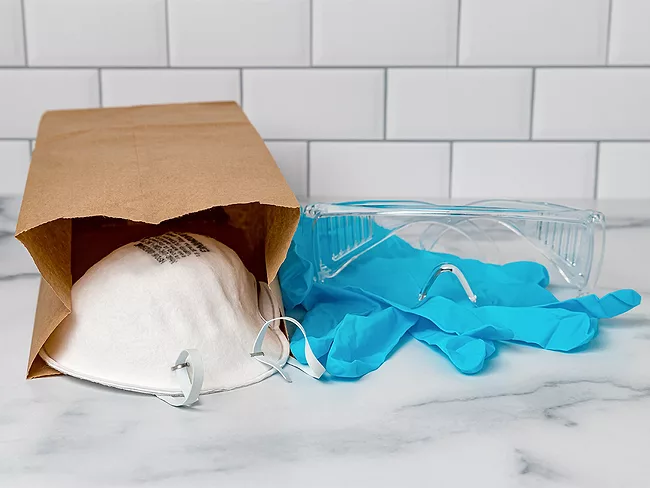
Health care professionals (HCPs) might prefer a new respirator for each shift, but the ongoing shortage has left clinical sites with a need to employ dry heat for filtering facepiece respirator reuse. The U.S. FDA said on a Jan. 26 town hall that it will stick to an established policy that these devices can be processed with dry heat no more than five times, a practice that is likely to stick for the foreseeable future despite that administrators are required to provide fresh units when possible.
One of the side effects of COVID-19 is the acceleration of a shift in health care delivery that is changing how drug and device companies market their products to doctors. There’s no going back to the commercial model where having a sales rep call on a doctor was the way to market a product, Rita Numerof, CEO and co-founder of Numerof & Associates, said during a Jan. 21 webinar on the impact the pandemic has had on drug and device detailing.
The U.S. FDA is actively working on guidance for conversion of emergency use authorizations (EUAs) to conventional premarket review programs, but the FDA’s Tim Stenzel said he does “not perceive a need to rush to convert EUAs” because of the volume of EUA applications, and because he does not expect the public health emergency “to end anytime soon.”
Thanks to the pandemic caused by the SARS-CoV-2 coronavirus identified in late December 2019, 2020 was the year of COVID-19. It was a year of lockdowns and social distancing, a year of Zoom meetings and virtual conferences, and a year when donning a face mask sometimes came to signify a political rather than health decision.
The U.S. FDA’s device center may still be grappling with the COVID-19 pandemic throughout the remainder of fiscal year 2021, but that does not mean other considerations have disappeared. The FDA’s Erin Keith said the agency will keep working on a major overhaul of the quality systems regulation (QSR) but will also work toward expanding industry’s use of advanced manufacturing technologies, such as additive manufacturing.
As is the case with many national governments, the U.S. federal government does not routinely measure its activities in the calendar year, but we at BioWorld don’t share that outlook. CY 2020 was odd in more ways than one from a regulatory standpoint, and thus we offer our version of a regulatory top 10 for a year that might not look much better in the rear-view mirror than it has looked as a current event.
Thanks to the pandemic caused by the SARS-CoV-2 coronavirus identified in late December 2019, 2020 was the year of COVID-19. It was a year of lockdowns and social distancing, a year of Zoom meetings and virtual conferences, and a year when donning a face mask sometimes came to signify a political rather than health decision. For the biopharma sector, the impact of COVID-19 was wide-ranging, in many cases showing the industry at its best, with the speedy mobilization of scientific efforts that spawned vaccine approvals at record rates and a host of therapeutics making their way through development. But biopharma suffered COVID-19-related setbacks as well, from a negative impact on clinical trials to the increasing politicization of science that could make the industry’s job harder as the world moves hopefully to end the pandemic in 2021. In looking back over the past year, BioWorld has compiled the biggest trends and lessons from the year of COVID-19.
The digital therapeutics market has surged during the pandemic and looks likely to markedly change health care long after the current crisis abates. The need for distance, limited in-person appointments, increased stress and mental health issues, and a more relaxed U.S. FDA approach have created the ideal environment for the rollout of therapies patients can use from home on their own time. Increasingly, clinical trials demonstrate the effectiveness of the new options and users praise the convenience.
Michael Mina, assistant professor of epidemiology at the Harvard T.H. Chan School of Public Health, again criticized the U.S. FDA for taking a conventional regulatory approach to rapid antigen tests for the pandemic. However, not everyone at the FDA’s parent department deserves brickbats. Mina said Assistant Secretary for Health Brett Giroir deserves a lot of credit for assisting in the effort to stand up pilot studies for rapid antigen tests that could be used to restore the U.S. economy even in the absence of a fully rolled-out vaccination campaign.
The latest U.S. FDA town hall for diagnostics included the usual technical questions about test validation, but there are some frustrations among test developers regarding turn-around times for emergency use authorizations (EUAs). Nonetheless, Tim Stenzel, director of the Office of In Vitro Diagnostics and Radiological Health (OIR) at the FDA, said the surge in staff assigned to review EUA filings has worked to some benefit, claiming that the agency has rendered a decision in connection with 65 applications in the two weeks leading up to the Dec. 9 town hall.