SARS-CoV-2 infection caused damage to brain blood vessels via a cascade of immune system reactions that was most likely initiated by antibody-dependent cytotoxicity, researchers from the National Institute of Neurological Disorders and Stroke reported in the July 5, 2022, online issue of Brain.
With vaccines now authorized for children as young as six months, omicron boosters in development for the fall, and the nation’s first protein subunit vaccine for COVID-19 pending authorization, the U.S. appears to be well on its way to exiting the turmoil caused by the deadly SARS-CoV-2 virus. Globally, there is reason for optimism as well.
Although the death toll in the U.S. is nearing 1 million lives lost, signs continue to suggest that an end is in sight for the COVID-19 pandemic, the most disruptive global health crisis in a century.
Although the death toll in the U.S. is nearing 1 million lives lost, signs continue to suggest that an end is in sight for the COVID-19 pandemic, the most disruptive global health crisis in a century. Now, into its third year, those at-risk have numerous options and growing numbers of people have achieved immunity through vaccines and infection.
Although the death toll in the U.S. is nearing 1 million lives lost, signs continue to suggest that an end is in sight for the COVID-19 pandemic, the most disruptive global health crisis in a century.
Lumiradx Ltd. has secured CE marking for its HbA1c test for diabetes. The point-of-care (POC), automated fingerstick assay is run on the Lumiradx portable platform and designed to provide connected results in under seven minutes, with a reportable range of 20-130 mmol/mol HbA1c (4.0% to 14.0% HbA1c).
The Biden administration recently reported that a new round of free rapid tests for the SARS-CoV-2 virus is available to the public, a development that coincides with a new surge of the latest sub-variant of the omicron variant. However, the administration is also expected to renew the public health emergency (PHE) for the pandemic, even as the White House continues to press Congress for another $22 billion in pandemic-related funding.
The pandemic exponentially amplified the move to more patient-driven health care with at-home monitoring, wearable medical devices and telemedicine. Testing has arguably seen the greatest shift, led by emergency use authorizations (EUA) for dozens of rapid tests for SARS-CoV-2. Laboratory Corp. of American Holdings Inc. (Labcorp) stands to benefit even more from the trend with an EUA for an over-the-counter multiplex respiratory virus test and the launch of an at-home collection kit for testing hemoglobin A1c (HbA1c) this week.
An unknown U.K. biotech, RQ Biotechnology Ltd., has emerged from stealth mode with a $157 million licensing deal with Astrazeneca plc for its monoclonal antibodies, aimed at protecting vulnerable and immunosuppressed people against SARS-CoV-2.
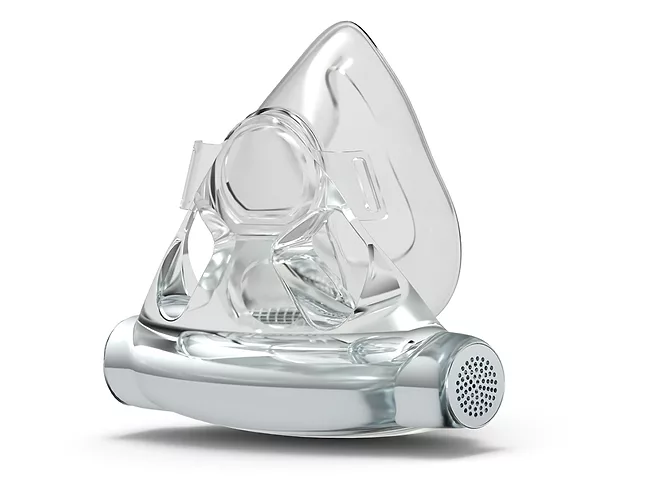
Henley Ion LLC has released data showing its filter-less respirator device can remove more than 99% of SARS-CoV-2 bioaerosols. The mask prototype developed by physician and surgeon Julian Henley, uses micronized electrostatic precipitation (mEP) to remove infectious aerosol particles from both inhaled and exhaled air. Results from the study have been published in the Viruses journal and confirm the device can provide equivalent protection from infectious bioaerosols as N95 respirators.