Researchers from the National Cancer Institute and their collaborators have presented data regarding a MLK3-degrading PROTAC, CEP1347-VHL-02, for treating triple-negative breast cancer.
About 30%-40% of triple-negative breast cancers (TNBC) show HER2-low status and may benefit from the HER2-directed antibody-drug conjugate trastuzumab deruxtecan (T-DXd). Ataxia-telangiectasia mutated (ATM) kinase plays a crucial role in double-strand break (DSB) repair response, thus inhibitors of ATM, such as AZD-1390, may enhance the effect of DSB inducers, resulting in DNA damage accumulation.
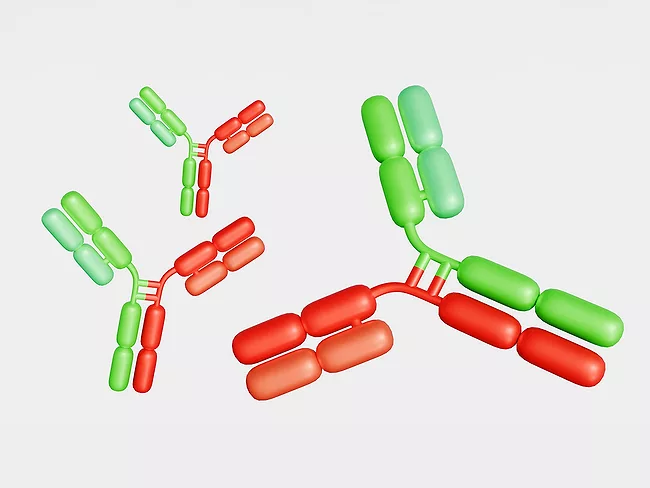
New and positive phase III cancer data for two monoclonal antibodies from two pharma giants opened the second day of the American Society of Clinical Oncology (ASCO) conference this past weekend.
Biontech SE and Bristol Myers Squibb Co. are teaming up to develop Biontech’s BNT-327 in a deal possibly worth over $11 billion. BNT-327 is in the hot new class of bispecific antibodies targeting programmed death-1 (PD-1) or its ligand (PD-L1) and vascular endothelial growth factor (VEGF). The bispecifics take advantage of two well established mechanisms of action that help tumors grow; PD-1/PD-L1, which tells immunogenic T cells not to attack the tumor, and VEGF, which tumors excrete to produce new blood vessels to supply oxygen and other nutrients to the tumor.
Proteinqure Inc. has closed an $11 million series A financing round to support the initiation of the company’s first clinical trial for PQ-203, a first-in-class peptide-drug conjugate for triple-negative breast cancer (TNBC). The funds will also be used to advance additional pipeline programs in neurology and nephrology.
Cell division cycle 20 homolog (CDC20) is a key regulatory protein involved in mitotic progression. Aberrant overexpression of CDC20 has been implicated in tumorigenesis and is associated with poor prognosis in several cancers, including triple-negative breast cancer.
UTR Therapeutics Inc. has submitted an IND application to the FDA for UTRxM1-18, a novel therapeutic approach for targeting c-MYC-driven cancers. Pending approval, a first-in-human phase I trial is slated to begin next year.
Triple-negative breast cancer is an especially challenging subtype characterized by the absence of key receptors, limiting the effectiveness of many standard breast cancer treatments.