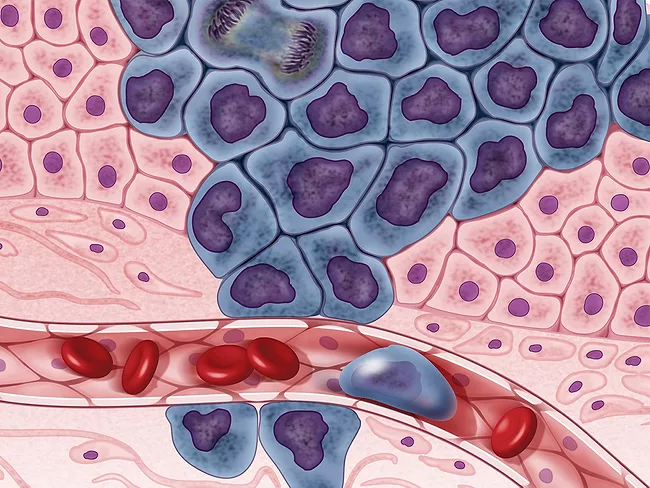
A new study has unveiled the signaling cascade involved in the progression of brain metastasis from breast cancer. A family of connexins participates in the process that regulate the expression of laminins that favor metastatic cells to colonize the brain.
The design of genetically modified exosomes that combine multiple targets killed cancer cells and conferred immunity against them. Scientists at the University of Southern California (USC) applied bioengineering techniques to introduce up to four antitumor functions in the same type of extracellular vesicles and destroy EGFR-positive triple-negative breast cancer (TNBC) tumor cells.
The PKMYT1 kinase has emerged as a promising therapeutic target for CCNE1-amplified cancers, after a recently reported genome-scale CRISPR/Cas9-based screen identified its inhibition as synthetically lethal for CCNE1 amplification.
Everest Medicines Ltd. has picked up its first marketing approval in China for Trodelvy (sacituzumab govitecan), a medicine licensed from Gilead Sciences Inc. It was approved to treat adults with unresectable locally advanced or metastatic triple-negative breast cancer who have received two or more prior systemic therapies, at least one of them for metastatic disease.
Everest Medicines Ltd. has picked up its first marketing approval in China for Trodelvy (sacituzumab govitecan), a medicine licensed from Gilead Sciences Inc. It was approved to treat adults with unresectable locally advanced or metastatic triple-negative breast cancer who have received two or more prior systemic therapies, at least one of them for metastatic disease.
Elasmogen Ltd. has secured a “transformational” £8 million (US$10 million) in new funding with which to move its shark-based, antibody-like constructs toward the clinic.
Obi Pharma Inc. has acquired global rights to BSI-04702, an anti-trophoblast antigen 2 (Trop2) humanized monoclonal antibody (MAb), from Biosion Inc. Obi is granted exclusive rights for further preclinical and clinical development, registration and commercialization of the candidate as an antibody-drug conjugate and other derivative products.
LONDON – The EMA recommended approval of Apellis Pharmaceuticals Inc.’s C3 complement inhibitor, Aspaveli (pegcetacoplan), to treat paroxysmal nocturnal hemoglobinuria, but has diverged from the FDA, excluding treatment-naïve patients adding its use should be restricted to those who have failed to respond to C5 inhibitor drugs.
New data on the addition of Infinity Pharmaceuticals Inc.'s oral PI3K-gamma inhibitor, eganelisib, to PD-(L)1 in both urothelial and triple-negative breast cancer patients appeared to evidence benefits for the combination. Benefit for company shares (NASDAQ:INFI), however, was nowhere to be seen, as they fell 31.5% to $1.52 on July 27. In a same-day earnings report, the Cambridge, Mass.-based company said it had a cash balance of $97.3 million to fund further development of the drug and filed to raise the maximum amount of capital it may raise in future sales of its shares.
French biotech Pep-Therapy SAS is taking its potentially first-in-class cancer cell penetrating peptide technology into the clinic, after raising €5.4 million (US$6.4 million) in an extended series A funding round. The series A fundraiser initially brought in €2.6 million, but the extension brought in a further €1.6 million in equity from Anaxago, i&i Prague and Badge as well as a €1 million loan from Bpifrance.