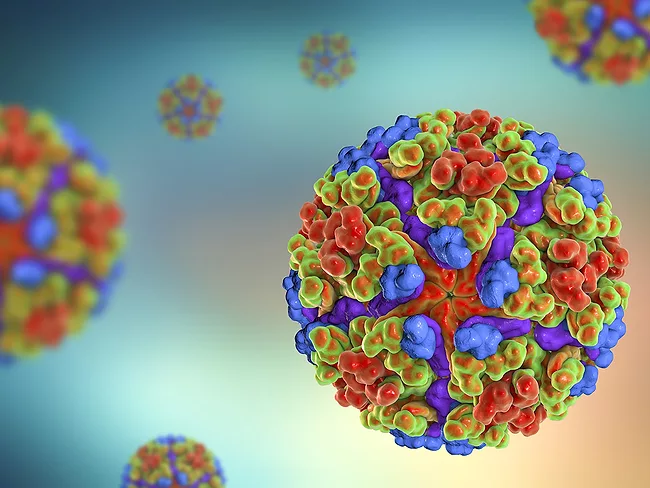
Emergex Vaccines Holding Ltd. has signed a contract with the U.K. Department of Health and Social Care (DHSC) for almost £1.8 million (US$2.2 million) to advance a CD8 T cell-based vaccine candidate against Chikungunya virus (CHIKV).
With Valneva SE’s accelerated approval from the U.S. FDA for chikungunya vaccine Ixchiq, attention turned to the February 2024 meeting of the Advisory Committee on Immunization Practices (ACIP), which will vote on the product. A single-dose, live-attenuated vaccine, Ixchiq is designed to prevent disease caused by the virus in people 18 and older who are at increased risk of exposure to the bug.
About two weeks after chikungunya virus (CHIKV) vaccine contender Bavarian Nordic A/S provided phase III data with its prospect, rival Valneva SE rolled out positive phase III safety findings in adolescents with its single-dose candidate VLA-1553. Results from the Saint-Herblain, France-based company’s first trial in an endemic area with people previously infected with CHIKV showed the product was generally safe and well-tolerated in subjects aged 12-17 years, regardless of previous infection by the mosquito-borne disease, carried mainly by Aedes aegypti and Aedes albopictus. Immunogenicity data from the study are expected in November.
The dent made in Bavarian Nordic A/S’ future revenues after it dropped development of late-stage respiratory syncytial virus (RSV) contender MVA-BN-RSV could be offset by potential sales of its chikungunya virus vaccine, PXVX-0317, if recent phase III immunogenicity data manage to persuade the U.S. FDA that it’s as worthy as Valneva SA’s VLA-1553, the other chikungunya vaccine racing to be first to market.
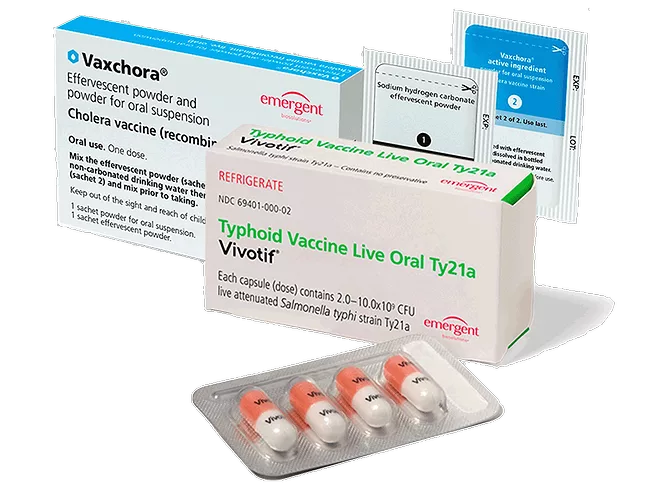
Bavarian Nordic A/S plans to buy two travel vaccines plus a phase III chikungunya vaccine candidate from Emergent Biosolutions Inc. for about $380 million. Emergent will receive a $270 million up-front payment and perhaps as much as $110 million in future milestone payments. The vaccines are Vivotif, for preventing typhoid fever, and Vaxchora, for preventing cholera caused by Vibrio cholerae serogroup O1. Both oral vaccines have U.S. FDA and European approvals.
Twelve months after a single shot of Valneva SE’s chikungunya vaccine, positive antibody persistence was found, threatening a deadly disease that has long resisted treatment. The new data are derived from a study of 363 healthy adult participants that followed them from month 6 after vaccination to month 12. Nearly all, 99%, kept their neutralizing antibody titers for 12 months beyond the seroresponse threshold of 150, which hit the primary endpoint and the antibody level agreed with regulators as endpoint under the accelerated approval pathway.
Emergex Vaccines Holding Ltd. has generated a chikungunya virus (CHIKV) ligandome, the first major milestone in the development of the company's CD8+ T-cell CHIKV adaptive vaccine candidate. Using an immunoproteomics approach, naturally presented MHC Class I-restricted peptides on the surface of a human leukocyte antigen (HLA)-typed cell line infected with CHIKV virus were extracted and identified.
Positive phase III top-line results for Valneva SA’s chikungunya virus vaccine candidate, VLA-1553, show the study met its primary endpoint of inducing neutralizing antibody titers, setting it up for possible accelerated approval.
Specific therapies against a new disease take time to develop. But there are methods that can speed up that development – and in the meantime, there are ways to make do with what’s already in the cupboard.