Watchers of the percolating myasthenia gravis space are waiting eagerly for data from Dianthus Therapeutics Inc.’s phase II Magic study testing DNTH-103, an active C1s inhibitor, compared to placebo in patients with anti-AChR-positive generalized disease.
Cartesian Therapeutics Inc. followed up December’s phase IIb data with more good news regarding Descartes-08, offering 12-month efficacy and safety results that whetted Wall Street’s appetite for the phase III Aurora effort ahead. Milos Miljkovic, chief medical officer, told BioWorld that minimum symptom expression – among the areas where Descartes-08 shone, providing relief for “months and months after the last dose of treatment” – is especially important to patients.
Roivant Sciences Ltd. CEO Matt Cline said the firm’s unit Immunovant Inc. with FcRn blocker batoclimab has established “frankly a new bar” in myasthenia gravis (MG) as the New York-based firm reported top-line results from its phase III study and first data from period 1 of the phase IIb study with the same drug in chronic inflammatory demyelinating polyneuropathy. The data look promising, and Immunovant intends to use the findings to help advance second-generation FcRn prospect IMVT-1402 in both indications. Potentially registrational trials are planned. The U.S. FDA has granted IND clearance.
Yesterday’s first part of this two-part series surveyed bispecific antibodies for immunological and inflammatory (I&I) disease. Apart from bispecifics, Leerink analyst Thomas Smith lately has proven interested in I&I overall, unveiling his “five for 2025” in a January report that listed five indications with “potential for disruption” in the year ahead.
Cyrus Biotechnology Inc. has selected CYR-212, an engineered next-generation reduced-immunogenicity and half-life extended immunoglobulin G (IgG) protease, as a clinical development candidate for chronic IgG-driven autoimmune disease.
Cyrus Biotechnology Inc. has reported data on its engineered IdeS (IgG-degrading enzyme of S. pyogenes) protease for IgG-driven autoimmune disease, showing potent activity on repeat doses in a rabbit redosing model while eliciting no anti-drug antibodies.
During a busy day of dealmaking, Cour Pharmaceutical Development Co. Inc. entered a pact with Roche Holding AG’s Genentech unit to advance tolerogenic nanoparticle treatments for an autoimmune disease indication, garnering up to $940 million in up-front and milestone payments. Cour’s partnership with Genentech is its biggest to date, and the largest deal announced by a biopharma company on Dec. 3. A total of seven deals amounted to a combined single-day deal value of $3.67 billion.
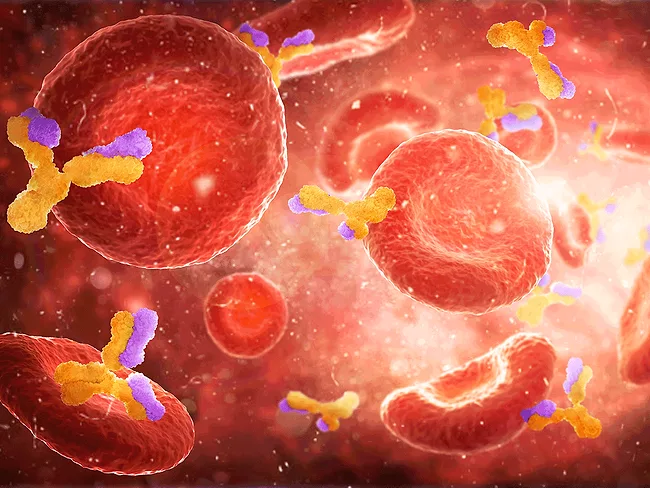
Myasthenia gravis (MG) is an antibody-mediated chronic neuromuscular disorder leading to fluctuating weakness and early muscle fatigue, with limited treatment options available. In MG, such as other autoimmune diseases, the main pathogenic autoantibody involved is the immunoglobulin G (IgG) isotype.
Researchers from Kyverna Therapeutics Inc. presented preclinical data for KYV-101, a first-in-class, fully human autologous anti-CD19 chimeric antigen receptor (CAR) T-cell therapy being developed for the treatment of patients with B-cell-driven neurologic autoimmune diseases, including multiple sclerosis and myasthenia gravis.