Researchers from the Institute of Translational Genomics at Helmholtz Munich have described a genetic overlap between type 2 diabetes (T2D), a disease that is also associated with obesity, and osteoarthritis, a degeneration of the joints that worsens with age and coincides in the factor risk of being overweight. The researchers used genetic data, multiomics and functional analysis of the tissues T2D and osteoarthritis express to identify which genes were associated and correlated with both diseases. They published their results on July 10, 2023, in The American Journal of Human Genetics.
Sensitized nociceptors, such as during inflammation, respond to non-noxious stimuli. The precise molecular mechanisms for sensitization to mechanical stimuli are not well defined. Recent findings have suggested piezo-type mechanosensitive ion channel component 2 (Piezo2) to be part of these mechanisms.
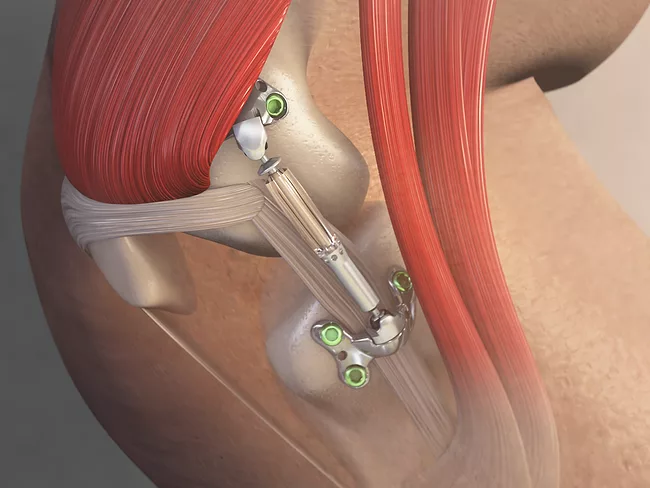
The U.S. FDA has granted de novo authorization to Moximed Inc. for its Misha knee system, a first-of-its-kind implantable shock absorber for people suffering from osteoarthritis (OA) of the knee. The device is intended to relieve pain and improve daily function in patients ineligible for, or not ready to undergo, joint replacement.
Partially blocking a receptor that helps regulate the activity of the inflammatory cytokine molecule interleukin-6 (IL-6) seems to promote tissue regeneration and block degeneration in a model of osteoarthritis. As reported in the March 22, 2023, issue of Science Translational Medicine, the receptor, called glycoprotein 130 (gp130), regulates both positive and negative inflammatory responses that can help regenerate tissue, but also cause degeneration.
Osteoarthritis and its associated cartilage pathology affects 30 million people in the U.S., but no disease-modifying treatments have yet reached the clinic. A recent multicenter trial evaluating the safety and efficacy of a truncated, recombinant human fibroblast growth factor-18 (FGF18) protein analogue (rhFGF18) demonstrated a dose-dependent improvement in cartilage thickness relative to a placebo.
Genascence Corp. has been awarded US$11.6 million over 4 years from the California Institute for Regenerative Medicine (CIRM) to help advance the company's GNSC-001 gene therapy for knee osteoarthritis (OA). The funding will support a phase Ib trial and manufacturing activities.
In a blow to Aussie regenerative medicine company Regeneus Ltd., Japan’s Kyocera Corp. has pulled out of a licensing deal for Regeneus’ lead mesenchymal stem cell (MSC) therapy, Progenza, for osteoarthritis of the knee for the Japan market.
Orthogen AG received an investigational device exemption (IDE) from the U.S. FDA for its Orthogen technology device. This approval allows the company to start a pivotal trial on the device, used for treating patients with mild stage (II) to severe stage (IV) knee osteoarthritis. The trial will compare improvements in pain levels and function using standalone glucocorticoid injection, the current standard of care, against the Orthogen device.
Osteoarthritis (OA) is the most common joint disease and a leading cause of disability worldwide. Its treatment is still elusive due to difficulties with early diagnoses and patient risk identification. This leads to a need for reliable biomarkers for OA prognosis or to identify patients at risk of progression.
In a blow to Aussie regenerative medicine company Regeneus Ltd., Japan’s Kyocera Corp. has pulled out of a licensing deal for Regeneus’ lead mesenchymal stem cell (MSC) therapy, Progenza, for osteoarthritis of the knee for the Japan market. Osteoarthritis of the knee is the first indication for Progenza, an allogeneic off-the-shelf adipose-derived MSC therapy.