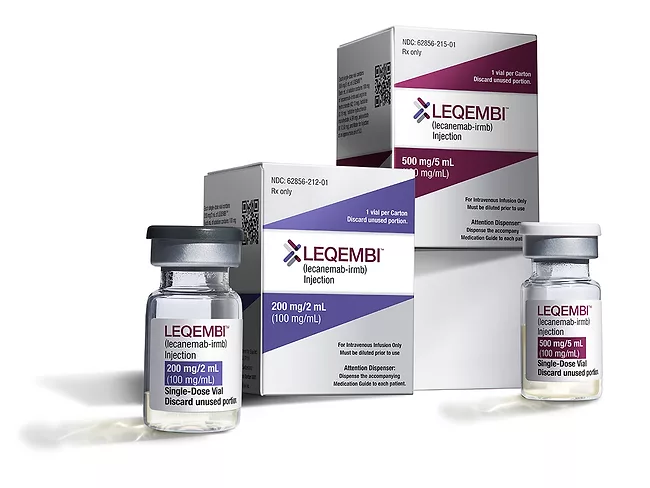
The EMA’s Committee for Medicinal Products for Human Use (CHMP) recommended approval of 14 drugs and the extension of the label of 11 others at its July meeting, but, inevitably, it was the decision to turn down the Alzheimer’s disease therapy Leqembi (lecanemab) that stirred the greatest reaction.
Parvus Therapeutics Inc.'s PVT-201 has received orphan drug status from the U.S. FDA for the treatment of primary biliary cholangitis (PBC), an autoimmune disease of the liver.
Ipsen SA, of Paris, struck a $461 million deal with Day One Biopharmaceuticals Inc. for ex-U.S. rights to tovorafenib, an oral drug for pediatric brain tumor that gained U.S. FDA accelerated approval April 23 as Ojemda (tovorafenib).
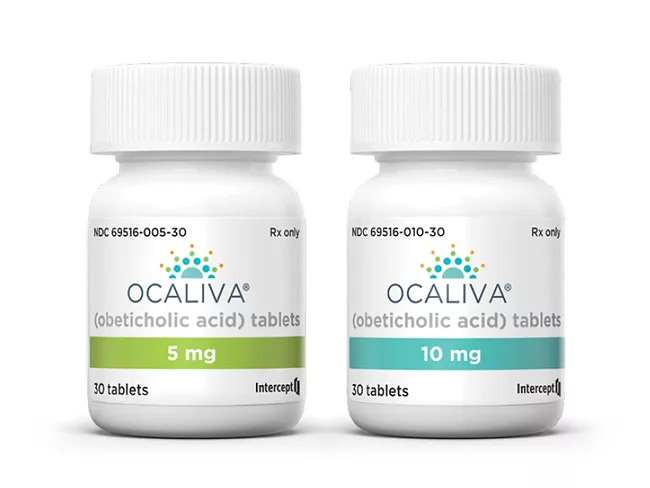
Those affected by primary biliary cholangitis (PBC) are fighting back against the recommendation by the EMA that the marketing authorization for Ocaliva (obeticholic acid), a second-line treatment used by 7,000 patients in Europe, be withdrawn. Earlier today, July 25, patients and their supporters staged a protest outside the European Commission building in Brussels to oppose EMA’s position that Ocaliva’s conditional license should be revoked.
Two drugs were pushed back by the EMA last week, with a recommendation that Ocaliva, currently the only second line standard of care for treating primary biliary cholangitis, be withdrawn from the market, and a refusal to grant conditional approval for masitinib in the treatment of amyotrophic lateral sclerosis.
Optimism on Wall Street proved wise and shares of Mirum Pharmaceuticals Inc. (NASDAQ:MIRM) rose accordingly to close June 17 at $33, up $7.08, or 27.3%, as the firm disclosed interim results from two phase IIb studies evaluating volixibat, an oral ileal bile acid transporter (IBAT) inhibitor, in patients with primary biliary cholangitis (PBC) and primary sclerosing cholangitis (PSC). The drug proved its mettle in both liver biliary tract-stenosing indications, with no new safety signals turning up, Foster City, Calif.-based Mirum said.
Ipsen SA picked up U.S. FDA accelerated approval for its Genfit SA-licensed elafibranor, making it the first new drug in eight years for treating primary biliary cholangitis, though a potential competitor lurks just around the corner.
After reviewing data from its phase II trial of farnesoid X receptor agonist ASC-42 in primary biliary cholangitis, Ascletis Pharma Inc. said it was quitting development of the molecule in all indications.
After reviewing data from its phase II trial of farnesoid X receptor agonist ASC-42 in primary biliary cholangitis, Ascletis Pharma Inc. said it was quitting development of the molecule in all indications.
Seeking to rejuvenate itself after recent disappointments, Gilead Sciences Inc. proposes to bolster its liver portfolio by taking over Cymabay Therapeutics Inc. for $32.50 per share in cash, a total equity value of $4.3 billion. The arrangement brings aboard seladelpar for second-line primary biliary cholangitis (PBC) including pruritis (itch), which is under priority review by the U.S. FDA, with a decision due this year.