Drug and device makers that offer health care professionals opportunities to earn continuing medical education (CME) points have a fine line to walk when sponsoring those programs, but a new advisory opinion by the Office of Inspector General at the Department of Health and Human Services seems to draw a very clear line around those programs.
Physician-owned distributorships (PODs) were the subject of concern by medical device makers and members of Congress as long as a decade ago, and recent events would seem to justify some of those fears. The U.S. Department of Justice (DOJ) announced July 1 that two owners of a POD have agreed to pay $1 million to settle claims that they paid kickbacks to other doctors to use medical devices supplied by the POD, the very kind of violation of the Anti-Kickback Statute that undergirded some of the earlier concerns about these business arrangements.
The cost of providing COVID-19 vaccines and therapies for a possible fall surge in the U.S. is coming at the expense of testing and personal protection equipment. While other countries are planning for the expected surge by placing their orders for vaccines and therapies, “we are starting to lose our place in line,” White House Coronavirus Response Coordinator Ashish Jha said during a June 9 media briefing.
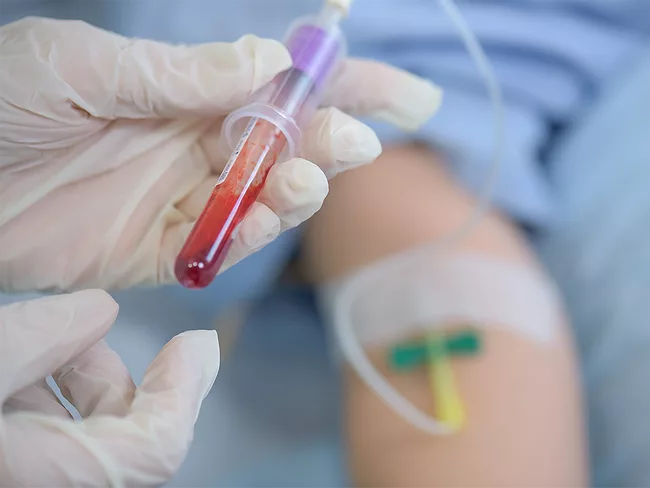
Clinical laboratories and hospitals have routine commercial interactions, and most of those are entirely legal, but this is not always the case. The Office of Inspector General (OIG) at the U.S. Department of Health and Human Services recently decreed that an arrangement in which the hospital pays the lab for blood specimen collection handling services, or a “draw fee,” would not be permissible under the Anti-Kickback Statute (AKS), reinforcing an existing understanding that such activities present a significant legal hazard for operators of clinical labs.
The grantmaking process at the U.S. National Institutes of Health has been under scrutiny for several years for several reasons, and a new report by the Office of Inspector General (OIG) indicates that the NIH’s National Cancer Institute (NCI) has generally administered its grants properly. However, the report also indicates that some grantees were tardy in filing their final reports on grant performance, a problem that NCI has vowed to correct with tighter supervision of those grants.
Genetic testing for health care purposes took a hit with the onset of the COVID-19 pandemic, but there are concerns about the volume of these tests in the four years before the onset of the pandemic. The U.S. Office of Inspector General (OIG) said recently that the data suggest possible fraud and abuse of the Medicare program, and that the picture suggests a need for a more concerted regulatory effort by the CMS.
The U.S. Office of Inspector General (OIG) said a review of claims for implant of neurostimulation devices indicates that many of these claims lack the data to ensure that the devices were appropriately implanted.
Physicians occasionally go over the line where Medicare services are concerned, but the U.S. Department of Justice announced Sept. 15 that a cardiologist in Orlando, Fla., went farther than the ordinary illicit billing.
As cyberattacks on U.S. hospitals continue to increase with health care’s growing reliance on technology, a new report from the U.S. Office of Inspector General (OIG) has flagged Medicare’s requirements for being silent on the cybersecurity of networked medical devices. The OIG’s study found hospitals are not required to identify networked device cybersecurity in their emergency preparedness risk assessments, and as a result, they don’t include this information “very often.”
The controversy over the use of ethylene oxide (EtO) is back in play, thanks to a May 5 letter from the Office of Inspector General at the Environmental Protection Agency to the EPA. The letter recommends that the agency revisit its work on determining the status of EtO based on new data, data that may lead to more restricted use of EtO to sterilize medical devices.