Elixir Medical Corp. reported that the Bioadaptor randomized controlled trial which compared its Dynamx coronary drug-eluting bioadaptor system to Dublin-based Medtronic plc’s Resolute Onyx drug-eluting stent (DES) in de novo native coronary arteries, met its primary endpoint of target lesion failure (TLF) non-inferiority at 12 months. The results were presented at a late-breaking clinical session during the EuroPCR 2023 conference in Paris.
An increasing number of European med-tech companies are first seeking regulatory approval from the U.S. FDA because of the growing backlog and frustrations with requirements under the new regulatory framework of the EU Medical Device Regulation (MDR), which has been described as “not working.”
Companies such asMedtronic plc have become risk averse and are unlikely to takeover early stage medtech firms, Ori Hadomi, vice president strategic initiatives & partnerships, at Medtronic, told delegates at the LSX World Congress in London. Hadomi, who joined Dublin-based Medtronic after his firm Mazor Robotics Inc. was taken over by the company in a $1.64 billion deal in 2018, told early-stage startups “don’t waste their time” in approaching the company.
Med-tech companies are facing a new reality of high interest rates, inflation, bank failures, and geopolitical turmoil that are impacting financing and M&A opportunities. To secure finance and attract partnership deals they must keep their product simple, focus on proof of concept and ensure that it has quality, delegates at the LSX World Congress in London heard during a panel presentation.
For several years, the U.S. CMS has been musing a coverage policy specifically for breakthrough medical devices, and the absence of activity on this front has once again drawn the attention of Congress. Rep. Cathy McMorris Rodgers (R-Wash.), said a representative of CMS had recently appeared before a House subcommittee for the first time in four years, and that the subcommittee is prepared to act on breakthrough devices coverage if CMS doesn’t produce a final rule this year.
Regulatory harmonization is perhaps highest on the regulatory wish list of medical device manufacturers, but the FDA’s device center has tamped down expectations of a medical device single review program. Jeff Shuren, director of the Center for Devices and Radiological Health (CDRH) said the agency will release a strategic plan later this year for regulatory harmonization, but declined to offer any details other than to state that differences in risk classification schema are not as significant a source of drag on harmonization as may commonly be believed.
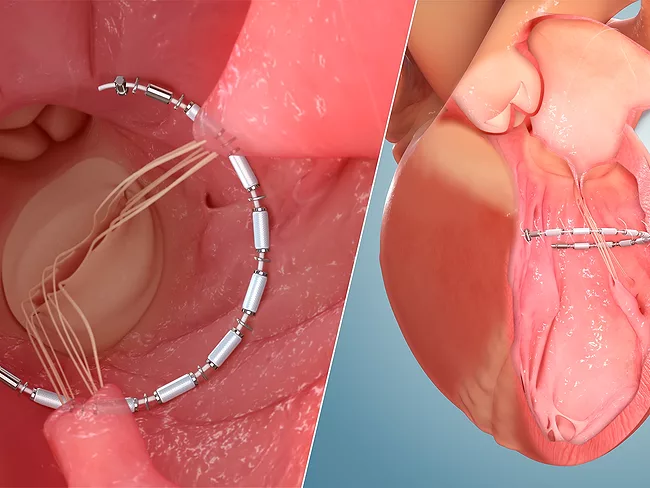
Ancora Heart Inc. reported 12-month data showing its Accucinch system significantly improves outcomes in heart failure (HF) patients, including positive changes in cardiac structure and function. The results, presented at the Technology and Heart Failure Therapeutics conference (THT 2023) in Boston, were simultaneously published in the Journal of Cardiac Failure.
As companies increasingly use artificial intelligence (AI) in medical devices and applications to help treat and diagnose patients, innovators must be careful of excluding large sections of the population in their algorithms and in their data gathering process, delegates heard at the Medtech Futures conference in Cambridge, U.K.
The question of the U.S. FDA’s authority to regulate lab-developed tests (LDTs) has been percolating for more than a decade, but the recent failure of Congress to pass legislation granting the agency explicit authority to do so is seen in some quarters as a missed opportunity. The FDA’s Elizabeth Hillebrenner said that while the agency would prefer to regulate LDTs under new statutory authorities, the agency sees a public health problem with the current state of affairs, and thus, “we are moving forward with rulemaking.”
Surgical aortic valve replacement (SAVR) devices are widely believed to be considerably more durable than transcatheter aortic valve replacement (TAVR) devices, but five-year data for Medtronic plc’s Corevalve Evolut, presented this week at the Cardiovascular Research Technologies Conference in Washington, seem to suggest that TAVR devices are closing that gap.