As an ever-increasing share of companies seek signs of efficacy for investigational drugs in early stage studies, single-arm trials to confirm those effects and support marketing applications are also becoming more common. Now, China’s Center for Drug Evaluation has released draft guidelines on how single-arm trials can be regulated, used to support the new drug application for cancer drugs, and accelerate oncology drug development.
As an ever-increasing share of companies seek signs of efficacy for investigational drugs in early stage studies, single-arm trials to confirm those effects and support marketing applications are also becoming more common. Now, China’s Center for Drug Evaluation has released draft guidelines on how single-arm trials can be regulated, used to support the new drug application for cancer drugs, and accelerate oncology drug development.
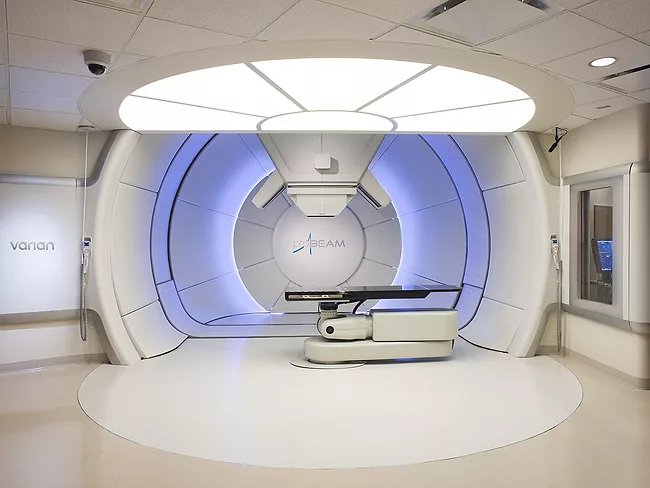
Varian Medical Systems Inc. received an investigational device exemption (IDE) from the U.S. FDA to start a clinical trial evaluating its new radiation therapy. The experimental treatment, named Flash, delivers radiation at ultra-high dose rates, typically in less than one second. The Siemens Healthineers AG company said the therapy is capable of being over 100 times faster than conventional radiation therapy.
Medtronic plc has received U.S. FDA 510(k) clearance and breakthrough device designation for its Ligapass 2.0 ligament augmentation system in spine surgery. The surgical treatment is designed to reduce the reoperation rate for proximal junctional kyphosis (PJK), a complication of adult spinal deformity surgery which disrupts spinal ligaments. Ligament augmentation provides strength to the upper instrumented vertebra and adjacent segments while also reducing junctional stress at those levels.
U.K.’s Angle plc has become the first company to receive a U.S. FDA product clearance for harvesting intact cancer cells for analysis. Angle reported it scored FDA clearance for its Parsortix system for the capture and harvest of circulating tumor cells (CTCs) from metastatic breast cancer patient blood. Shares in the AIM-listed company soared by more than 50% following the news.
Organ transplant diagnostic company Caredx Inc. has received CE marking for its Alloseq HCT chimerism testing kit and Alloseq HCT interpretation software for use in patients who have received hematopoietic cell transplantation (HCT). The NGS-based solution is used to monitor engraftment and evaluate the success of a hematopoietic stem cell transplant by measuring the relative ratio of the recipient and the donor cell population post-transplantation.
As the implementation date of In Vitro Diagnostic Regulation (IVDR) looms on May 26, 2022, significant uncertainty remains around the new regulatory system. Under Directive 98/79/EC around 10% of all IVDs placed on the market need notified body involvement, whereas under the IVDR this will rise to 80%-90%. Notified body shortages continue to be a major challenge for industry, with many manufacturers yet to receive certification. The situation is expected to be particularly problematic for SME manufacturers who will see most of their products blocked on the market if they don’t receive validation in time.
The ultra-rare skin disease X-linked hypohidrotic ectodermal dysplasia (XLHED) can be a heavy burden for children, affecting structures in the skin including sweat glands, respiratory glands, and hair as well as teeth. Though lacking a specific treatment to date, a pivotal clinical trial planned by the Geneva-based nonprofit Esperare Foundation and Pierre Fabre SA could now help bring one about.
DUBLIN – The EMA has rejected Biogen Inc.’s application for European Union approval of Aduhelm (aducanumab), its controversial Alzheimer’s disease drug. Its human medicines committee (CHMP) issued a negative opinion on Biogen’s dossier during its December meeting this week, stating that the data from the key studies submitted in support of the application “were conflicting and did not show overall that Aduhelm was effective at treating adults with early stage Alzheimer’s disease.”
A new law in China will grant physicians the right to use off-label drugs, giving clearer definition to a gray area and lending hope that it could benefit pharma companies.