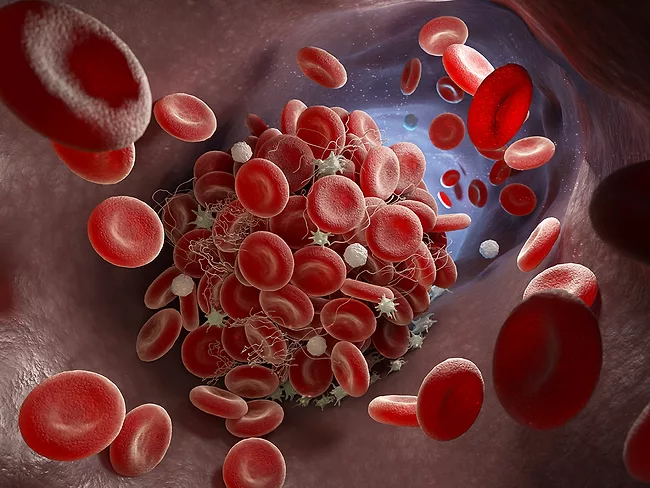
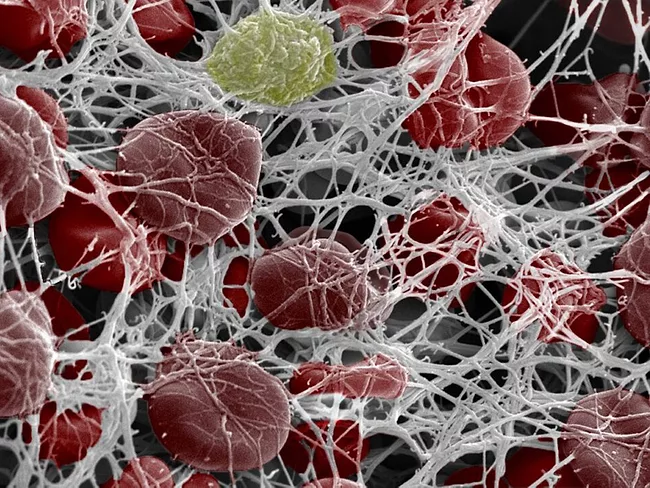
Under pathologic conditions such as vascular injury or atherosclerosis, the hyperactivation of platelets may lead to occlusive thrombus formation, myocardial infarction or stroke. Although there are several targets for clot prevention validated clinically, these strategies may present bleeding risk as a limitation. Researchers from the University of Michigan have reported on CS-014, a histone deacetylase (HDAC) inhibitor aimed to reduce clot formation without risk of bleeding.
Protease form factor Xia (FXIa) is a therapeutic target for thrombosis prevention due to its well-known contribution to VTE and ischemic stroke in humans. Researchers from Janssen Pharmaceutica NV presented an antithrombotic target FXIa inhibitor obtained through a non-classical interactions strategy to improve the pharmacokinetic and pharmacological activity for the treatment of thrombosis. In the series, the potency was increased by using water-mediated hydrogen bonds to reduce polar hydrogen bond donors and using methyl to displace high-energy waters.
Antibodies against β-2-glycoprotein I (β-2-GPI) play a crucial role in thrombus formation in conditions such as antiphospholipid syndrome (APS). Despite the efficacy of recombinant tissue plasminogen activator (rtPA) in patients with APS, this therapy presents significant limitations, including safety concerns.
Could a bioactive peptide secreted in the saliva of ticks offer a useful therapy for people who have experienced intracerebral hemorrhage (ICH)? That’s the question Bioxodes SA has set out to answer, and the company is about to move its first-in-class drug candidate, Ir-CPI, which has dual anti-thrombotic and anti-inflammatory effects, into a phase IIa trial in patients with ICH.
Aidoc Medical Ltd. has just presented a study using its AI tool in the Netherlands Cancers Institute for detection and worklist prioritization to diagnose incidental pulmonary embolism at routine contrast-enhanced chest CT. The results published in Radiology: Cardiothoracic Imaging show a reduction by 15% of the missed rate of incidental pulmonary embolism and by more than 98% of the notification time for positive incidental pulmonary embolism. “Our AI system gives a response related to the interpretation, quantification and workflow management,” Elad Walach, co-founder and CEO of Aidoc Medical, told BioWorld. Due to the growing volume of radiology examinations, particularly in thoracic imaging, and the lack of supply radiologists, the delay between the CT examinations and their interpretation has increased significantly in many practices. This is particularly true for pulmonary embolism (PE).
Blood clots can lead to life-threatening conditions such as deep vein thrombosis, heart attack, pulmonary embolism and stroke. Blood thinners are essential in the treatment and prevention of blood clots but carry a significant risk of bleeding as they target enzymes essential for blood clotting. Researchers at the University of British Columbia (UBC) and the University of Michigan have developed a new class of blood thinners that can specifically target clots without increasing the risk of bleeding.
Blood clots can lead to life-threatening conditions such as deep vein thrombosis, heart attack, pulmonary embolism and stroke. Blood thinners are essential in the treatment and prevention of blood clots but carry a significant risk of bleeding as they target enzymes essential for blood clotting. Researchers at the University of British Columbia (UBC) and the University of Michigan have developed a new class of blood thinners that can specifically target clots without increasing the risk of bleeding.
Current antithrombotic therapies for the prevention and management of cardiovascular disorders such as thrombosis, myocardial infarction (MI) or stroke present an associated risk of bleeding. The essential events leading to the formation of hemostatic clots are platelet activation and fibrin formation. When activated, the prostacyclin (IP) receptor prevents platelet aggregation in arteries and veins after injury.
Hemab Therapeutics ApS raised $135 million in a series B funding round to continue its broad effort to build a company focused on developing prophylactic therapies for neglected bleeding and thrombotic disorders. The new cash brings its total equity raise to $190 million.