Tyra Biosciences Inc. has disclosed new indazole compounds acting as fibroblast growth factor receptor (FGFR) inhibitors. They are reported to be useful for the treatment of cancer and developmental disorders.
Hutchmed (China) Ltd. has moved closer to establishing China’s first domestically developed FGFR-targeted therapy for intrahepatic cholangiocarcinoma, after the National Medical Products Administration (NMPA) accepted its NDA for fanregratinib (HMPL-453) and granted the drug priority review.
Tyra Biosciences Inc. recently presented the design and preclinical characterization of TYRA-200, an oral small-molecule FGFR1/2/3 tyrosine kinase inhibitor (TKI) that shows high potency against all common mutant forms of FGFR2 and holds potential for the treatment of cancers driven by FGFR2 alterations.
Cogent Biosciences Inc. has described compounds acting as fibroblast growth factor receptor (FGFR) inhibitors reported to be useful for the treatment of achondroplasia, cancer, craniosynostosis, Alzheimer’s disease, fibrosis, pulmonary fibrosis, systemic scleroderma (systemic sclerosis) and thanatophoric dysplasia, among others.
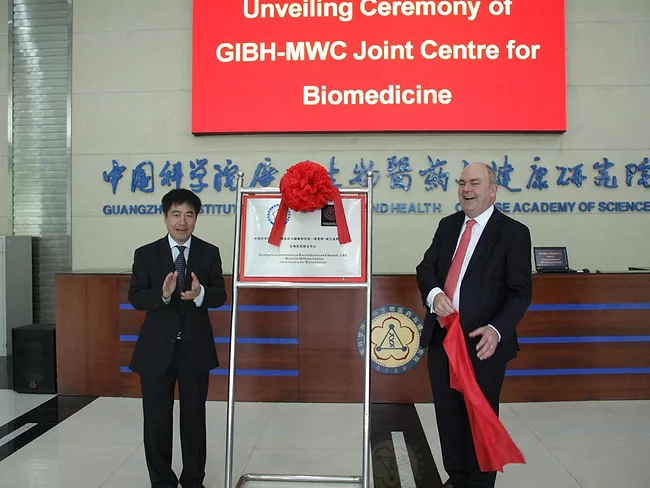
University of Auckland senior research fellow Jeff Smaill first visited China in 2012 as part of a team of 15 scientists from the Maurice Wilkins Center, one of New Zealand’s centers of excellence, to meet with scientists at the Guangzhou Institute of Medicine and Health to find partners to collaborate on drug development projects. The scientists started collaborating that year, and the first project is already in phase I trials in China. It was a joint discovery and development partnership from the beginning, he said.
University of Auckland senior research fellow Jeff Smaill first visited China in 2012 as part of a team of 15 scientists from the Maurice Wilkins Center, one of New Zealand’s centers of excellence, to meet with scientists at the Guangzhou Institute of Medicine and Health to find partners to collaborate on drug development projects. The scientists started collaborating that year, and the first project is already in phase I trials in China. It was a joint discovery and development partnership from the beginning, he said.
Cogent Biosciences Inc. has disclosed compounds acting as fibroblast growth factor receptor (FGFR) inhibitors reported to be useful for the treatment of achondroplasia, cancer, craniosynostosis, Alzheimer's disease, fibrosis, pulmonary fibrosis, systemic scleroderma (systemic sclerosis) and thanatophoric dysplasia, among others.
Shouyao Holdings (Beijing) Co. Ltd. has patented inhibitors of fibroblast growth factor receptor (FGFR), particularly FGFR2 and/or FGFR3, described as potentially useful for the treatment of cancer.
Lyme disease, caused by the bacterium Borrelia burgdorferi, is the leading tick-borne infection. Between 10% and 35% of patients show post-antibiotic treatment Lyme disease syndrome, with symptoms including fatigue, cognitive issues, memory loss, neuropathy, joint pain, musculoskeletal pain, sleep issues, depression and others.
Jiangsu Hansoh Pharmaceutical Group Co. Ltd. and Shanghai Hansoh Biomedical Co. Ltd. have synthesized fibroblast growth factor receptor (FGFR) inhibitors reported to be useful for the treatment of cancer and achondroplasia.