One-year data from the Notion-2 trial, which compared transcatheter aortic valve implantation (TAVI) with surgical aortic valve replacement (SAVR) in younger low-risk patients with severe tricuspid or bicuspid aortic valve stenosis, showed little difference in clinical outcomes between the two procedures. The results were presented at the recent EuroPCR conference in Paris.
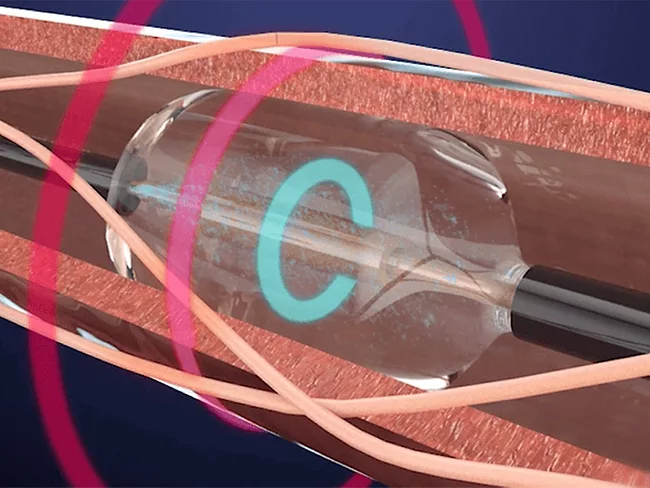
There should be no more excuses to the adoption of renal denervation (RDN) as a treatment for hypertension given the recent approval by the U.S. FDA of two technologies and a range of guidelines recommending the therapy, delegates heard at the EuroPCR conference in Paris. In a discussion on the technology, panelists argued that on the back of solid evidence, RDN should be offered as a treatment given that the therapy is a safe method to reduce high blood pressure.
Data from the transcatheter valve and vessel trial showed that percutaneous interventions in patients with aortic stenosis and coronary disease resulted in significantly lower mortality rates than those receiving surgical treatment.
Renal denervation (RDN) was described as the “comeback kid” at the recent EuroPCR conference in Paris where participants argued that following the success seen in several sham-controlled trials, there is now no doubt about the safety and the efficacy of the technology as a treatment for hypertension. The device-based procedure should now be used as a therapy option to reduce high blood pressure in patients, delegates heard.
Robocath SAS is about to embark on a limited market release of its robotic platform, the R-One+, which will not only make performing coronary angioplasties easier and safer but will protect cardiologists from radiation, CEO Lucien Goffart told BioWorld in an interview. However, the launch comes on the heels of a decision by Siemens Healthineers Inc. to discontinue its robotic-assisted endovascular cardiology business as it did not meet the company’s “initial expectations.”
Among the many companies presenting data at the EuroPCR conference in Paris, several late breaking trials from heavy hitters Medtronic plc, Royal Phillips NV and Edwards Lifesciences Corp. stood out.
GE Healthcare Technologies Inc. launched a 3Dstent imaging tool at the EuroPCR conference in Paris which it said will allow a new perspective on stent visualization, helping doctors do a better job. The company warned however that it is still in the process of validating the technology, which complements existing technologies and provides intraprocedural 3D and multi-slice images of stent but has certain limitations.
Heartpoint Global Inc. will begin human trials of its Intellistent device shortly and expects to make submission to the U.S. FDA in 2024, Seth Bogner, its chairman and CEO told BioWorld in an interview on the sidelines of the EuroPCR conference in Paris. Intellistent is a multi-lumen stent system for interventional adjustment of pulmonary blood flow in congenital heart disease. It is a minimally invasive device that will meet an unmet need in pulmonary artery hypertension caused by congenital heart disease, said Bogner.
Elixir Medical Corp. reported that the Bioadaptor randomized controlled trial which compared its Dynamx coronary drug-eluting bioadaptor system to Dublin-based Medtronic plc’s Resolute Onyx drug-eluting stent (DES) in de novo native coronary arteries, met its primary endpoint of target lesion failure (TLF) non-inferiority at 12 months. The results were presented at a late-breaking clinical session during the EuroPCR 2023 conference in Paris.
Abbott Laboratories Inc. reported late-breaking data from the Bright study which showed that its Triclip transcatheter edge-to-edge repair (TEER) system reduced tricuspid regurgitation and improved the quality of life of patients with leaky tricuspid valves. The results from the largest real-world dataset were presented, for the first time, at the EuroPCR 2023 conference in Paris.