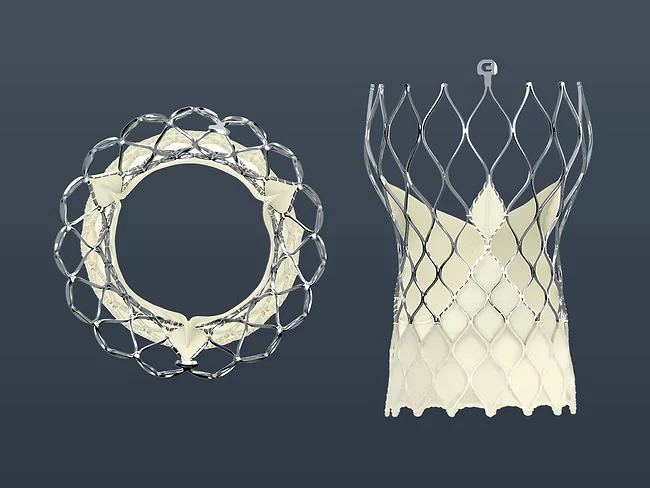
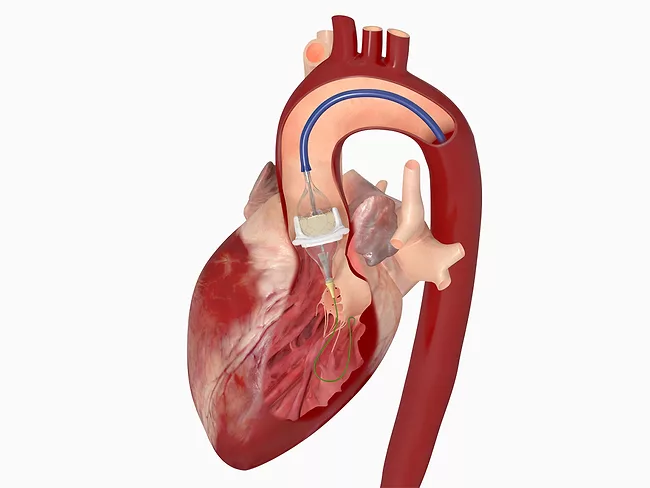
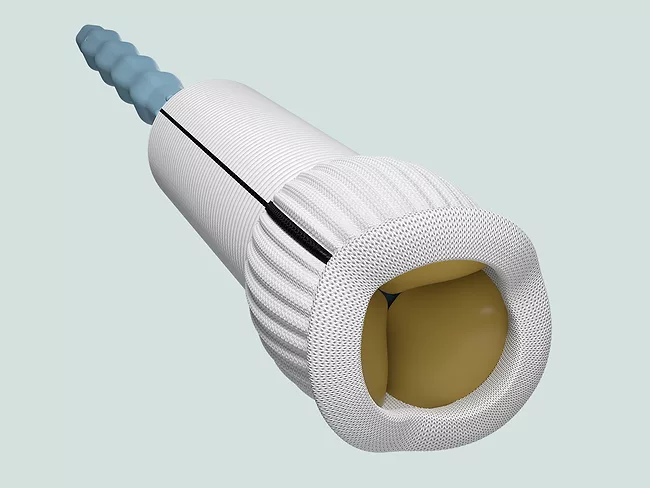
The history of TAVR devices is evolutionary as much as it is revolutionary, or that is at least the take-away from an Oct. 15 virtual session comparing the Acurate Neo device by Boston Scientific Corp., of Marlborough, Mass., with the Corevalve Evolut R by Dublin-based Medtronic plc.
Medtronic plc has kicked off two clinical trials of its Evolut transcatheter aortic valve replacement (TAVR) system. One study will pit the self-expanding Evolut Pro and Pro+TAVR systems against Edwards Lifesciences Corp.’s balloon-expandable Sapien 3 and Sapien 3 Ultra transcatheter heart valves in small annulus patients.
Edwards Lifesciences Corp. reported better-than-expected results when it released its second quarter earnings late July 23, with revenue down 15% to $924 million, from $1.1 billion in the same period of 2019. The results beat Wall Street consensus of $797.5 million, and reflected an uptick in surgical procedures that had been delayed by the COVID-19 pandemic. The Irvine, Calif.-based company sustained a net loss of $121.9 million, or $0.20 per share, based on generally accepted accounting principles (GAAP), a sharp drop from $242.3 million, or $0.38 per share, in the same quarter last year. However, adjusted earnings looked brighter at $0.34 per share.
Edwards Lifesciences Corp. has scored an approval from the U.S. FDA for the Konect Resilia aortic valved conduit, a ready-to-implant solution for bio-Bentall procedures.
Ongoing litigation between rivals Edwards Lifesciences Corp. and Abbott Laboratories is over, with the two settling all outstanding patent disputes in cases related to transcatheter mitral and tricuspid repair products. Details of the settlement remain confidential.
The U.S. Centers for Medicare and Medicaid Services (CMS) posted the much-anticipated draft do-over of the mitral valve repair device coverage memo, and in the process renamed the policy the mitral valve transcatheter edge-to-edge repair (TEER) national coverage memo.
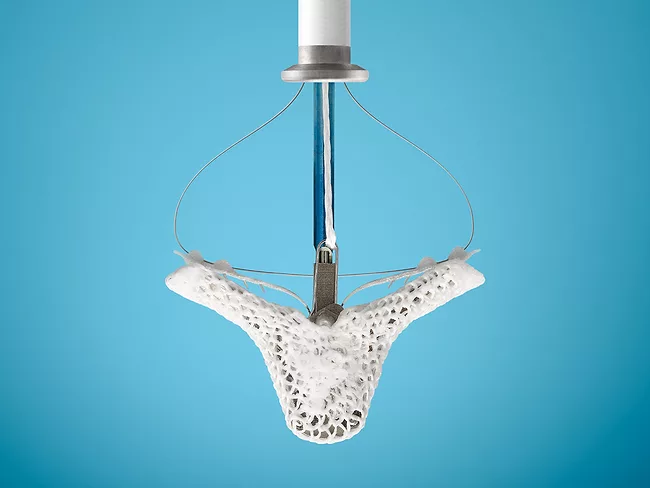
Protaryx Medical has picked up $8.3 million to develop its device for precision transseptal access to the left atrium for use during structural heart and catheter ablation procedures. The funding includes nondilutive grants and a seed round totaling $3.2 million, as well as the recently closed $5.1 million series A financing led by Ajax Health, with participation from returning investor University of Maryland (UM) Ventures.
Medical science continues to define the relative risks of progressively smaller patient subsets across the disease spectrum, but this is particularly true of late in connection with aortic stenosis (AS).
Edwards Lifesciences Corp. has gained a CE mark for its Pascal transcatheter valve repair system to treat tricuspid regurgitation (TR). It was previously approved for mitral regurgitation treatment. Due to the pandemic, Edwards has paused new enrollments in its ongoing mitral and tricuspid pivotal clinical trials.
Physicians who perform a variety of device implant procedures face a difficult choice in determining whether a patient should be treated. A new article in the Journal of the American College of Cardiology (JACC) recommends that patients who ordinarily would be candidates for surgical aortic valve replacement (SAVR) might instead be referred for the transcatheter alternative.