Two recent trials in cardiovascular disease took critical steps toward addressing ongoing and deadly disparities in cardiac care by focusing entirely on women.
The first year of data from the TRISCEND II study of the Evoque tricuspid valve by Edwards Lifesciences Corp. confirm the notion that reduced regurgitation has a big impact on patient well-being. While one-year data support the device’s safety, cardiovascular mortality at one year does not seem to decisively favor the device over medical management.
The ACURATE study of the Accurate neo2 TAVR device by Boston Scientific Corp., failed to demonstrate the device is non-inferior to established devices, but the COVID-19 pandemic threw up some roadblocks.
Some studies suggest a need for cardiologists to rethink their approach to device implant. However, the TAVR UNLOAD study failed to demonstrate a statistically significant difference between device implant and medical management for patients with aortic stenosis and low left ventricular ejection fraction.
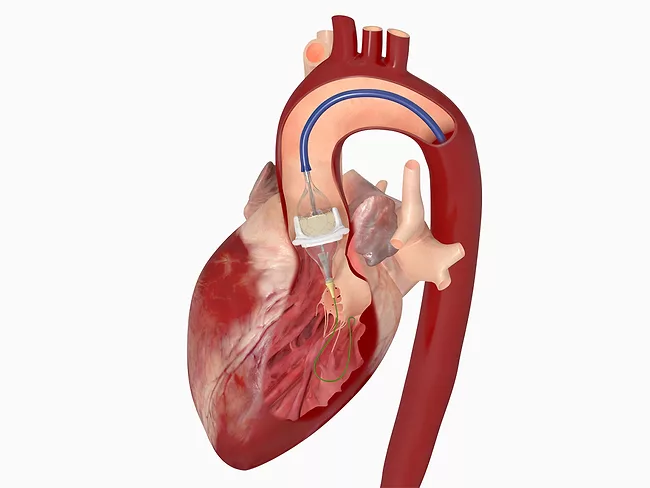
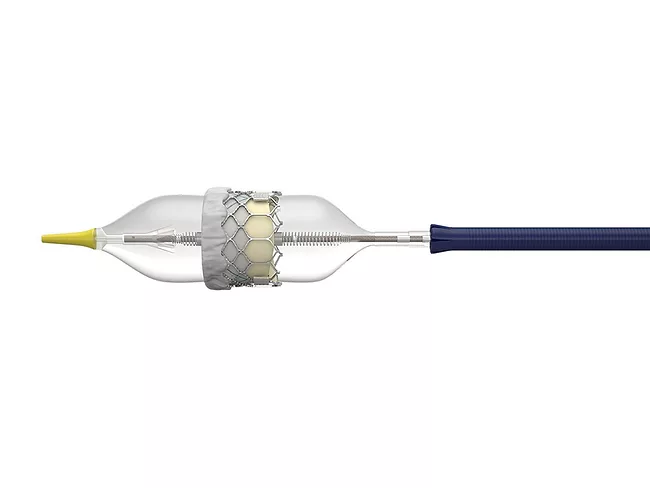
Transcatheter aortic valve replacement (TAVR) devices continue to make a splash in the world of medical technology, with the Sapien 3 by Edwards Lifesciences Corp. leading the way. Results of the EARLY TAVR study strongly suggest a need for implant in asymptomatic patients with severe aortic stenosis, a development that should help sustain and possibly increase sales of these devices for the next few years.
This is a very exciting time for med-tech in Europe despite companies facing regulatory and funding challenges, Todd Brinton, corporate vice president, advanced technology, and chief scientific officer at Edwards Lifesciences Corp. told BioWorld.
In the first study to compare transcatheter aortic valve replacement or implantation to surgical aortic valve replacement exclusively in women, Edwards Lifescience Corp.’s Sapien 3 and Sapien 3 Ultra valves provided better outcomes.
Boston Scientific Corp. obtained a CE mark for its latest self-expanding transcatheter aortic valve replacement technology, the Acurate Prime, opening up a new access point for increased sales and profitability in its structural heart division this year.
Andera Partners involvement in a string of recent deals in the cardiovascular space demonstrates the ongoing appetite for devices to treat heart diseases, Olivier Litzka, a partner at Andera Partners told BioWorld.
Edwards Lifesciences Corp. continued its recent acquisition streak with its buy of JC Medical Inc., a subsidiary of Genesis Medtech International. The sale included the intellectual property and commercial rights for the J-Valve system, a transcatheter aortic valve replacement for the treatment of severe aortic regurgitation.