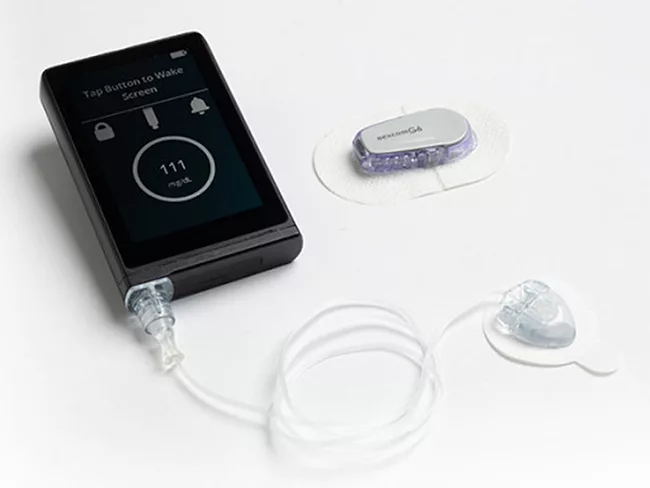
Medtronic plc agreed to acquire Eoflow Co. Ltd., the manufacturer of Eopatch, a tubeless, wearable and fully disposable insulin delivery service, for $738 million. The deal, which is expected to provide a significant boost to Medtronic’s beleaguered diabetes unit, is slated to close in the second half of 2023. The deal announcement coincided with Medtronic’s release of its fourth quarter results for fiscal 2023.
Beta Bionics Inc. received U.S. FDA clearance for its Ilet Bionic Pancreas, an automated insulin-delivery (AID) system that calculates 100% of insulin doses without requiring carb counting or manual boluses. The system—a pump plus dosing decision software—is indicated for people aged six years and up with type 1 diabetes.
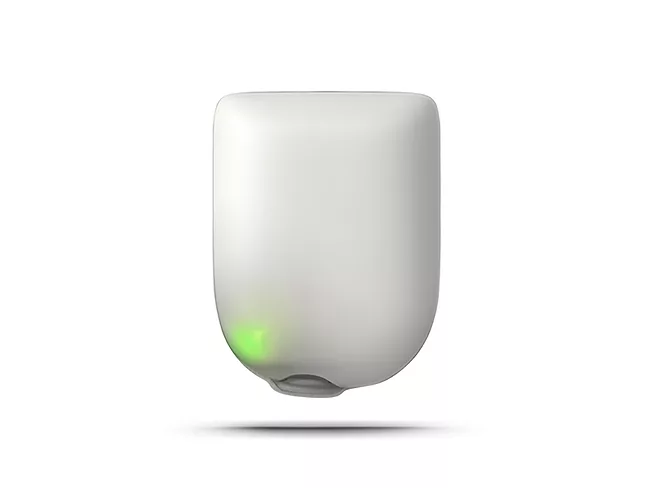
Insulet Corp. has taken the lead in the race to bring insulin delivery systems to individuals with type 2 diabetes with U.S. FDA clearance of its Omnipod Go device. The delivery system is adapted for use by adults who use once-a-day basal insulin. The company plans to roll out Go in 2024.
Abbott Laboratories Inc. landed U.S. FDA clearance for its Freestyle Libre 3 integrated continuous glucose monitoring system (CGM)’s reader device a bit earlier than expected. With the regulatory greenlight for the durable medical equipment component received, the company is now pursuing coverage by the CMS for the entire Freestyle Libre 3 system. The system’s sensor received FDA clearance in May 2022.
While still pending clearance in the U.S., Medtronic plc’s Minimed 780G advanced hybrid closed loop (AHCL) system continues to post strong results in clinical trials. Results of two studies presented at the 2023 Advanced Technologies & Treatments for Diabetes Conference in Berlin on Feb. 27 demonstrated that patients with type 1 diabetes (T1D) who used the device for one year maintained a 26.7% increase in time in range for adults and a 14% increase in time in range for children aged 7 to 17 compared to their baseline using multiple daily injections with a continuous glucose monitor (CGM).
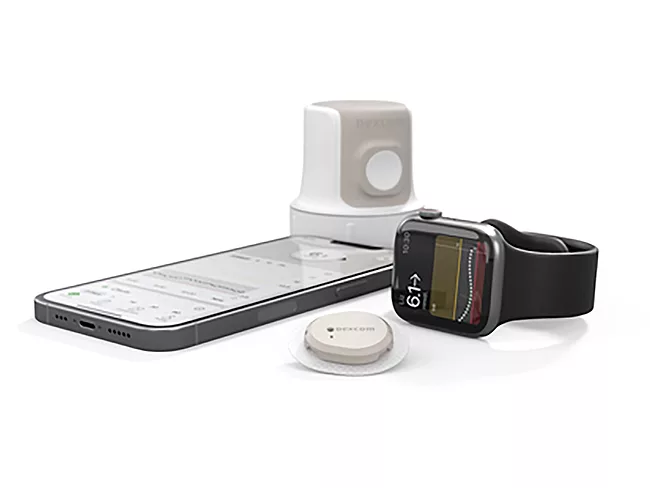
Dexcom Inc. ends 2022 on a high note with broad clearance from the U.S. FDA for its G7 continuous glucose monitoring system (CGM). The long-awaited 510(k) clearance encompasses use in people with all types of diabetes age two and older, positioning Dexcom to take advantage of expanded coverage of CGMs to include individuals on basal insulin-only for Medicare beneficiaries as proposed by CMS in October.
Two Medicare administrative contractors are examining a request for expanded Medicare coverage of continuous glucose monitors (CGMs) that would drop the requirement that patients routinely administer insulin at least three times a day. The requestors, Alameda, Calif.-based Abbott Diabetes Care Inc., and a group of stakeholders including the Juvenile Diabetes Research Foundation (JDRF), assert that such a change is not only endorsed by two medical societies, but is also supported by clinical evidence, and the net effect for industry may be to significantly accelerate sales of these devices.