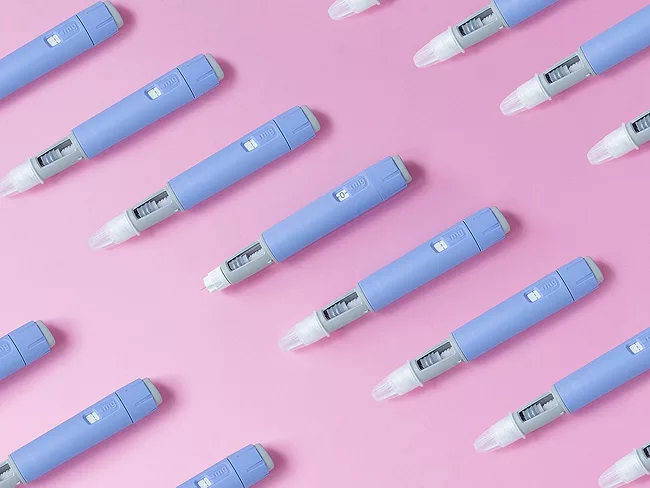
Chinese pharmaceutical and biotech companies are leading development of glucagon-like peptide-1 receptor agonists as Novo Nordisk A/S and Eli Lilly and Co. edge closer to launching blockbuster therapies in China. At the heart of the GLP-1 boom is a nationwide obesity problem driven by a confluence of factors, including the rise of a modern, sedentary lifestyle, according to Clarivate. Despite the rising prevalence of obesity and type 2 diabetes, the gap in obesity therapeutics is “substantial and leaves a solid market opportunity for weight loss drugs,” Karan Verma, principal analyst of healthcare research & data analytics at Clarivate, said.
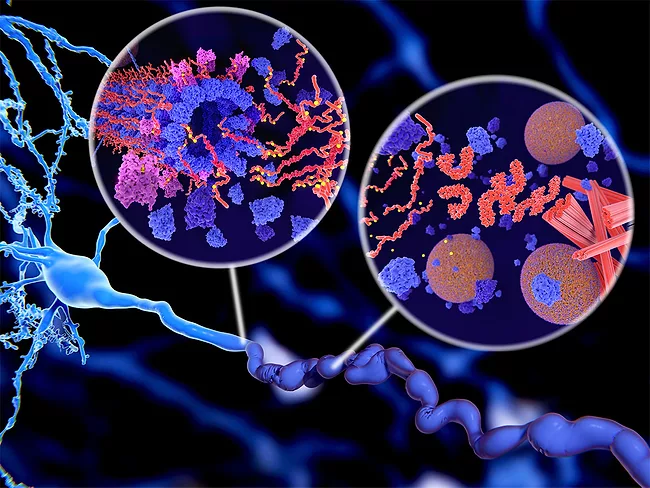
As Novo Nordisk A/S and Eli Lilly and Co. go head-to-head in the U.S. and Chinese glucagon-like peptide-1 receptor agonists (GLP-1RA) market for diabetes and obesity, Novo Nordisk is in innovator gear once more with leading studies of GLP-1s in Alzheimer’s disease.
Biolexis Therapeutics Inc. has announced findings from a study of its oral small-molecule GLP-1 agonist, BLX-7006, in a diet-induced obesity model in mice. In the study, BLX-7006 achieved an average weight reduction of 15% over a 28-day period.
Chinese pharmaceutical and biotech companies are leading development of glucagon-like peptide-1 receptor agonists as Novo Nordisk A/S and Eli Lilly and Co. edge closer to launching blockbuster therapies in China. At the heart of the GLP-1 boom is a nationwide obesity problem driven by a confluence of factors, including the rise of a modern, sedentary lifestyle, according to Clarivate. Despite the rising prevalence of obesity and type 2 diabetes, the gap in obesity therapeutics is “substantial and leaves a solid market opportunity for weight loss drugs,” Karan Verma, principal analyst of healthcare research & data analytics at Clarivate, said.
Two leading glucagon-like peptide-1 (GLP-1) receptor agonists for obesity and type 2 diabetes – Novo Nordisk A/S’s semaglutide (Wegovy/Ozempic) and Eli Lilly and Co.’s tirzepatide (Mounjaro/Zepbound) – are advancing in China after taking the U.S. market by storm. China represents the world’s largest population of diabetes and obesity patients. Its GLP-1 market, valued at about $1.7 billion in 2023 according to Clarivate, is expected to grow as the number of obesity patients is projected to exceed 500 million by 2033.
Boosting shares by nearly 17% on Sept. 9, phase I data of Terns Pharmaceuticals Inc.’s glucagon-like peptide 1 (GLP-1) receptor agonist, TERN-601, demonstrated it was well-tolerated and led to a statistically significant weight loss across all three doses tested in healthy adults who were obese or overweight.
IGC Pharma Inc. has reported preclinical research demonstrating the therapeutic potential of IGC-1C, a cyclic dipeptide-based small-molecule modulator, in neurodegenerative disease due to its modulation of tau protein, which is involved in the formation of neurofibrillary tangles, a key hallmark of Alzheimer’s disease.
IGC Pharma Inc. has used its artificial intelligence (AI) modeling to identify the company’s proprietary molecule, IGC-1A, as a potential GLP-1 agonist. The company’s AI model compared IGC-1A and IGC-1C to established drugs such as Ozempic (semaglutide), tirzepatide, retatrutide and metformin, among others, and indicated that they could become effective options for metabolic disorders.