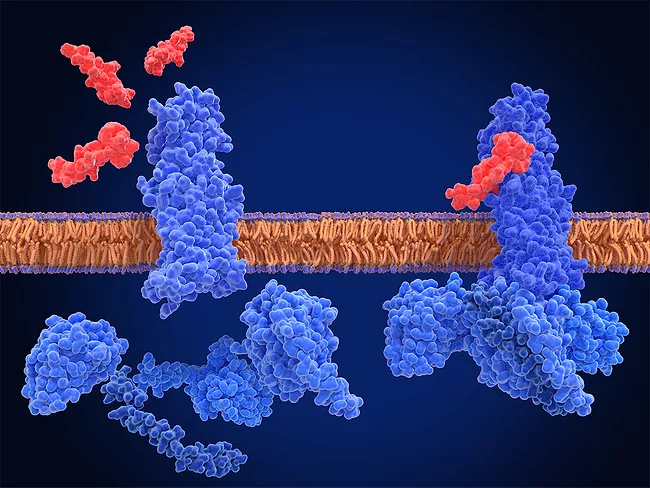
Chong Kun Dang Pharmaceutical Corp. has prepared and tested glucagon-like peptide 1 receptor (GLP-1R) agonists reported to be useful for the treatment of fibrosis, neurodegeneration, nutrition, endocrine, immunological, inflammatory, psychiatric and renal disorders, among others.
Hinova Pharmaceuticals Inc. has divulged glucagon-like peptide 1 receptor (GLP-1R) agonists reported to be useful for the treatment of type 2 diabetes, obesity, hepatic steatosis and polycystic ovary syndrome.
With the U.S. FDA clearance of the sNDA for Wegovy (semaglutide) from Novo Nordisk A/S to treat noncirrhotic metabolic dysfunction-associated steatohepatitis (MASH), Wall Street speculation deepened as to the consequences for Madrigal Pharmaceuticals Inc.’s Rezdiffra (resmetirom), a thyroid hormone receptor-beta (THR-beta) agonist that won the MASH go-ahead last year.
Haisco Pharmaceutical Group Co. Ltd. has prepared and tested glucagon-like peptide 1 receptor (GLP-1R) agonists reported to be useful for the treatment of diabetes and obesity.
Researchers from the Cleveland Clinic and National Institutes of Health investigated the role of the neurobeachin (NBEA) gene in predicting weight loss response to glucagon-like peptide-1 receptor agonists.
CSPC Baike (Shandong) Biopharmaceutical Co. Ltd. has patented new polycyclic compounds acting as glucagon-like peptide 1 receptor (GLP-1R) agonists reported to be useful for the treatment of Alzheimer’s disease, obesity, type 2 diabetes and nonalcoholic fatty liver disease (NAFLD; MASLD).
Gasherbrum Bio Inc. has patented new heterocyclic glucagon-like peptide 1 receptor (GLP-1R) agonists reported to be useful for the treatment of type 2 diabetes, among others.
Guangdong Zhongsheng Ruichuang Pharmaceutical Co. Ltd. has described glucagon-like peptide 1 receptor (GLP-1R) agonists reported to be useful for the treatment of type 2 diabetes, obesity, atherosclerosis, nonalcoholic or metabolic dysfunction-associated steatohepatitis (NASH/MASH), hyperglycemia, cerebral infarction, hypertension and Parkinson’s disease.
The increased use of GLP-1 receptor agonists has led on to an increase in reports of acute pancreatitis in people taking these weight loss drugs in the U.K. That has prompted the launch of a pharmacogenomics project to investigate if there are any genetic links underlying the occurrence of this adverse event.