Harbour Biomed has gained IND clearance from the FDA for HBM-7004, enabling the initiation of a first-in-human phase I trial in subjects with advanced solid tumors.
Harbour Biomed Ltd. and Sichuan Kelun-Biotech Biopharmaceutical Co. Ltd. have announced IND approval by China’s National Medical Products Administration (NMPA) for HBM-7575 (SKB-575) for the treatment of atopic dermatitis.
Harbour Biomed is spinning out newco Solstice Oncology and is outlicensing its CTLA-4 antibody, porustobart (HBM-4003), to the newco in a cash and equity deal worth more than $1.2 billion.
Harbour Biomed is spinning out newco Solstice Oncology and is outlicensing its CTLA-4 antibody, porustobart (HBM-4003), to the newco in a cash and equity deal worth more than $1.2 billion.
Astrazeneca plc is investing $15 billion in China through 2030 to expand R&D and manufacturing, marking one of the largest long-term investments by a multinational pharma company in the country. The U.K.-based company also struck a deal worth up to $3.5 billion with China’s CSPC Pharmaceuticals Group Ltd. to accelerate the development of next-generation therapies for obesity and type 2 diabetes.
Astrazeneca plc is investing $15 billion in China through 2030 to expand R&D and manufacturing, marking one of the largest long-term investments by a multinational pharma company in the country. The U.K.-based company also struck a deal worth up to $3.5 billion with China’s CSPC Pharmaceuticals Group Ltd. to accelerate the development of next-generation therapies for obesity and type 2 diabetes.
Harbour Biomed and Yantai Lannacheng Biotechnology Co. Ltd. have entered into a long-term strategic collaboration to jointly advance the development of next-generation radionuclide-drug conjugates for the treatment of cancer.
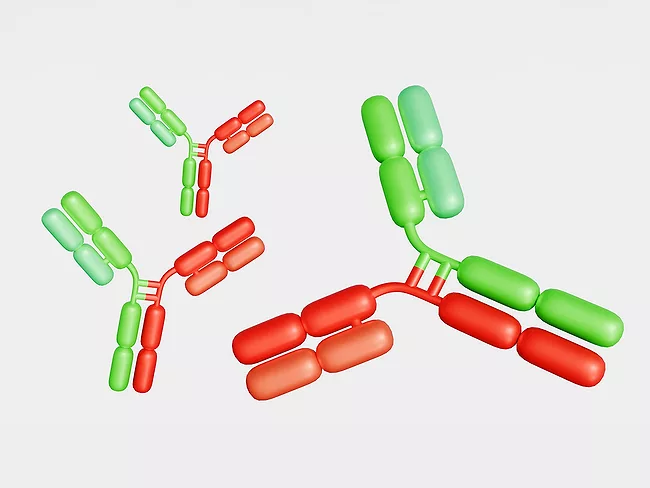
Harbour Biomed has added another collaboration to its end-of-year dealmaking, this time with Bristol Myers Squibb Co. (BMS) to develop multispecific antibodies. Harbour is getting about $90 million up front, but milestones could eventually top $1 billion.
Big pharma is increasingly shopping in China to fill its pipelines as it faces looming patent cliffs on major blockbusters coupled with growing pricing pressures on drugs. As previously reported by BioWorld, China’s out-licensing deals grew to represent 32% of global deals in the first half of 2025, up from 21% in 2024, and only 5% in 2020, Jefferies Hong Kong-based analyst Cui Cui wrote in a July 2025 report on China dealmaking.
Big pharma is increasingly shopping in China to fill its pipelines as it faces looming patent cliffs on major blockbusters coupled with growing pricing pressures on drugs. As previously reported by BioWorld, China’s out-licensing deals grew to represent 32% of global deals in the first half of 2025, up from 21% in 2024, and only 5% in 2020, Jefferies Hong Kong-based analyst Cui Cui wrote in a July 2025 report on China dealmaking.