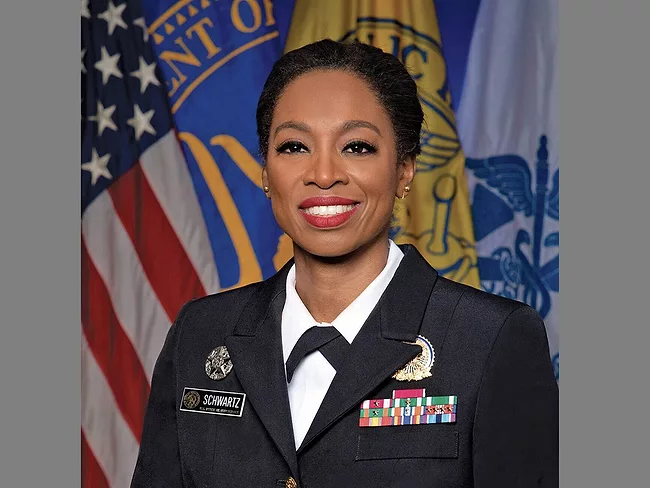
As U.S. President Donald Trump’s third nominee for CDC director, Erica Schwartz will soon find out if three times really is a charm. Trump announced the nomination on social media April 16, touting Schwartz’s credentials for the job. Calling her “incredibly talented,” Trump cited her “distinguished career” as a military doctor, in the Navy and Coast Guard, and her service as deputy surgeon general during his first term in office.
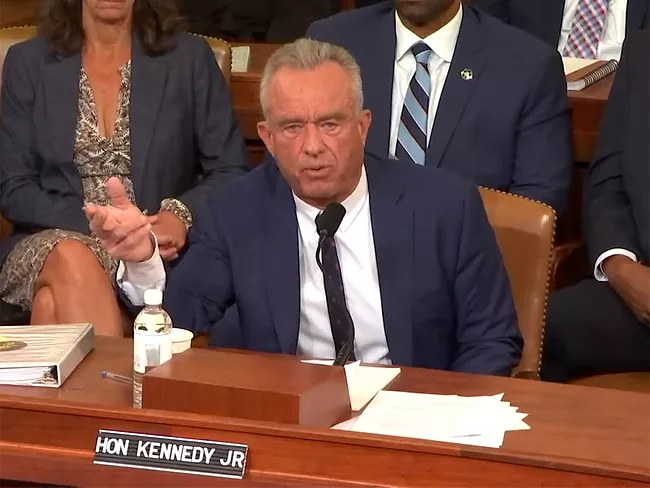
U.S. Health and Human Services (HHS) Secretary Robert Kennedy made his first stop April 16 on a congressional tour in support of President Donald Trump’s proposed fiscal 2027 budget, which would reduce discretional spending for HHS and its agencies by about 12%.
Amending his previous two-year-renewal of the standard charter for the U.S. CDC’s Advisory Committee on Immunization Practices (ACIP), Health and Human Services Secretary Robert Kennedy made monitoring adverse vaccine events a primary function of the committee and expanded its liaison membership to include organizations that have challenged vaccine safety.>
Don’t like a court order? Sidestep it. That seems to be the idea behind U.S. Health and Human Services Secretary Robert Kennedy’s latest changes to his renewal of the charter for the CDC’s Advisory Committee on Immunization Practices (ACIP).
After nearly a year of threats and promises of a global biopharma tariff of 25% to 500%, U.S. President Donald Trump finally delivered it. In the name of national security, he imposed a 100% sector tariff on prescription drugs and their associated ingredients beginning in about four months for large manufacturers and six months for smaller companies.
Do state laws requiring drug companies to give steep 340B drug discounts to an unlimited number of contract pharmacies, with no claims data required, interfere with a longstanding contract between the U.S. Congress and biopharma? Or do such laws merely flex states’ authority over pharmacy practices such as delivery?
After nearly a year of threats and promises of a global biopharma tariff of 25% to 500%, U.S. President Donald Trump finally delivered it. In the name of national security, he imposed a 100% sector tariff on prescription drugs and their associated ingredients beginning in about four months for large manufacturers and six months for smaller companies. However, depending on the drug, where it’s made and whether a manufacturer has reached onshoring and pricing agreements with the Department of Health and Human Services, the actual tariff could be as low as 0%.
With all the focus of late on the U.S. CDC’s Advisory Committee on Immunization Practices (ACIP), the FDA’s 30-plus advisory committees have been flying under the radar, especially since many of them haven’t met for a few years now.
Chaos continues at the U.S. CDC and its Advisory Committee on Immunization Practices (ACIP) with the resignation of ACIP member Robert Malone and the impending deadline for the president to nominate a new CDC director following the dramatic exit last year of Susan Monarez and months of acting directors.
A member of the CDC’s Advisory Committee on Immunization Practices (ACIP), physician and biochemist Robert Malone, who a judge earlier this week suggested lacked vaccine-related experience, wrote March 19 on X that the committee “has been disbanded.” Nearly six hours later, he followed up, saying it was a “miscommunication.”