Galvani Bioelectronics Ltd. reported the first patient implanted with its experimental direct splenic nerve stimulation therapy for rheumatoid arthritis (RA). The first-in-human implant is part of a small trial at the NHS Greater Glasgow & Clyde Health Board in Scotland.
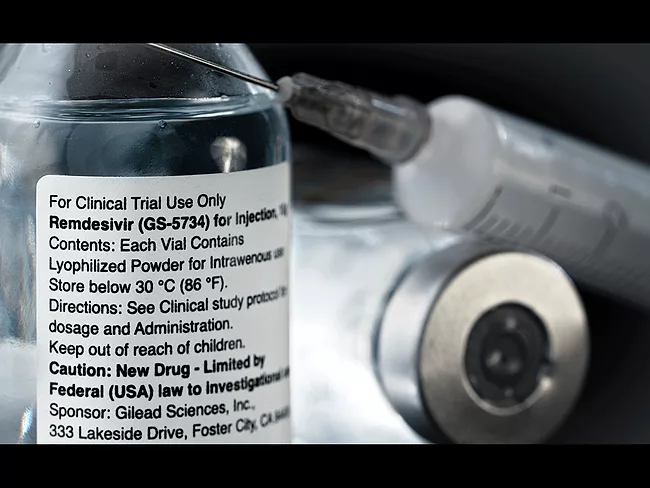
Once again, the U.S. FDA giveth and it taketh away. Just a few days after expanding its approval for Gilead Sciences Inc.’s Veklury (remdesivir) to provide access to more people infected with COVID-19, the FDA essentially shut down the use of two monoclonal antibody (mAb) treatments Jan. 24 that had been authorized to treat mild-to-moderate COVID-19 infections – Regeneron Inc.’s Regen-Cov (Ronapreve in Europe), an antibody cocktail of casirivimab and imdevimab, and Eli Lilly and Co.’s bamlanivimab and etesevimab that are administered together.
When Glaxosmithkline plc’s new CEO, Emma Walmsley, was hiring a “dream team” of executives to lead the company in 2017, former Genentech whizz Hal Barron was the star signing as chief scientific officer. Lured away from Alphabet Inc.’s biotech subsidiary, Calico LLC, by a bumper pay deal, Barron was arguably Walmsley’s most important appointment. Walmsley badly needed a strong leader with credible expertise in science to lead the company’s R&D efforts, as her expertise and experience came from the company’s consumer operation. But as GSK plans to split later this year, Barron is heading for the exit to become CEO of California’s ambitious and enormously well-funded startup Altos Labs Inc.
The FDA went from zero to two oral antivirals to treat COVID-19 in the space of two days, granting emergency use authorizations last week to Pfizer Inc.’s Paxlovid and Merck & Co. Inc.-Ridgeback Biotherapeutics Inc.’s molnupiravir. Both five-day regimens are authorized for use, within five days of COVID-19 symptom onset, in individuals at high risk of progressing to severe disease, including hospitalization and death.
Vaccine specialists Sanofi SA and Glaxosmithkline plc have been behind the curve throughout the pandemic, with upstarts such as Moderna Inc. and Biontech SE stealing the show with their ground-breaking mRNA technology. While their rivals were beginning to launch the first wave of vaccines early last year, Sanofi and GSK had to reformulate theirs after it failed to produce a strong enough immune response in older people. New results show that the shot, SP-0253, could play a role as a booster but there will be another delay after the companies struggled to recruit enough participants in a crucial phase III trial.
Mitsubishi Tanabe Pharma Corp.'s Medicago Inc. plans to "imminently" seek Health Canada approval for its plant-based COVID-19 vaccine candidate, MT-2766, after top-line phase III results showed an overall vaccine efficacy rate of 71% against all variants of SARS-CoV-2.
The U.K. is stepping up its response to the Omicron COVID-19 variant after the country’s regulatory agency approved Xevudy (sotrovimab), the antibody therapy from Glaxosmithkline plc and Vir Biotechnology Inc. At the same time the country placed orders for 114 million more doses of COVID-19 vaccines from Pfizer Inc. and Moderna Inc., for use in 2022 and 2023.
Glaxosmithkline plc (GSK) tapped Arrowhead Pharmaceuticals Inc. for its foray into nonalcoholic steatohepatitis (NASH), as the pair signed an exclusive global licensing deal (excluding China) for GSK to develop and commercialize phase I/II-stage ARO-HSD, Arrowhead’s RNAi therapy targeting HSD17B13.
Results from two pivotal phase III trials testing Glaxosmithkline plc's daprodustat against anemia due to chronic kidney disease (CKD) found the oral hypoxia-inducible factor prolyl hydroxylase inhibitor helped both non-dialysis and dialysis patients improve or maintain hemoglobin levels without increased cardiovascular risk vs. standard-of-care erythropoietin stimulating agents. Though already approved in Japan as Duvroq, what future the drug might face in the U.S., where the same-class drug roxadustat garnered an FDA complete response letter, remained an open question.
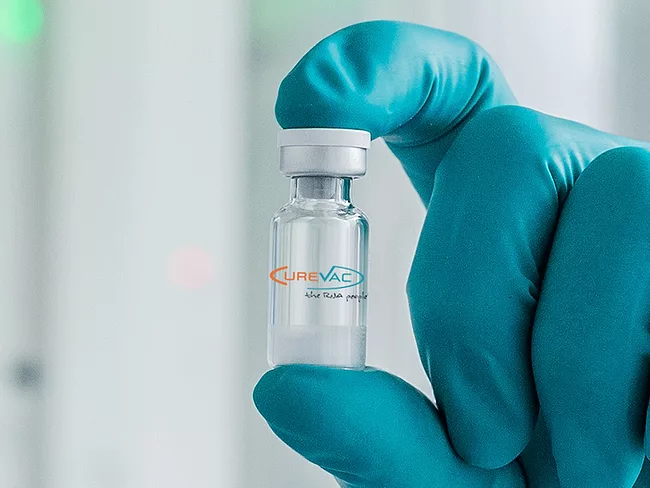
Curevac AG, once a forerunner in COVID-19 vaccine development but later surpassed, said it would terminate its first effort in the field, CVnCoV, withdrawing it from a rolling review at the EMA to focus instead on development of second-generation mRNA vaccine candidates with Glaxosmithkline plc.