Incyte Corp. has described GTPase KRAS (mutant) inhibitors reported to be useful for the treatment of cancer, inflammatory and immunological disorders.
The BioWorld Biopharmaceutical Index extended its downward trend over April and May, closing the latter month down 6.47% after reaching a peak gain of 9.64% at the end of February. The Nasdaq Biotechnology Index followed a similar trajectory, finishing May with a 5.37% decline. Meanwhile, the Dow Jones Industrial Average dipped through April but rebounded slightly in May, ending the month down 0.64%.
Incyte Corp. has disclosed GTPase KRAS (mutant) inhibitors reported to be useful for the treatment of cancer, as well as autoimmune and inflammatory disorders.
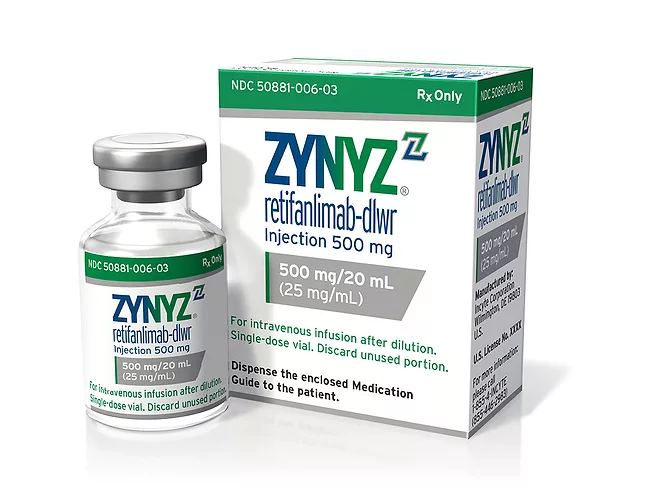
Incyte Corp.’s Zynyz (retifanlimab-dlwr) has received another U.S. FDA approval and put some distance between it and a 2021 complete response letter. The FDA gave the humanized monoclonal antibody targeting PD-1 the nod for first-line treatment of adults with inoperable locally recurrent or metastatic squamous cell carcinoma of the anal canal. That makes it the only approved first-line treatment for this cancer.
Planting seed money and “wishing” is not enough to claim “irreparable harm” to secure a preliminary injunction or to establish the standing required to appeal a patent board decision, the U.S. Court of Appeals for the Federal Circuit ruled May 7 in two decisions involving Incyte Corp. and Sun Pharmaceutical Industries Ltd.
Planting seed money and “wishing” is not enough to claim “irreparable harm” to secure a preliminary injunction or to establish the standing required to appeal a patent board decision, the U.S. Court of Appeals for the Federal Circuit ruled May 7 in two decisions involving Incyte Corp. and Sun Pharmaceutical Industries Ltd.
Incyte Corp. has synthesized Mas-related G-protein coupled receptor member X2 (MRGPRX2) antagonists reported to be useful for the treatment of inflammatory disorders.
Investors wanted more from Incyte Corp.’s top-line results in hidradenitis suppurativa (HS) from its pivotal phase III Stop-HS trial program with oral small-molecule JAK1 inhibitor povorcitinib in adults with moderate to severe disease. Shares of the Wilmington, Del.-based firm (NASDAQ:INCY) closed March 17 at $62.01, down $5.85, after the company made public that Stop-HS1 and Stop-HS2 met the primary endpoint at both tested doses (45 mg and 75 mg)
Artificial intelligence (AI) technology developer Genesis Therapeutics Inc. has brought in another larger partner to go on a search for the right therapeutic small molecules. The company is getting an up-front $30 million payment from Incyte Corp. and could bring in as much as $295 million per target in development, regulatory and commercial milestones, bringing the deal to about $620 million total.