Moonlake Therapeutics AG is making headway on its mission to establish a broad dermatology and rheumatology franchise around its sole product, sonelokimab, announcing it is poised to start a phase II study in hidradenitis suppurativa.
Quris Technologies Ltd. has inked an agreement with Merck KGaA to assess its BioAI safety prediction platform. The partnership will compare the Quris’ artificial intelligence (AI)-based platform with traditional in vivo and in vitro approaches of evaluating drug safety concerns.
LONDON – Merck KGaA has increased the size of its corporate venture fund M Ventures to €600 million (US$676.4 million), to be invested over the next five years. This is the third increase in the financial commitment to the evergreen fund following its formation as Merck Serono Ventures in 2009, with €40 million. Since then, it has backed more than 80 companies. The larger fund will allow M Ventures to further grow the number and the size of its investments but, said Hakan Goker, managing director of M Ventures, “We will not change the strategy per se.”
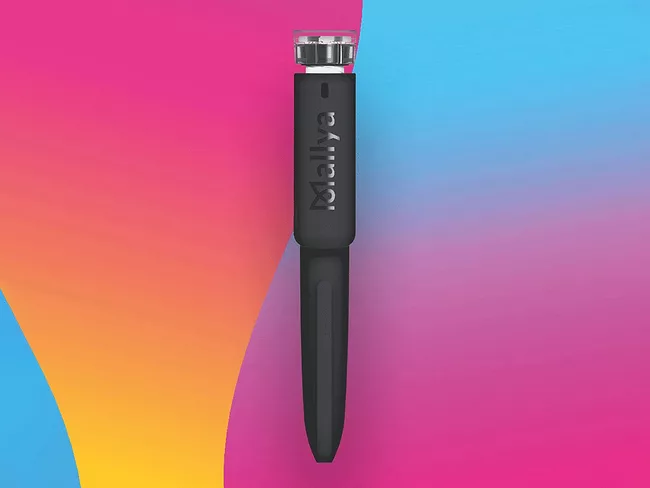
Merck KGaA has signed an agreement with French company Biocorp SA to develop a version of its Mallya smart device for monitoring human growth hormone (HGH) treatment. Mallya is a clip-on device for pen injectors that collects the dose and time of each injection and transfers the information in real time to a companion software using Bluetooth technology. The device is CE marked (Class IIb) and was first launched in France in 2020.
Diaccurate SAB has scooped a cancer drug from Germany’s Merck KGaA, transforming the small French biotech into a clinical-stage company. With expertise on its scientific advisory board from Nobel prize winner Tasuku Honjo, famously credited with the work establishing PD-1 as a target in immune-oncology, Diaccurate said it has fought off other competitors to acquire M-2698.
Merck KGaA is partnering with Neuroloop GmbH, a subsidiary of B. Braun SE, to develop a neurostimulator device that can complement existing drug therapies for people with chronic inflammatory diseases. The collaboration aims to adapt Neuroloop’s neurostimulation platform to enable targeted treatment of chronic inflammatory ailments. The new bioelectronics program intends to open up new technologies and markets that are close to Merck’s electronics and health care business sectors.
In a first for the biotech industry, the European Commission (EC) has imposed a €7.5 million (US$9.05 million) fine on Sigma-Aldrich, under the EU’s 2004 Merger Regulation, for providing incorrect or misleading information during a merger investigation.
Less than two months after scrubbing a phase III non-small-cell lung cancer trial of the bifunctional fusion protein immunotherapy bintrafusp alfa, Merck KGaA said a phase II test of the candidate in another indication, biliary tract cancer, has missed a predefined threshold that would have enabled a regulatory filing for it. Both studies are part of a rich alliance between Merck and licensee Glaxosmithkline plc.
Debiopharm International SA is more interested in developing drugs than marketing them. Bertrand Ducrey, CEO of Debiopharm, said he envisions the drugs the company is stewarding through development as a "living pipeline" that needs to be refreshed as drugs get to late-stage development. So Debiopharm is shipping global rights to xevinapant (Debio-1143) and its follow-on inhibitor of apoptosis proteins antagonist, Debio-4028, to Merck KGaA, of Darmstadt, Germany.
Just weeks after seeing one late-stage candidate hit a wall in a subtype of non-small-cell lung cancer (NSCLC), Merck KGaA's EMD Serono has won accelerated approval from the FDA for another important NSCLC therapy, Tepmetko (tepotinib).