New drug approvals, financings and deals were seen across the Asia-Pacific biotech sector this week, with China’s National Medical Products Administration (NMPA) granting clearances to Takeda Pharmaceutical Co. Ltd.’s oral orexin receptor 2 agonist oveporexton for narcolepsy, as well as Haisco Pharmaceutical Group’s ciprocopan (HSK-39297) for paroxysmal nocturnal hemoglobinuria.
Dassault Systèmes agreed to buy Arisglobal for up to $2 billion as it strengthens its position in the life sciences sector, advancing its ambition to create a unified AI intelligence platform for the industry where datasets are currently fragmented. The deal brings together Arisglobal’s AI-powered safety and regulatory intelligence platform with Dassault’s own position in scientific modeling and simulation, to create what the company calls the industry’s first AI platform that unifies real-world evidence with virtual evidence.
Biopharma deal value through the first half (H1) of 2026 reached $170.11 billion, surpassing every prior year in BioWorld’s records, including 2025’s $139.35 billion, the previous high-water mark. June was the second-strongest month of H1 at $34.59 billion, trailing only May’s $41.95 billion.
Another day, another two multibillion-dollar deals with Asian companies, this time involving Dizal Pharmaceutical Co. Ltd. and its EGFR inhibitor for lung cancer, as well as Innovent Biologics Inc. and its anti-CD40L antibody for a chronic fibroinflammatory condition.
Hansoh Pharmaceutical Group Co. Ltd. has taken a new step in the evolution of China’s “newco” strategy, combining its newly created U.S. company, Avere Therapeutics Inc., with Nasdaq-listed Nextcure Inc. in a deal designed less to merge pipelines than to create a public vehicle for global development of a China-originated asset.
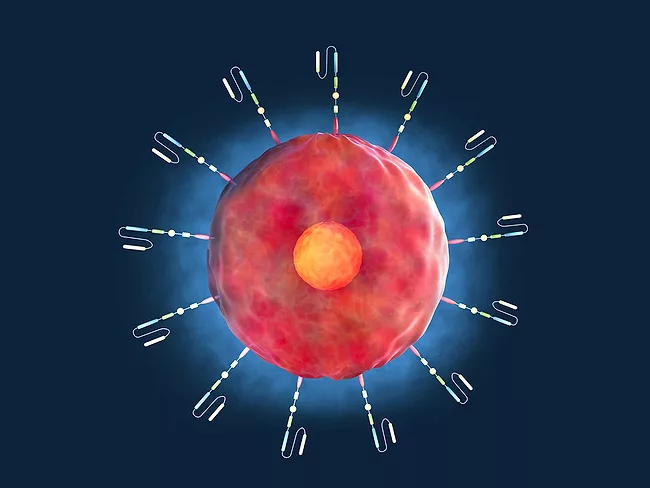
The field of cell and gene therapy is moving toward a new phase of scalability and clinical durability, with in vivo chimeric antigen receptor (CAR) T-cell therapeutics emerging as the dark horse in what speakers at BIO Asia-Taiwan 2026 described as CAR T’s second revolution.
The field of cell and gene therapy is moving toward a new phase of scalability and clinical durability, with in vivo chimeric antigen receptor (CAR) T-cell therapeutics emerging as the dark horse in what speakers at BIO Asia-Taiwan 2026 described as CAR T’s second revolution.
The field of cell and gene therapy is moving toward a new phase of scalability and clinical durability, with in vivo chimeric antigen receptor (CAR) T-cell therapeutics emerging as the dark horse in what speakers at BIO Asia-Taiwan 2026 described as CAR T’s second revolution.
On the tail of rumors that Merck & Co. Inc. and others holding stakes in Personalis Inc. might take over the firm, Chicago-based Tempus AI Inc. ended speculation by disclosing its plan to buy the company for $16.25 per share, which amounts to an enterprise value of $1.5 billion net of Tempus’ existing ownership interest.
Leica Biosystems GmbH, agreed to buy Statlab Medical Products in a move that will strengthen parent company Danaher Corp.'s diagnostics and anatomical pathology portfolio with a broader range of consumables and instruments. Although the financial terms were not disclosed, RBC Capital Markets analyst Dan Leonard reckoned that the deal could be valued at more than $1 billion.
 RSS
RSS