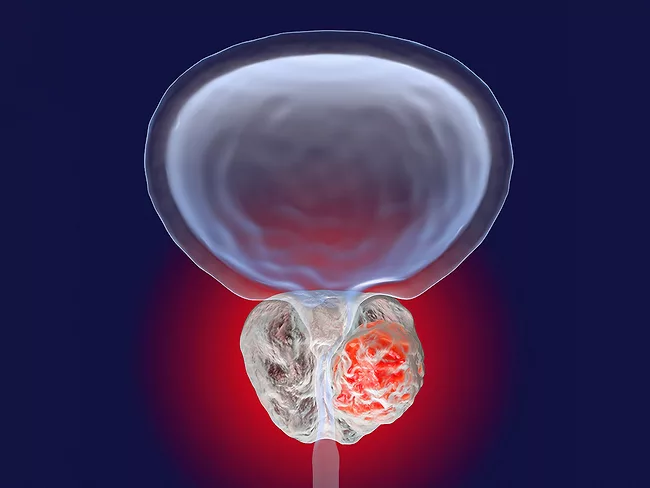
Prostate cancer is still one of the main causes of cancer death among men; while prostate-specific antigen (PSA) testing is done for screening, there are recommendations against its use due to its nonspecific and suboptimal results. There is thus an urgent need for new biomarkers that are more accurate in the detection of prostate cancer.
Previous research has shown that aberrant sphingolipid metabolism, which is evidenced by elevated levels of circulating ceramide, is associated with poor prognosis in patients with prostate cancer (PC). Work at the University of Adelaide has led to the establishment of a new syngeneic mouse model to study the role of sphingolipid metabolism in PC.
Researchers from Hebei Normal University and affiliated organizations presented the discovery and preclinical characterization of a novel B lymphoma Mo-MLV insertion region 1 (Bmi-1) expression inhibitor, APD-94, designed as an agent that could potentially overcome drug resistance in patients with colorectal cancer.
Work at Exelixis Inc. has led to the development of antibody-drug conjugates (ADCs) comprising antibodies targeting interleukin-13 receptor subunit α2 (IL-13RA2, IL-13R-α2) covalently linked to a payload. They are described as potentially useful for the treatment of non-small-cell lung cancer (NSCLC) and head and neck squamous cell carcinoma (HNSCC).
Researchers from Wuyi University presented the discovery and preclinical characterization of kinesin spindle protein (KSP) degraders developed using proteolysis-targeting chimera (PROTAC) technology.
Xilio Therapeutics Inc. has announced three wholly owned preclinical programs for masked T-cell engagers targeting prostate-specific membrane antigen (PSMA), claudin 18.2 (CLDN18.2) and six-transmembrane epithelial antigen of prostate 1 (STEAP1).
Within the immune system, interleukin-15 (IL-15) plays a relevant role by boosting the number of cytotoxic T cells and NK cells, the major drivers of anticancer immune response. Researchers from Sotio Biotech AS, MD Anderson and collaborators reported preclinical data on nanrilkefusp alfa (nanril; SOT-101), an IL-15 receptor βγ superagonist that stimulates both CD8+ T and NK cells in the tumor microenvironment.
Genescience Pharmaceuticals Co. Ltd. has prepared and tested new fibroblast growth factor receptor 2 (FGFR2) and/or FGFR3 inhibitors reported to be useful for the treatment of cancer, osteochondrodysplasia and achondroplasia.
Work at the University of Florida has led to the identification of nuclear receptor subfamily 1 group D member 1 (Rev-erbA-α) antagonists reported to be useful for the treatment of cancer, sarcopenia and Duchenne muscular dystrophy.
 RSS
RSS