Immunostimulant therapy using agonistic cytokines or activating antibodies has been associated with off-target side effects, failure to preferentially activate cytotoxic lymphocytes (CTLs) over regulatory T cells (Treg), and the development of T-cell exhaustion. With the aim of overcoming these issues, researchers from Recourse Biologics Inc. designed a potentially first-in-class immunostimulatory fusion protein.
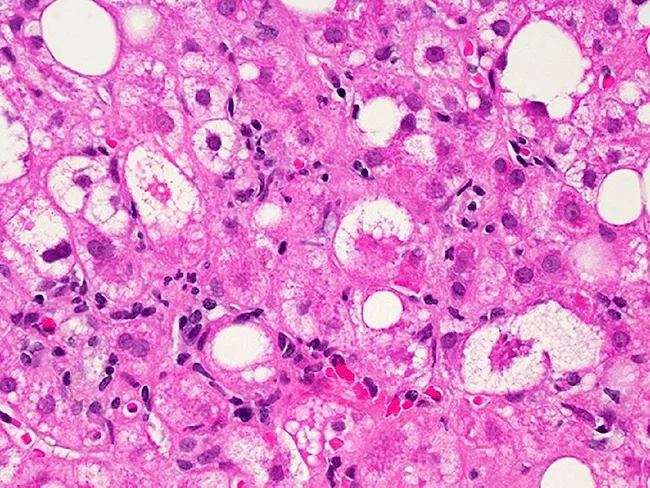
Human antigen R (HuR) controls the stability and translation of several transcripts that are key for metabolism, inflammation and cancer, including TNF-α or MYC. Previous findings have shown the pro-tumorigenic role of HuR in hepatocellular carcinoma (HCC), and its inhibition to be involved in metabolic dysfunction-associated steatohepatitis (MASH).
Multiple endogenous retroviruses (ERVs) in human DNA may be programmed to activate as cancer therapy. A recent study, led by scientists at the Dana-Farber Cancer Institute, expanded on a previously reported case of kidney cancer cure after hematopoietic stem cell transplantation attributed to the expression of an ERV driven by the hypoxia-inducible factor 2 (HIF2). The question was whether this finding might play out with different ERVs and different types of cancer through HIF.
Taichengsi (Shanghai) Biomedical Co. Ltd. has described antibody-drug conjugates comprising an antibody covalently bound to a cytotoxic drug through a bivalent olefin linker optionally consisting of an isotope-labeled compound reported to be useful for the treatment of cancer.
Scientists at Jiangsu Hengrui Medicine Co. Ltd. and Shanghai Hengrui Pharmaceutical Co. Ltd. have synthesized protein arginine N-methyltransferase 5 (PRMT5) inhibitors reported to be useful for the treatment of cancer.
Mindrank Therapeutics (Suzhou) New Drug Research & Development Co. Ltd. has disclosed cellular tumor antigen p53 (TP53) (Y220C mutant) stabilizers reported to be useful for the treatment of cancer.
The map of cystic fibrosis (CF) research is being redrawn in the U.K. as improvements in treatment, and in particular the introduction of CF modulator drugs, mean people with the rare inherited disease are living much longer.
Researchers at Children’s Hospital of Fudan University, Shanghaitech University and Suzhou Zhongke New Drug Incubator Biomedical Technology Co. Ltd. have identified WD repeat-containing protein 5 (WDR5; BIG3)/c-Myc interaction inhibitors reported to be useful for the treatment of cancer.
In a recently published study, researchers from Shandong Second Medical University and collaborators synthesized a new dual-gold(I) complex, named QB-1561, and tested its potential to inhibit drug-resistant cancer cells overexpressing ATP-binding cassette (ABC) transporters

 RSS
RSS