Merck Sharp & Dohme LLC (MSD) has synthesized new benzimidazole derivatives acting as NLRP3 inflammasome inhibitors. As such, they are potentially useful for the treatment of atherosclerosis, metabolic dysfunction-associated steatohepatitis (MASH), neuroinflammation, inflammatory skin, inflammatory joint and autoimmune disease, Alzheimer’s and Parkinson’s disease, among others.
Human biology is extraordinarily complex, and that sophistication emerges from the very beginning. During embryonic and fetal development, the organism’s architecture is shaped through the organization of tissues, the establishment of molecular pathways, and the coordination of signals that will later sustain the body as an integrated system. It is likely the most delicate stage of life, where any disturbance in that foundational process can have lasting consequences on health.
Nuvectis Pharma Inc.’s shares climbed further after the oncology-focused biotech nabbed select rights to a late-stage complement factor B inhibitor (HSK-39297/NXP-100) and a phase I BRAF inhibitor (HSK-42360/NXP-200) from Haisco Pharmaceutical Group Co. Ltd. for $40 million up front.
Hexapharmatec Co. Ltd. has discovered new transcription factor EB (TFEB) inducers described as potentially useful for the treatment of colitis, kidney and hepatic fibrosis.
Changchun Genescience Pharmaceuticals Co. Ltd. has synthesized new molecular glue degraders comprising E3 ubiquitin-protein ligase-binding agents acting as proto-oncogene Vav (VAV1) degradation inducers. They are described as potentially useful for the treatment of ulcerative colitis, Crohn’s disease, rheumatoid arthritis, multiple sclerosis, systemic lupus erythematosus and myasthenia gravis.
Chronic activation or upregulation of interleukin-1 receptor-associated kinase 4 (IRAK4) has been linked to several diseases, including systemic lupus erythematosus, rheumatoid arthritis, atopic dermatitis, Alzheimer’s disease and atherosclerosis. Researchers from the Ocean University of China aimed to address the limitations of traditional small-molecule inhibitors by designing novel proteolysis targeting chimeras (PROTACs) for IRAK4 degradation.
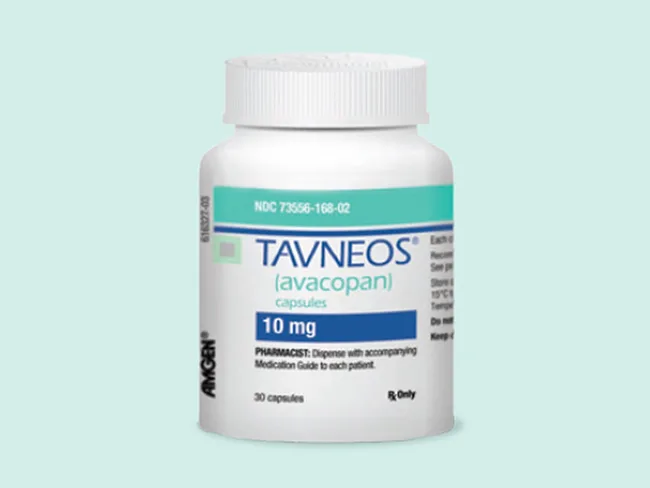
The EMA is recommending withdrawing Amgen Inc.’s complement inhibitor Tavneos (avacopan) from the market in Europe, saying data provided at the time it assessed the MAA “were found to be incorrect and misleading and could no longer be relied upon for demonstrating Tavneos’ effectiveness.”
Receptor-interacting protein kinase 1 (RIPK1) acts as a central signaling node regulating apoptosis, necroptosis and inflammatory pathways. Researchers from China Pharmaceutical University reported the discovery and preclinical characterization of LT-1339-553, a novel RIPK1 inhibitor, in models of schistosomiasis-induced hepatic fibrosis.
Nuvectis Pharma Inc.’s shares climbed further after the oncology-focused biotech nabbed select rights to a late-stage complement factor B inhibitor (HSK-39297/NXP-100) and a phase I BRAF inhibitor (HSK-42360/NXP-200) from Haisco Pharmaceutical Group Co. Ltd. for $40 million up front.

 RSS
RSS