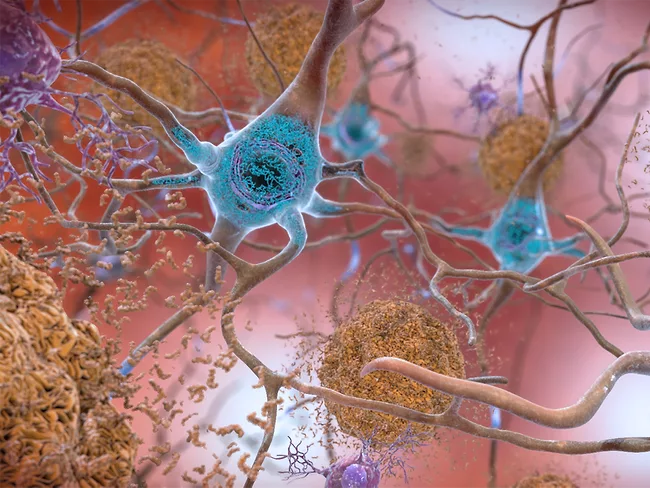
With the number of people with dementia in Australia expected to nearly double by 2054, the federal government is funding a new AU$50 million (US$32.76 million) biomedical and med-tech incubator program to develop new therapies, medical devices and digital health technologies to address dementia and cognitive decline.
Korean neurodegenerative disease-focused Aribio Co. Ltd. gained the U.K.’s regulatory clearance to start the phase III Polaris-AD trial on AR-1001 (mirodenafil), an investigative therapy for early Alzheimer’s disease (AD). The U.K.’s Medicines and Healthcare products Regulatory Agency gave notice of acceptance to Seoul, South Korea- and San Diego-based Aribio for the clinical study on Feb. 21 after “confirming a favorable ethical opinion,” Aribio said. AR-1001 is an oral phosphodiesterase-5 inhibitor under development to treat early AD.
In the end, Minerva Neurosciences Inc. NDA submission wasn’t able to overcome the U.S. FDA’s concerns regarding data for dual 5-HT2A/sigma 2 antagonist roluperidone. The agency issued a complete response letter (CRL) for the application, which had been seeking approval as the first treatment specifically targeting negative symptoms of schizophrenia.
Transthera Sciences (Nanjing) Inc. has announced the initiation of IND-enabling studies for TT-02332, a potent, selective and highly CNS-penetrating NLRP3 inflammasome inhibitor.
Korean neurodegenerative disease-focused Aribio Co. Ltd. gained the U.K.’s regulatory clearance to start the phase III Polaris-AD trial on AR-1001 (mirodenafil), an investigative therapy for early Alzheimer’s disease (AD). The U.K.’s Medicines and Healthcare products Regulatory Agency gave notice of acceptance to Seoul, South Korea- and San Diego-based Aribio for the clinical study on Feb. 21 after “confirming a favorable ethical opinion,” Aribio said. AR-1001 is an oral phosphodiesterase-5 inhibitor under development to treat early AD.
With the number of people with dementia in Australia expected to nearly double by 2054, the federal government is funding a new AU$50 million (US$32.76 million) biomedical and med-tech incubator program to develop new therapies, medical devices and digital health technologies to address dementia and cognitive decline.
Vandria SA has disclosed urolithin and fluorene derivatives acting as ferroptosis inhibitors and reported to be useful for the treatment of neurodegeneration and inflammatory disorders.
Voyager Therapeutics Inc. has announced the selection of a lead development candidate from its Friedreich’s ataxia program with collaborator Neurocrine Biosciences Inc.
A new cutting-edge blood-based biomarker test developed by researchers at Hong Kong University of Science and Technology can detect early Alzheimer’s disease (AD) and mild cognitive impairment (MCI), with accuracy rates surpassing 96% and 87% respectively, and could be a game changer in detecting and treading early AD.
 RSS
RSS