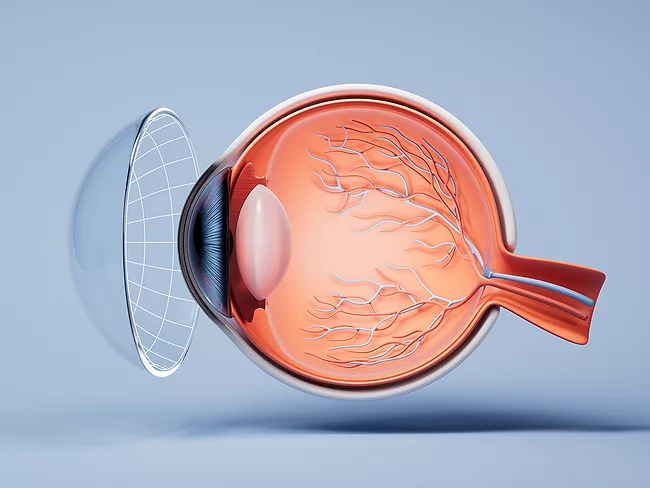
A smart polymer contact lens measures intraocular pressure (IOP) in real time and automatically releases medication into the eye when IOP goes beyond a critical limit. This technological advance, developed by scientists at the Terasaki Institute for Biomedical Innovation, could enable personalized glaucoma therapy.
Work at Khartis Therapeutics Inc. has led to the discovery of new insulin-like growth factor 1 receptor (IGF-1R; CD221) inhibitors potentially useful for the treatment of thyroid-associated ophthalmopathy (Graves ophthalmopathy), age-related macular degeneration, idiopathic orbital inflammatory disease, cancer and inflammatory disorders.
Chiesi Group’s idebenone faced a regulatory setback last month after the U.S. FDA issued a complete response letter (CRL) to the company’s NDA for Leber hereditary optic neuropathy (LHON), a rare inherited disorder that causes sudden vision loss.But a chance missed for Chiesi may be an opportunity for gene therapies, including Gensight Biologics SA’s lenadogene nolparvovec (Lumevoq; GS-010).
Innovent Biologics Inc.’s efdamrofusp alfa (IBI-302) met the primary endpoint in the phase III Star trial in neovascular age-related macular degeneration (nAMD), and the Suzhou, China-based company will submit an NDA to China’s National Medical Products Administration.
Biogen Inc. hardly blinked at the competition faced by Apellis Pharmaceuticals Inc. as the two companies sealed a deal whereby the former has agreed to acquire all outstanding shares of the latter for $41 each, or about $5.6 billion.
Analysts were sounding pleased and the company intends to go ahead with a regulatory filing, but investors seem to have wanted more from Viridian Therapeutics Inc.’s top-line data from the elegrobart (formerly VRDN-003) Reveal-1 phase III trial in active thyroid eye disease (TED). Viridian shares (NASDAQ:VRDN) closed March 30 at $18.53, down $8.86, or 32%.
After previous setbacks with the program, investors largely brushed aside ocular-focused Kodiak Sciences Inc.’s anticipated phase III Glow2 data of tarcocimab tedromer in diabetic retinopathy (DR), so the positive top-line superiority results revealed March 26 caught many by surprise as it sets the company up for an accelerated multi-indication BLA submission.
Innovent Biologics Inc.’s efdamrofusp alfa (IBI-302) met the primary endpoint in the phase III Star trial in neovascular age-related macular degeneration (nAMD), and the Suzhou, China-based company will submit an NDA to China’s National Medical Products Administration.
It’s déjà vu all over again for Aldeyra Therapeutics Inc., which disclosed its third complete response letter (CRL) for dry eye disease candidate reproxalap, with the U.S. FDA citing a lack of substantial and consistent evidence of efficacy.
 RSS
RSS