The EMA recommended the highest number of approvals in the last 15 years in 2024, giving the nod to 114 drugs. That is amongst the highest number in the 30 years of the agency’s existence, said Steffen Thirstrup, the EMA’s chief medical officer.
It’s taken nearly a decade for the U.S. FDA to go from zero to 60 in approving biosimilars. Currently, 63 biosimilars have been approved in the U.S., thanks to 18 new approvals in 2024 that stretched the number of biologics referenced by biosimilars from 14 to 17. That’s an all-time record, CDER Director Patrizia Cavazzoni said, as she released the drug center’s annual approval report for 2024.
Tanvex Biopharma Inc. said its U.S. subsidiary, Tanvex Biopharma U.S.A. Inc., received an FDA complete response letter (CRL) on Jan. 3 for its TX-05 BLA, a biosimilar that references Roche AG’s Herceptin (trastuzumab). The CRL cites unnamed issues that need to be addressed by the downstream manufacturer of TX-05, which is a third-party service provider of Tanvex U.S. for its drug product.
From local drug discovery to global innovation, economic uncertainty is taking a toll on China’s innovative biotech system, forcing local companies to weather unpredictable storms, investors said during the Chinabio Partnering Forum in Shanghai in September.
The first round of the U.S.’ Medicare negotiations accounted for a lot of digital ink and headlines in 2024. Next year is sure to bring more of the same as Medicare is to announce up to 15 Part D drugs to be negotiated in the second round by Feb. 1, even as several constitutional challenges to the process continue in federal appeals courts across the country.
South Korean billionaire and chairman of Celltrion Group Jungjin Seo is returning Celltrion Inc. to its contract manufacturing organization (CMO) roots, as it relies on biosimilar sales to anchor the company in a fiercely competitive novel drug R&D arena.
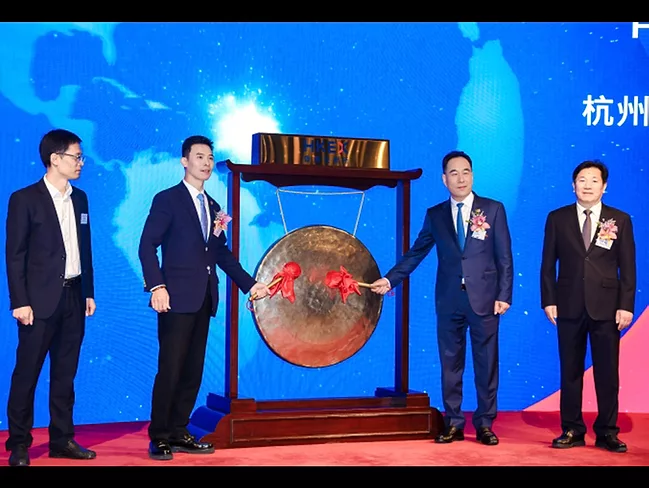
Hangzhou Jiuyuan Gene Engineering Co. Ltd. raised HKD$485.4 million (US$62.38 million) in a November 28 IPO on the main board of the Hong Kong Stock Exchange (HKEX:2566).
The Ministry of Food and Drug Safety (MFDS) approved South Korea’s first denosumab (Prolia/Xgeva) biosimilars, developed by Celltrion Inc. under the brand names of Stoboclo/Osenvelt (CT-P41) for respective indications, a move the company hopes will help secure first-mover advantage for the drugs, currently under review in the U.S. and Europe.
Celltrion Inc. said it would acquire Iqone Healthcare Switzerland SA in the fourth quarter of 2024 for about ₩30 billion (US$21.34 million) to expand its European business. “This move represents a strategic shift in our growth strategy,” Taehun Ha, Celltrion vice president and Europe head, said in a statement Nov. 15.
The nearer-looming threat of a biosimilar from Amgen Inc. to heavyweight Regeneron Pharmaceuticals Inc.’s age-related macular degeneration (AMD) VEGF therapy, Eylea (aflibercept), along with other issues, pressured shares of the latter (NASDAQ:REGN) since reporting third-quarter earnings Oct 31. But Wall Street pundits are not altogether aligned on how serious the scenario might be. After the earnings update, Regeneron’s stock fell 12%, from $925 to $819.96, and closed Nov. 1 at $843.60, up $5.40.
 RSS
RSS