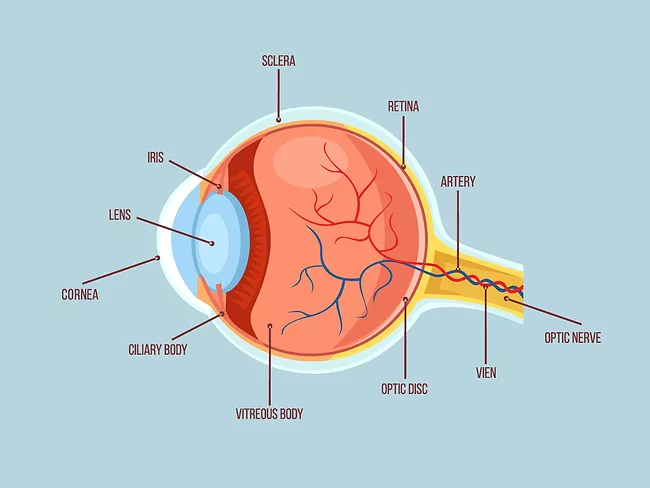
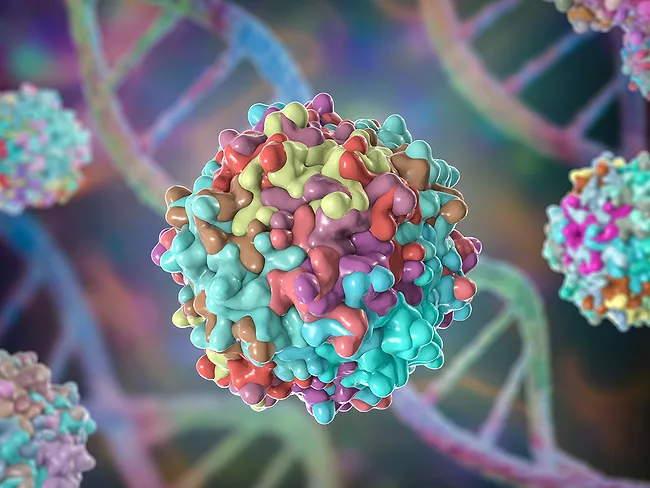
Complement Therapeutics GmbH raised €72 million (US$79.4 million) in a series A round to move into the clinic a novel gene therapy for treating geographic atrophy secondary to dry age-related macular degeneration. It’s the largest series A round completed in Europe so far this year.
The editing in human cells and in mice of the survival motor neuron 1 gene (SMN1) restored the levels of SMN protein that the mutation of the SMN2 gene produces in spinal muscular atrophy. Scientists from the Broad Institute in Boston and The Ohio State University reversed the mutation using the base editing technique.
The editing in human cells and in mice of the survival motor neuron 1 gene (SMN1) restored the levels of SMN protein that the mutation of the SMN2 gene produces in spinal muscular atrophy (SMA). Scientists from the Broad Institute in Boston and The Ohio State University reversed the mutation using the base editing technique. “This base editing approach to treating SMA should be applicable to all SMA patients, regardless of the specific mutation that caused their SMN1 loss,” the lead author David Liu, a professor and director of the Merkin Institute of Transformative Technologies in Healthcare at the Broad Institute of Harvard and MIT, told BioWorld.
Base editing (BE), a technique that modifies a single nucleotide in living cells, has been successfully tested to resolve the CD3δ mutation in severe combined immunodeficiencies (SCIDs) and produce functional T cells. For now, scientists at the University of California, Los Angeles (UCLA), completed the study on patient stem cells and artificial thymic organoids, shortening the way for future clinical trials.
A modification of the CRISPR technique has made it possible to restore vision in mouse models with retinitis pigmentosa (RP). Scientists at the Institute of Visual Neuroscience and Stem Cell Engineering of Wuhan University of Science and Technology developed a new gene-editing tool called PE(SpRY) to edit in vivo a mutation of enzyme phosphodiesterase 6B (PDE6β) and return its function.
Osteoarthritis and its associated cartilage pathology affects 30 million people in the U.S., but no disease-modifying treatments have yet reached the clinic. A recent multicenter trial evaluating the safety and efficacy of a truncated, recombinant human fibroblast growth factor-18 (FGF18) protein analogue (rhFGF18) demonstrated a dose-dependent improvement in cartilage thickness relative to a placebo.
Patients with Leber hereditary optic neuropathy who received bilateral injections of Gensight Biologics SA’s Lumevoq (lenadogene nolparvovec) are continuing to see statistically significant visual improvements three years into the phase III REFLECT trial, but the missed primary endpoint at 1.5 years, along with a series of manufacturing mishaps, have left the gene therapy’s approval prospects uncertain.
Abeona Therapeutics Inc. has announced three investigational preclinical gene therapy product candidates from its ophthalmology program. The new AAV-based therapies use novel AAV capsids from Abeona's in-licensed AIM capsid library. Abeona intends to submit its first pre-IND application meeting request this month.
 RSS
RSS