Investors found in an 8-K filing by Intellia Therapeutics Inc. the news of one case of liver-enzyme elevation in the ongoing phase III Magnitude study with nexiguran ziclumeran (nex-z, NTLA-2001), and in reaction pushed shares of the firm (NASDAQ:NTLA) down to close May 29 at $7.45, a loss of $2.21, or 23%, after the stock traded as low as $6.90 during the day.
Rocket Pharmaceuticals Inc. CEO Gaurav Shah said his firm is investigating how its gene therapy for Danon disease may have created an “unexpected and paradoxical” effect that led to problems for a phase II patient who ultimately died.
The lack of animal models that mimic human disease impedes the study of many pathologies that still lack treatment beyond symptom relief. This is what has happened so far with PURA syndrome, a rare disorder affecting brain development for which a mouse model has finally been developed. Other times, small and large models exist, but an effective treatment remains elusive, as is the case with Krabbe disease, a fatal disease in children that could be prevented with the advances in gene therapy.
A collaboration of scientists from the NIH Brain Initiative consortium has published eight simultaneous studies in Neuron, Cell, Cell Genomics, Cell Reports and Cell Reports Methods, with the results of the Armamentarium project, a new set of gene therapy tools for the research and treatment of human brain disorders. The methodology, based on genetic techniques, RNA detection, genomic enhancers and viral vectors, is designed to access different CNS cell types, neuronal and non-neuronal cells, with common and reproducible protocols now available for any laboratory.
Since the development of the base and prime editing technique by David Liu at the Broad Institute, their applications in biomedicine have continued to grow, reaching 17 clinical trials for base editing and one clinical assay for prime editing. The 28th Annual Meeting of the American Society of Gene & Cell Therapy (ASGCT) marked a historic milestone this year by presenting the first case of treatment with base editors of a baby with a deadly metabolic disease.
Rznomics Inc. scored a potential ₩1.9 trillion (US$1.35 billion) global license option agreement with Eli Lilly and Co. to codevelop a novel RNA editing gene therapy to treat hereditary hearing loss.
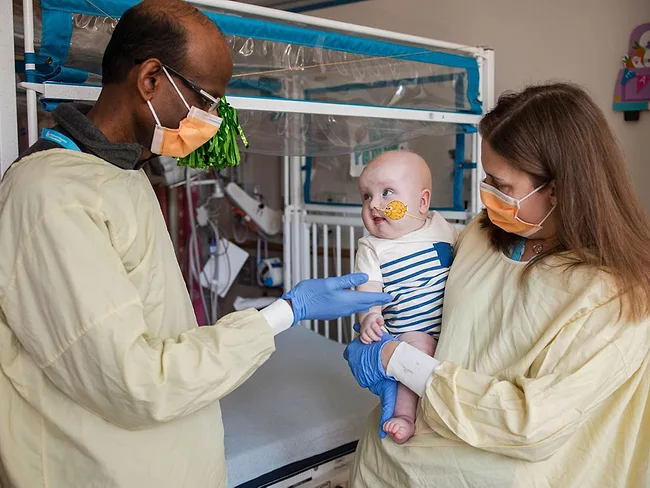
Using a customized gene editing therapy, researchers at the Children’s Hospital of Philadelphia have reported success in treating an infant with a severe metabolic disorder. Kiran Musunuru, Barry J. Gertz Professor for Translational Research in the University of Pennsylvania’s Perelman School of Medicine, presented the case at the American Society of Gene and Cell Therapy’s 2025 annual meeting. The case study was simultaneously published in The New England Journal of Medicine.
Gene and cell therapies (GCTs) can target the kidney to treat congenital, acute or chronic diseases affecting this organ. However, its complex structure poses a challenge for these technologies. To be precise and effective in the long term, new approaches should circumvent the specificities of renal tissue, with novel methods of delivery and gene transfer to offer new therapeutic options for patients who lack them.
Rznomics Inc. scored a potential ₩1.9 trillion (US$1.35 billion) global license option agreement with Eli Lilly and Co. to codevelop a novel RNA editing gene therapy to treat hereditary hearing loss.

 RSS
RSS