HER2-targeted antibody-drug conjugates (ADCs) have significantly improved cancer therapy in recent decades. However, ADCs can cause toxicity and resistance, while T-cell engagers (TCEs) show promising antitumor activity in solid tumors but are limited by substantial adverse effects.
Allogeneic CAR T-cell therapy offers several advantages over an individualized autologous CAR T approach, thanks to the use of readily available, higher quality and quantity of starting donor T cells and the potential to generate multiple doses from a single manufacturing process.
Researchers from Synthekine Inc. presented preclinical efficacy data on STK-012, a first-in-class IL-2 partial agonist engineered for preferential binding to the IL-2Rαβγ receptor.
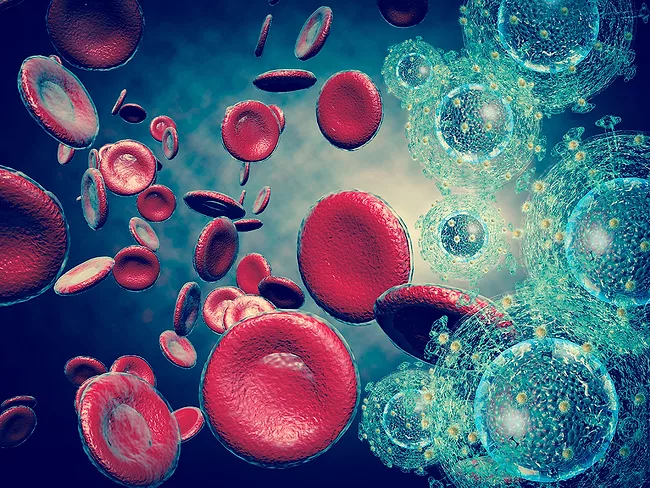
2025 has been the most challenging year in the efforts to fight HIV since at least the advent of antiretroviral therapy. In a report on “Overcoming disruption, transforming the AIDS response,” released last week ahead of World AIDS Day on Dec. 1, the Joint United Nations Program on HIV/AIDS (UNAIDS) described “a global system in shock” by sharply reduced funding from the U.S. and other wealthy nations. Scientifically, for now, progress is ongoing. To mark World AIDS Day, Nature published three independent studies on HIV.
Pancreatic cancer is among the most aggressive cancer types, with survival rates being very low and current treatment being quite ineffective. To address this unmet medical need, HCW Biologics Inc. has developed and presented preclinical data for their T-cell engager approach – HCW11-018.
M-3554 is an antibody-drug conjugate (ADC) targeting GD2; it has shown strong antitumor activity in neuroblastoma xenograft models and has been engineered to reduce anti-GD2 antibody-associated pain.
Researchers from Northeast Agricultural University and Jiangsu Kanion Pharmaceutical Co. Ltd. aimed to improve the oncolytic effect of existing Newcastle disease virus (NDV) vectors using engineering strategies to accelerate their clinical translation.
Nectin-4 is a cell-adhesion molecule that is highly expressed in several malignancies, including bladder, colorectal, lung and breast cancers, while exhibiting minimal expression in most normal adult tissues.
Researchers from Compass Therapeutics Inc. detailed the preclinical characterization of CTX-10726, a bispecific, tetravalent antibody that simultaneously targets VEGF-A and PD-1.
A paper from Onchilles Pharma Inc. and collaborating institutions details the development of N-17350, a next-generation therapeutic elastase optimized for intratumoral delivery that targets the neutrophil elastase pathway.
 RSS
RSS