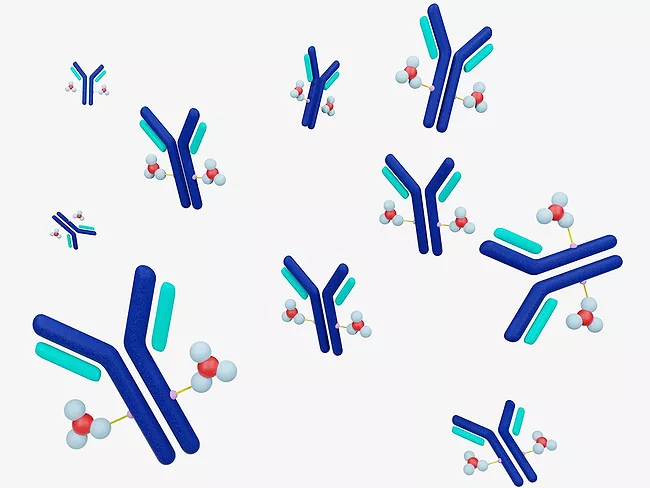
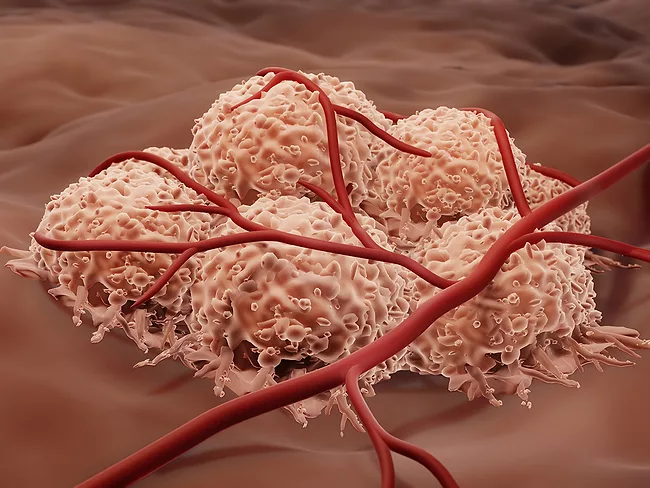
Antengene Corp. Ltd. has outlined progress in its early-stage pipeline. The company has leveraged its Antengager T-cell engager (TCE) platform for the discovery of multiple investigational programs.
Hutchmed Ltd. has identified antibody-drug conjugates comprising an antibody or antigen binding fragment covalently linked to a GTPase RAS or KRAS inhibitor through a linker reported to be useful for the treatment of cancer.
The limited efficacy of cancer immunotherapy is usually attributed to suboptimal antitumor T-cell generation, as well as impaired immunological memory development. MDX-2004 is a trispecific antibody-fusion protein developed by Modex Therapeutics Inc. that targets CD3, CD28 and CD137 on human T cells, which was designed to overcome these limitations by rejuvenating the immune system and enhancing antitumor immunity.
In a deal worth up to $840 million, Third Arc Bio Inc. is licensing Adagene Inc.’s Safebody technology platform to generate two masked CD3 T-cell engagers against unique tumor associated antigens.
South Korean researchers led by Lee In-suk of Yonsei University have reported the most complete oral microbiome catalog to date, with more than 72,000 genomes. Detailed in Cell Host & Microbe on Nov. 12, 2025, the database is expected to serve as a universal platform for academia and enable “precision microbiome medicine” for the industry, Lee told BioWorld.
Shanghai Phrontline Biopharma Co. Ltd. has described antibody-drug conjugates comprising an antibody or antigen-binding fragment targeting HER2 (erbB2) covalently linked to a cytotoxic drug through a linker reported to be useful for the treatment of cancer.
Although tricomplex pan-RAS (ON) inhibitors, such as RMC-6236, constitute a promising class of therapeutics against RAS-driven cancers, their on-target, off-tumor toxicities challenge the dosing strategy and the safety of drug combinations.
T-knife Therapeutics Inc. has filed a clinical trial application (CTA) to initiate a phase I trial of TK-6302, a PRAME-targeted T-cell receptor (TCR) T-cell therapy in solid tumors. Pending CTA approval, the ATLAS trial is planned to begin next year.
Captain T Cell GmbH has successfully closed an equity financing round to support its T-cell receptor (TCR) T-cell therapies for solid tumors. The company’s autologous lead program, CTC-127, is a best-in-class TCR T-cell therapy targeting MAGE-A4-positive solid tumors and is expected to enter clinical trials in early 2027.
The inhibition of PD-L1 and VEGF individually or in combination has shown efficacy across several solid tumor types, but not all patients respond to therapy or respond for short duration. IMM-2510 is a novel bispecific antibody developed by Immuneonco Biopharmaceuticals Inc. that targets both PD-L1 and VEGF, thus achieving both angiogenesis inhibition and immune checkpoint blockade.
 RSS
RSS