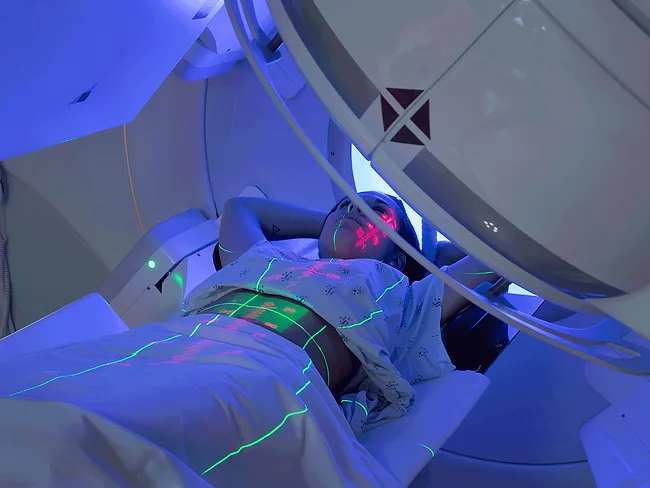
The University of Texas MD Anderson Cancer Center reported findings from studies of CBT-001-2334, a radionuclide peptide targeting carbonic anhydrase IX (CAIX/CA9) designed for diagnostic gallium labeling and downstream therapeutic isotope pairing. It features a DOTA chelator for use in theranostic applications through chelating either diagnostic or therapeutic radionuclides. Because it has limited expression in normal tissue, CAIX is an attractive target in clear cell renal cell carcinoma (ccRCC).
It is not surprising that a large Ebola outbreak would be considered a public health emergency of international concern. But the current PHEIC is notable for the speed with which it was declared, speaking to the urgency of the situation. World Health Organization Director-General Tedros Adhanom Ghebreyesus declared the outbreak a PHEIC on Sunday, May 17, without first convening an emergency committee. That step is unprecedented.
Minimal residual disease (MRD) has become a central concept in modern oncology, reshaping how clinicians evaluate response, relapse risk and treatment precision. As increasingly sensitive technologies reveal traces of cancer that persist after therapy, MRD is emerging as both a biological challenge and a clinical opportunity, especially as new data illuminate its complexity across hematologic and solid tumors. This topic was addressed at the 2026 American Association for Cancer Research (AACR) annual meeting.
A new metasurface design strategy that replaces rigid order with “engineered disorder” could significantly increase how many optical functions can be integrated into a single ultra-thin device without increasing size or complexity, according to a study published in Nature Communications. The study challenges a longstanding assumption in optical engineering that highly ordered, periodic structures are required to precisely control light.
Mabwell (Shanghai) Bioscience Co. Ltd. has announced that SST-001 (18F-FD4), an α-synuclein-targeted PET tracer developed by Mabwell’s incubated company Synusight Biotech, has received clinical trial clearance from China’s National Medical Products Administration (NMPA). The planned phase I trial will enroll healthy volunteers, patients with multiple system atrophy (MSA), and patients with Parkinson’s disease.
A University of Texas System patent describes new radiolabeled positron emission tomography (PET) imaging agents targeting receptor-interacting serine/threonine-protein kinase 1 (RIPK1; RIP-1). As such, they are potentially useful for the diagnosis of cancer, retinal and autoimmune diseases, neurological and inflammatory disorders.
Merck Sharp & Dohme LLC (MSD) has prepared and tested new positron emission tomography (PET) agents for binding and imaging α-synuclein (SNCA) for the diagnosis of Parkinson’s disease.
Trace Biosciences Inc. has obtained IND approval from the FDA for LGW16-03 (Nervetrace Dx), the company’s first nerve-specific fluorescent imaging agent. The IND clearance enables Trace to initiate a first-in-human study evaluating the safety and intraoperative performance of LGW16-03 in surgical settings.
Janssen Pharmaceutica NV has identified compounds targeting TAR DNA-binding protein 43 (TARDBP; TDP-43) acting as positron emission tomography (PET) imaging agents. They are designed for use in the diagnosis of neurological disorders.
Breast cancer is the most frequently diagnosed malignancy worldwide. Inhibiting PARP-mediated DNA repair has emerged as a promising anticancer strategy, with PARP inhibitors (PARPis) demonstrating clinical efficacy particularly in tumors with defective homologous recombination repair, such as BRCA-deficient cancers.
 RSS
RSS