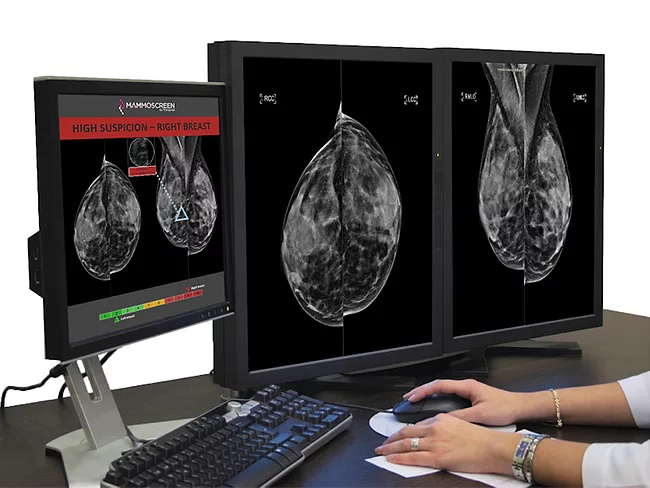
PARIS – Therapixel SA, of Nice, France, has obtained 510(k) clearance from the U.S. FDA for its Mammoscreen technology, a software platform based on artificial intelligence (AI) and used by radiologists for reading screening mammograms. “Obtaining FDA clearance is the result of working with radiologists over the past three years in order to develop a powerful tool providing relevant assistance in their day-to-day work,” Matthieu Leclerc-Chalvet, CEO of Therapixel, told BioWorld.
The U.S. FDA has rewritten the emergency use authorization (EUA) for the Laboratory Corp. of America Holdings Inc. (Labcorp) COVID-19 polymerase chain reaction (PCR) test to allow for diagnostic testing of those who are asymptomatic and those who have no reason to suspect they are infected with the SARS-CoV-2 virus.
The question of screening for the COVID-19 pandemic continues to absorb the interest of both the U.S. FDA and test developers, and Tim Stenzel, director of the FDA’s Office of In Vitro Diagnostics and Radiological Health (OIR), said in a July 22 webinar that the FDA is “very interested” in a fingerstick test at the point of care for screening purposes, adding that the agency sees any such applications as a priority.
Becton, Dickinson and Co. (BD) has received a green light for a premarket approval supplement from the U.S. FDA for an expanded version of its BD Onclarity HPV assay. It includes the expansion for genotype reporting beyond human papilloma virus (HPV) genotypes 16, 18, and 45.
Cancer treatment has been transformed, at its root, by a transformational change in how it is classified. Those successes have not escaped the notice of researchers in other areas of biomedicine, and diseases including heart failure, asthma and polycystic ovarian syndrome are being looked at with an eye to subdividing them in ways that brings diagnostics into the molecular era.
Artificial intelligence (AI)-focused Caption Health Inc. has scored a green light from the U.S. FDA for an updated version of Caption Interpretation, which aims to help clinicians gain quick, easy and accurate measurements of cardiac ejection fraction (EF) at the point of care.
HONG KONG – Seoul-based Vuno Inc. faces the happy dilemma of being able to choose from multiple partnership offers to add to the string of recent deals inked by the South Korean company. The company’s most recent deal is an agreement with Dong Wha Pharmaceutical Co. Ltd. for a ₩3 billion ($2.5 million) investment. For Dong Wha, the deal is a culmination of a three-year effort to diversify its business via active investments in the latest health care trends.

 RSS
RSS