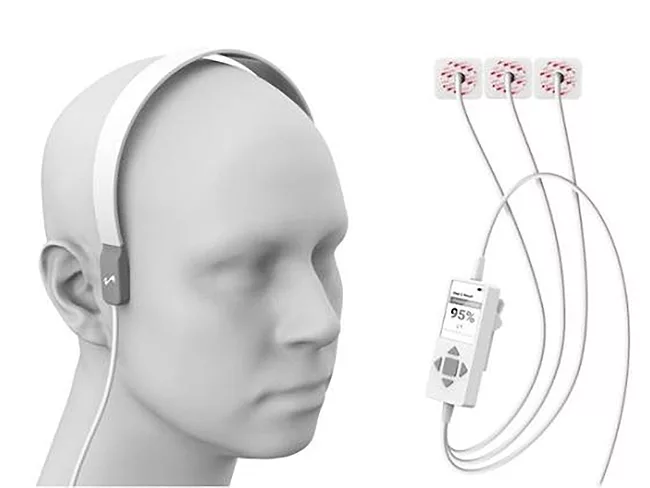
For many sports injuries, return-to-play decisions are pretty straightforward: pain and swelling have dissipated, or an X-ray confirms that a bone has healed. For concussion, it’s not so clear. Though symptoms may resolve after a few days, the brain could still be vulnerable. Now, Cupertino, Calif.-based based startup Mindrhythm Inc. has developed a headset to assess concussion recovery using biometric measures and help doctors safely return concussed individuals to play.
Neckepur SAS signed a licensing agreement with Assistance Publique-Hôpitaux de Paris (AP-HP) to develop an in vitro diagnostic technology to optimize the medical devices used in extracorporeal circulation. The agreement covers the rights to use a patent for a method of evaluating and optimizing the doses of drugs administered to patients admitted to the intensive care unit (ICU) who are undergoing treatment with devices such as hemofiltration, extracorporeal membrane oxygenation (ECMO), continuous hemodiafiltration, and adsorbent column circuits.
A recent bipartisan request for funding of a study on replacing U.S. drug patents with cash prizes is just one more symptom of a larger global malady that makes patents the scapegoat for bigger problems that have nothing to do with intellectual property (IP), David Kappos, board co-chair of the Council for Innovation Promotion (C4IP), told BioWorld.
A recent bipartisan request for funding of a study on replacing U.S. drug patents with cash prizes is just one more symptom of a larger global malady that makes patents the scapegoat for bigger problems that have nothing to do with intellectual property (IP), David Kappos, board co-chair of the Council for Innovation Promotion (C4IP), told BioWorld.
Pacific Biosciences Inc. and Genedx Inc. reported a research collaboration with the University of Washington to study HiFi long-read whole genome sequencing’s (WGS) capacity to boost diagnostic rates in pediatric patients with genetic disorders.
Dermasensor Inc.’s elastic scattering spectroscopy device appears to have solved one of the more challenging issues in dermatology—early detection of skin cancers in individuals with darker skin tones. The device demonstrated very high sensitivity across all skin cancer types compared to histopathological exams with minimal variation between Fitzpatrick skin type groups in an analysis of the DERM-SUCCESS trial.
Enochian Biosciences Inc.changed its name toRenovaro Biosciences Inc. and reported a deal to merge part of the company with Gedi Cube Intl Ltd. in an effort to move on from recent controversies. “Renovaro, Latin for ‘renewal,’ represents our company’s mission,” said Mark Dybul, CEO of the company.
Developers of medical technology have many concerns about the U.S. Centers for Medicare & Medicaid Services’ (CMS) handling of coverage and reimbursement, but those controversies have typically revolved around process. A new report sponsored by industry steers a somewhat different tack, however, arguing that while there are issues of process, one key issue is that of funding, a problem that only Congress can remedy.
Histoindex Pte Ltd.'s’s artificial intelligence (AI)-enabled tissue imaging technology more accurately measures the change in fibrosis than current pathology tests, the company said.
In a study reported in the online edition of Science on Aug. 10, 2023, a group of synthetic biologists from the University of California (UC) San Diego and clinicians from Australia have engineered synthetic bacteria to detect specific DNA sequences in the genomes of colorectal cancer (CRC) cells and organoids. This living cell sensor capable of detecting cancer in the colons of mice has the potential to steer the way to new biosensors capable of identifying various infections, cancers and other diseases.
 RSS
RSS