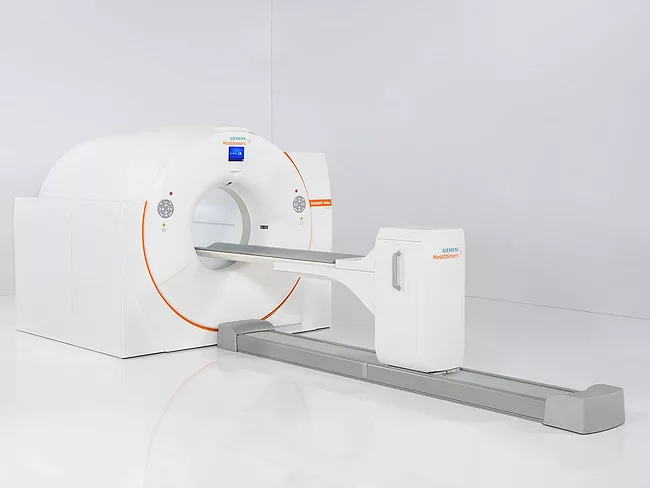
The U.K. has launched the first-of-its-kind national total-body positron emission tomography (PET) imaging platform that will be ‘game-changing’ for clinical research. Funded with £32 million (US$39 million) from the government, the National PET Imaging Platform (NPIP) will enable clinicians and researchers to access never-before-seen data that will improve the detection, diagnosis and treatment of complex, multi-organ diseases.
The U.S. Department of Justice (DOJ) reported on October 2 that Genomic Health Inc. (GHI), now a subsidiary of Exact Sciences Corp., has agreed to pay $32.5 million to settle allegations that the company violated the False Claims Act (FCA). The allegations include that GHI had manipulated the dates upon which a test was administered in order to boost revenues from public health programs, an activity that ended up costing the company double damages.
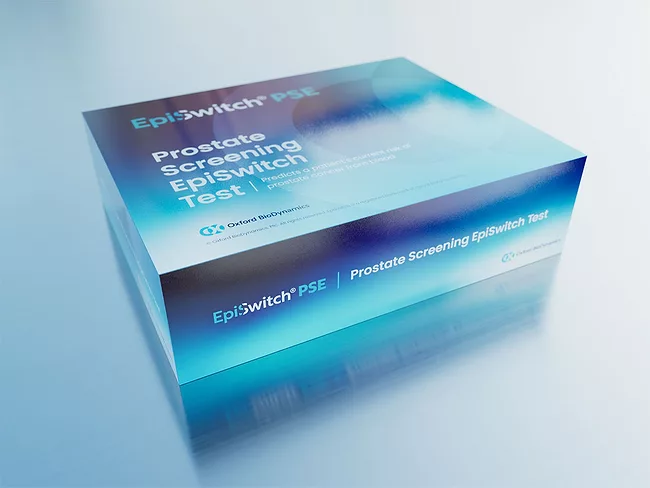
The receipt of a reimbursement code for the Episwitch Prostate Screening (PSE) test developed by Oxford Biodynamics plc, following its recent launch, is good news for men frustrated with the inaccuracies in prostate-specific antigen (PSA) tests and the lack of alternatives, Jon Burrows, CEO of Oxford Biodynamics told BioWorld.
The U.S. FDA has finally let fly with a draft rule for regulation of lab-developed tests (LDTs), an 83-page document that delves into the legal controversies regarding whether the agency has the requisite statutory authority. However, Allyson Mullen, a director in the D.C. office of Hyman, Phelps & McNamara P.C., told BioWorld that the emergence of this draft rule doesn’t mean Congress won’t eventually be dragged back into the LDT fray, particularly if stakeholders litigate to overturn the draft.
Following the receipt of a U.K. Conformity Assessed (UKCA) mark for its kidney function diagnostic software, the CKD Screening Prioritizer (CSP), Gendius Ltd. is hoping to soon receive CE mark and then U.S. FDA approval next year. Given that people with type 2 diabetes are at a higher risk of developing chronic kidney disease, Gendius’ pre-screening software will be “transformative” for patients and health care systems, CEO Rory Cameron told BioWorld in an interview.
Mission Bio Inc. released its Tapestri single-cell minimal residual disease (MRD) assay for acute myeloid leukemia (AML) on September 26, with the goal of enabling greater personalization of care for patients with blood cancers. The test can provide insights into the progression of AML and help identify targets for treatment in addition to identifying patients truly experiencing relapse as distinct from having pre-leukemic or precursor clones.
The U.S. FDA recently convened an advisory hearing to discuss whether three in vitro diagnostics should be reclassified from class III to class II, including tests for the pathogens responsible for Hepatitis B and tuberculosis. The panel agreed that all three of the test types should be reshuffled to the lower-risk class II category, suggesting that test developers now have an opportunity to jump into a market with lower-cost tests that won’t need expensive and drawn-out clinical studies to obtain the FDA’s seal of approval.
Proteomics International Pty Ltd has developed a new blood-based diagnostic test called the Promarkereso that identifies patients with esophageal adenocarcinoma as well as patients with a pre-malignant condition called Barrett’s esophagus that can arise from chronic acid reflux.
Artificial intelligence (AI) is an increasingly common matter of medical practice and thus not just another buzzword, and the U.K. National Institute for Health and Care Excellence (NICE) has opened a program for evidence generation for the use of AI to contour external beam radiotherapy to the tumor of treatment.
Previous research has shown high expression of angiotensin-converting enzyme 1 (ACE1) in the triple-negative breast cancer (TNBC) cell line MDA-MB-231, suggesting the potential of ACE1 as a novel target for this disease. In the current study, researchers from Peking University Cancer Hospital presented the discovery of [68Ga]DOTA-BPP, a novel peptide nuclide molecular imaging probe targeting ACE1 for the imaging of TNBC.
 RSS
RSS