As more and more artificial intelligence (AI)-based solutions get developed to improve patient care, humans should ultimately remain in control because no AI system will be free from mistakes, said Ha Hong, Chief Artificial Intelligence Officer in Medtronic plc’s Endoscopy unit. “There will be some errors, it is simply not possible to create a system that is 100% error free,” he told BioWorld in an interview.
South Korean researchers from the Gwangju Institute of Science and Technology (GIST) have penned a “groundbreaking” adversarial task adaptive pretraining (A-TAPT) model that could improve the accuracy of analyzing vocal cord vibrations for medical conditions.
Cognito Therapeutics Inc. is seeking patent protection for methods for measuring parameters, particularly gamma waveforms, of neurological disorders including neurodevelopmental disorders, psychiatric disorders, and neurodegenerative disorders.
Ventric Health Inc. received U.S. FDA 510(k) clearance for its Vivio system, a mobile, non-invasive medical device that can aid in the diagnosis of heart failure. With early diagnosis crucial for treating and managing the condition, Vivio uses advanced algorithms to detect elevated left ventricular end diastolic pressure (LVEDP) in less than five minutes and can therefore improve clinical and health outcomes.
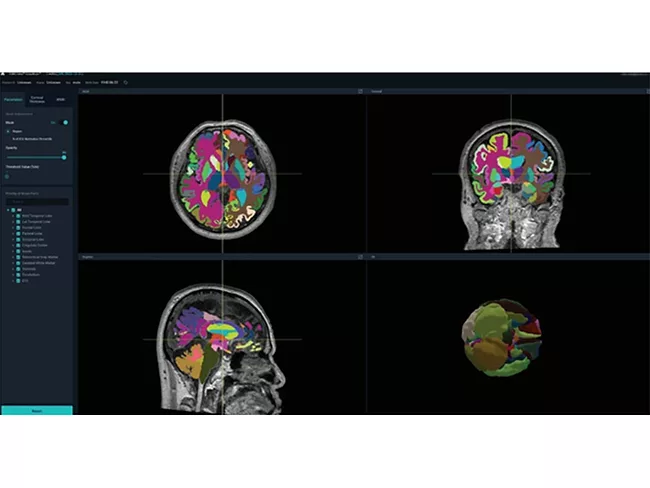
Vuno Inc. gained a U.S. FDA’s 510(k) clearance for its artificial intelligence (AI)-powered brain quantification device, Vuno Med-Deepbrain, to diagnose possible dementia in patients “even before mild cognitive impairment.”
The U.S. FDA recently released a guidance for non-invasive remote monitoring devices, which were granted tremendous leniency during the COVID-19 pandemic as a means of reducing the demands on hospitals and doctor’s offices. That policy has been extended for the non-COVID era as part of the agency’s strategic plan to improve health equity by ensuring that access to digital health technologies is enjoyed by diverse American populations in a variety of health care access-challenged geographical areas.
Burning Rock Biotech Ltd. wants to significantly change the way cancers are detected and the biotech is sailing ahead with the latest breakthrough device designation received from China’s NMPA for its multi-cancer detection blood test (MCDBT), Overc.
Celero Systems Inc. reported details of a patent filing for gastric residency systems for its ingestible devices, in the form a plurality of retention arms with non-deployed and deployed states sized and configured to temporarily retain the ingestible devices in the stomach for periods of up to a week.
 RSS
RSS