Valuations in the med-tech space lately call into question the old medical adage: “If you hear hoofbeats, think horses.” These days, you would be wise to consider unicorns in the differential diagnosis. Two new companies achieved the formerly rare status just this week. Viz.ai Inc.’s closing today of a $100 million series D financing propelled it into the stratosphere with a $1.2 billion valuation, joining Bostongene LLC which completed its own $150 million round Wednesday.
Even as many in the U.S. are looking for the end of the COVID-19 public health emergency, Health and Human Services (HHS) Secretary Xavier Becerra reinforced expectations April 5 that he will continue the emergency declaration into the summer, if not beyond. When asked during a Senate Finance Committee budget hearing if he saw the emergency ending this summer, Becerra declined to give a date, but reiterated his commitment to give stakeholders at least 60 days’ notice.
A 2,000-patient U.K. study has been set up to generate real-world evidence of the value of using AI technology to detect bowel polyps (adenomas) during colonoscopy procedures. The aim is to show whether Medtronic plc’s GI Genius system improves the detection of polyps when deployed in both expert centers and non-specialist units, in the routine diagnostic screening of patients referred from primary care or through the national fecal immunochemical testing program.
There has been some skepticism about the value of electronic health records (EHRs) beyond their role as a source of income for EHR developers, but an April 3 presentation at the 2022 America College of Cardiology scientific sessions being held in Washington suggests this type of software offers some real value for heart failure patients. Tariq Ahmad of Yale School of Medicine said a study of EHRs suggests their power lay in part in prompting compliance with heart failure medication regimes, an application of this type of software that can both save lives and cut costs for the Medicare program and Medicare beneficiaries.
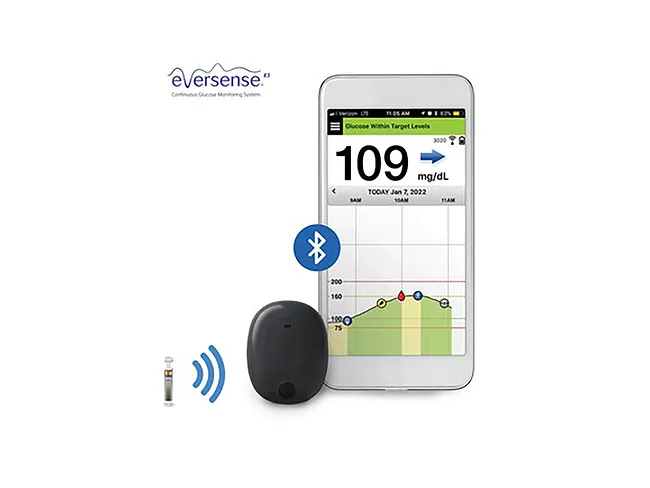
Ascensia Diabetes Care Holdings AG aims to reduce the pain associated with continuous glucose monitoring (CGM) just a bit with a new cost structure for Senseonics Holdings Inc.’ Eversense E3 CGM. The system, which lasts a ground-breaking six months without replacement, received FDA clearance in February.
With FDA clearance of its Endoscreener that uses artificial intelligence (AI) to detect polyps during coloscopy procedures, Wision AI Ltd. is expanding its product portfolio to include colorectal histopathology tools.
Nalagenetics Pte. Ltd. has landed $12.6 million in a series A round of financing. The Singapore-based company wants to use the capital to expand on its genetic testing solutions to implement predictive and presymptomatic testing for prevention geared towards chronic conditions in Asia.
Leading clinicians in the U.K. have set out a blueprint for integrating pharmacogenomic testing into prescribing in all cases where there is a known association between a gene variant and how an individual will respond – or not – to a particular drug.
 RSS
RSS