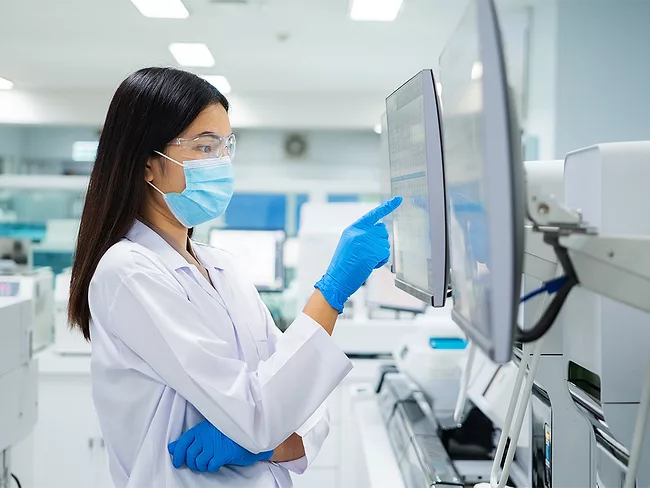
In its first report on device application processing times since it completed most of its medical device reforms, Australia’s Therapeutic Goods Administration (TGA) met all the legislated time frames for processing medical device applications during the six-month period from July 31 to December 2021.
Health care-focused private equity firm Archimed Group agreed to acquire Natus Medical Inc. for $33.50 per share, a nearly 29% premium over the April 14 closing share price for the provider of medical devices to diagnose and treat neurological and sensory disorders. The deal will take Natus (NASDAQ:NTUS) private after more than 20 years as a publicly traded company.
China’s Ministry of Science and Technology issued a draft rule on regulations governing sharing of human genetic resources that provides clarity on parts of the regulation that were previously ambiguous, Katherine Wang, partner at Ropes & Gray in Shanghai, told BioWorld.
Diagnostic testing group Clinisys Inc. has acquired cloud-based laboratory operations software company Apollolims in an undisclosed deal. Headquartered in Chertsey, U.K., and Tucson, Ariz., Clinisys will expand its public health, toxicology, and molecular diagnostics offering through the acquisition. The deal builds on the company’s combination with Sunquest and Horizon announced in January.
Newstem Ltd. filed a presubmission to the U.S. FDA for a de novo request and an in vitro diagnostic device with the EMA for its Newstem software diagnostic device (NSDD). The bioinformatics-based platform is a personalized diagnostic to inform oncologists about the presence of mutations in tumors and predict a patients’ resistance to chemotherapy treatments. The technology utilizes specialized stem cells (haploid cells) that carry just one set of chromosomes.
Telix Pharmaceuticals Ltd. has in-licensed Eli Lilly and Co.’s olaratumab antibody, agreeing to pay $5 million up front for exclusive worldwide rights to develop and commercialize radiolabeled forms of the antibody for the diagnosis and treatment of human cancers.
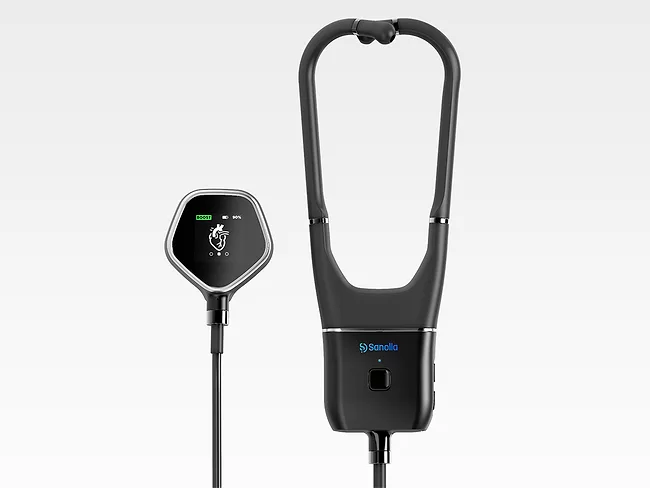
Israeli startup Sanolla Ltd. won U.S. FDA 510(k) clearance for its smart-infrasound stethoscope Voqx. The artificial intelligence (AI)-based device is the first stethoscope cleared by the U.S. FDA to detect infrasound and audible information to identify clinical conditions. The auscultation capabilities are designed to support early assessment of cardiopulmonary conditions.
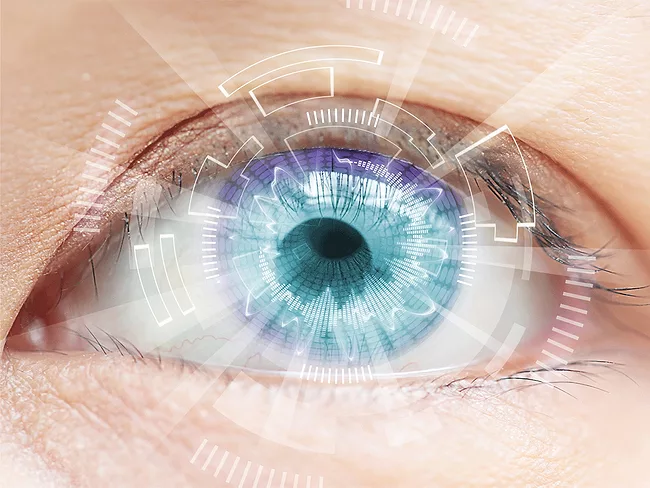
Meduni Vienna, the Medical University of Vienna, Austria, is working on a novel eye scanner combining the structural and functional sensitivity of optical coherence tomography (OCT) with the chemical specificity of Raman spectroscopy, to acquire data from the living human eye.
Fairtility Ltd.’s artificial intelligence (AI)-trained embryo classification system offers patients struggling with infertility and their physicians a better way to maximize the likelihood of implantation following in vitro fertilization (IVF) without the risk of a multiple pregnancy, a study in the Nature portfolio journal Scientific Reports found.
Quanterix Corp.’s Simoa technology helped drive a large, international study to establish reference ranges of serum neurofilament light chain (sNfL) to assess individual disease activity and drug response in multiple sclerosis (MS) patients. The study, published in The Lancet Neurology, utilized Simoa’s ability to precisely detect sNfL protein at ultra-low levels, enabling it to be reliably measured across a broad range of healthy individuals.
 RSS
RSS