Isono Health Inc. received FDA clearance for its Automated Three-dimensional Ultrasound with Artificial intelligence (ATUSA) system for breast imaging, a wearable, compact automated whole breast ultrasound system that can acquire high-quality images without requiring a skilled operator. The ultrasound scan takes two minutes to scan the entire breast volume and offers 3D visualization of the breast tissue.
Canada’s federally-funded Digital Technology Supercluster is joining with industry to invest CA$17.8 million (US$13.9 million) in an artificial intelligence (AI)-powered technologies program to advance personalized treatment for patients with cancer.
Inoviq Ltd. and The University of Queensland (UQ) are expanding a collaboration to develop an exosome-based ovarian cancer screening test. Researchers from UQ identified and validated exosomal protein and micro-RNA (miRNA) biomarkers that when combined in its OCRF-7 algorithm showed more than 90% accuracy to detect stages I and II ovarian cancer in an independent 500-sample retrospective case-control study, Inoviq CEO Leearne Hinch told BioWorld.
China’s Ministry of Science and Technology issued a draft rule on regulations governing sharing of human genetic resources that provides clarity on parts of the regulation that were previously ambiguous, Katherine Wang, partner at Ropes & Gray in Shanghai, told BioWorld.
The U.S. FDA’s device center reported April 18 that it has revoked the emergency use authorizations (EUAs) for five tests for the SARS-CoV-2 virus, a seemingly significant reduction in the inventory of tests for the COVID-19 pandemic. However, the sponsor of the test in each of these revocations requested that the EUA be revoked, an indication that the market for some types of these tests is saturated.
China’s Ministry of Science and Technology issued a draft rule on regulations governing sharing of human genetic resources that provides clarity on parts of the regulation that were previously ambiguous, Katherine Wang, partner at Ropes & Gray in Shanghai, told BioWorld.
The FDA has granted an emergency use authorization (EUA) to Inspect IR Systems LLC, of Frisco, Texas, for the company’s namesake test that evaluates the patient’s breath for the presence of volatile organic compounds (VOC) indicative of the SARS-CoV-2 virus. The test is expected to increase the volume of testing by only 64,000 per month at the current rate of production, however, making this a technological breakthrough of limited impact on the COVID-19 pandemic.
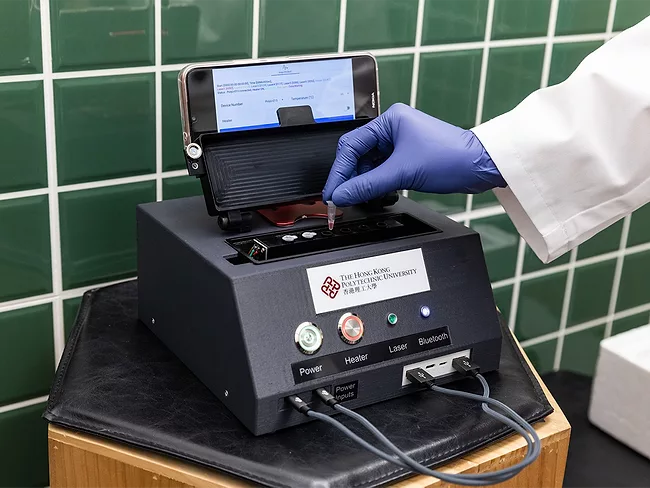
An interdisciplinary research team from the Hong Kong Polytechnic University has developed a portable testing device that can detect the COVID-19 virus within 40 minutes.
In its first report on device application processing times since it completed most of its medical device reforms, Australia’s Therapeutic Goods Administration (TGA) met all the legislated time frames for processing medical device applications during the six-month period from July 31 to December 2021.
 RSS
RSS